
AFOQT · CSO and ABM composites
Block Counting
Block Counting is the AFOQT subtest in which a drawing shows a pile of identical blocks, and you count how many other blocks a numbered block touches.
- Items
- 30
- Time
- 4.5 minutes
- Answer options
- 5
- Composites
- CSO, ABM (not Pilot)
- Guessing penalty
- None
Screens of the trainer
The subtest
Measures
The subtest measures whether you can tell, from a single drawing, which blocks a numbered block touches, including those the drawing hides.
Format
The pace is 9 seconds per item.
Form T raised the item count from 20 to 30 and the time from 3 to 4.5 minutes.
Block Counting is among the hardest AFOQT subtests, and many test-takers leave its last items unanswered.
Scoring
The score is the number of correct answers, and a wrong answer costs nothing.
The composites it feeds are reported as percentiles from 1 to 99.
Item types
One pile, numbered blocks
A black line drawing without shading shows a pile of blocks. Two blocks touch when a face meets a face, even partly. Blocks that meet only at a corner do not count. Every block in the pile has the same size and shape.
Five blocks of each drawing are numbered, and the five answer options are consecutive numbers, such as 3, 4, 5, 6 and 7.
The hardest items are those where blocks touch on faces hidden from view.
Free practice test
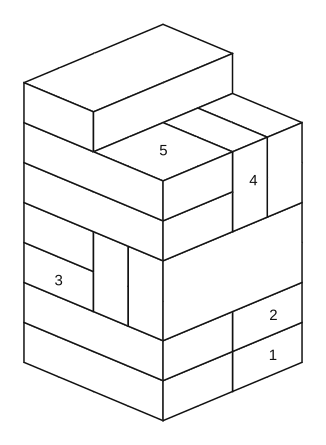
- One above, one beside: two.
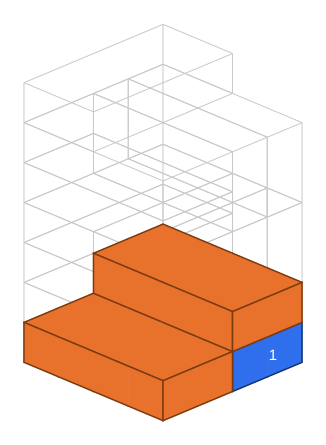
- One below, one beside, three above: five.
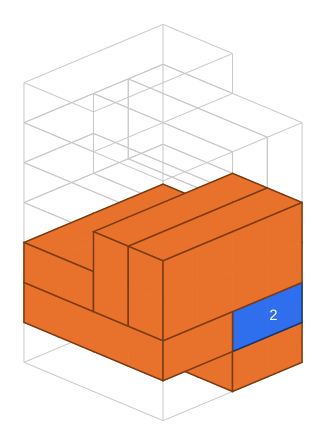
- Two below, one above, one beside: four.
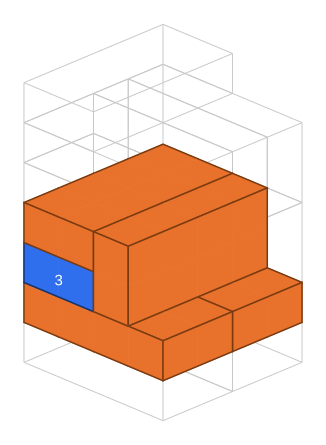
- Three below, one above, three beside: seven.
- One below, one above, one beside: three.
-
How many other blocks does block 1 touch?
Show the answer
Answer: 2
One above, one beside: two.
-
How many other blocks does block 2 touch?
Show the answer
Answer: 5
One below, one beside, three above: five.
-
How many other blocks does block 3 touch?
Show the answer
Answer: 4
Two below, one above, one beside: four.
-
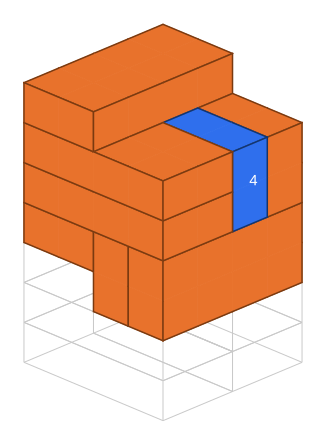
How many other blocks does block 4 touch?
Show the answer
Answer: 7
Three below, one above, three beside: seven.
-
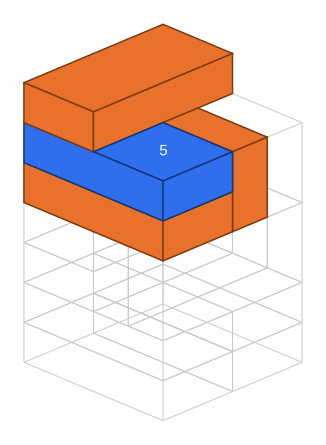
How many other blocks does block 5 touch?
Show the answer
Answer: 3
One below, one above, one beside: three.
The Frontline Forge trainer
-
The real format, hidden contacts included
Test mode runs 30 items in 4.5 minutes, on six drawings of five numbered blocks, then reviews every drawing. The trainer builds new drawings for every session, and in each one at least three of the numbered blocks touch another block on a face hidden from view.
-
A correction per drawing
Training runs the same 30 items on the same clock as Test mode. When you check a drawing, its five results appear and you can tap any block to see what it touches. The clock stops while the correction is on screen.
-
Ranked against other test-takers
Each score is ranked against the scores of other test-takers. The Statistics page plots the ranking of every attempt, so you see whether you are beating more test-takers than before.