ASTB-E · Practice test

Free ASTB-E practice test

75 questions: fifteen from each of the five sections, the right answer after every question, with no account and no clock.

Math Skills

15 questions

  1. Item 1 of 15

    What is the value of √225 + √64?

    1. 23
    2. 120
    3. 17
    4. 289
    Show the answer

    Answer: 23

    Take each root first: √225 = 15 and √64 = 8, so the sum is 15 + 8 = 23.

    120 multiplies the roots, 15 × 8, instead of adding them.

    289 adds 225 and 64 without taking any root, and 17 is the root of that sum, √289, which is not the sum of the two roots.

  2. Item 2 of 15

    What is 45% of 260?

    1. 117
    2. 305
    3. 215
    4. 130
    Show the answer

    Answer: 117

    45% means 45 hundredths, so 0.45 × 260 = 117.

    305 and 215 add 45 to 260 and subtract it, treating the percent as a plain number.

    130 is half of 260, which is 50%, not 45%.

  3. Item 3 of 15

    5/6 − 3/8 =

    1. 1/24
    2. 11/24
    3. 1/3
    4. 17/24
    Show the answer

    Answer: 11/24

    The smallest common denominator of 6 and 8 is 24: 5/6 = 20/24 and 3/8 = 9/24, so 20/24 − 9/24 = 11/24.

    17/24 rewrites 5/6 as 20/24 but subtracts 3 instead of 9.

    1/24 subtracts the numerators, 5 − 3 = 2, and multiplies the denominators, 6 × 8 = 48, giving 2/48.

    1/3 subtracts the numerators and keeps the 6 as the denominator: 2/6.

  4. Item 4 of 15

    In the pattern 5, 9, 13, 17, …, what is the 10th number?

    1. 41
    2. 45
    3. 40
    4. 36
    Show the answer

    Answer: 41

    Each number is 4 more than the one before. The 10th number lies 9 steps past the first, so it is 5 + 9 × 4 = 41.

    45 counts 10 steps instead of 9: 5 + 10 × 4.

    40 and 36 multiply the step alone, 10 × 4 and 9 × 4, and leave out the starting 5.

  5. Item 5 of 15

    A machine ran for 9, 5, 10, 4, 8 and 6 hours on six days. On a seventh day it ran for 12 hours. What is the median of the seven days' running times, in hours?

    1. 4
    2. 8
    3. 5
    4. 7
    Show the answer

    Answer: 8

    Sorted, the seven times are 4, 5, 6, 8, 9, 10, 12. The fourth of seven is the middle one, so the median is 8 hours.

    7 is the median of the first six days only, (6 + 8) ÷ 2, leaving out the 12-hour day.

    4 is the fourth time in the order given, before sorting, and 5 is the second-shortest time, not the middle one.

  6. Item 6 of 15

    On a drawing, 2 inches represent 15 feet. A hallway measures 14 inches on the drawing. How long is the hallway, in feet?

    1. 7
    2. 105
    3. 182
    4. 120
    Show the answer

    Answer: 105

    14 inches is 14 ÷ 2 = 7 lengths of 2 inches, and each stands for 15 feet: 7 × 15 = 105 feet.

    7 stops after the division and never converts to feet.

    182 multiplies 14 by 13, subtracting the 2 from the 15 instead of dividing by it.

    120 is 8 × 15, one 2-inch length too many.

  7. Item 7 of 15

    (Use A = ½(b₁ + b₂)h.) A trapezoid has parallel sides of 13 inches and 19 inches and a height of 6 inches. Its area, in square inches, is

    1. 96
    2. 18
    3. 38
    4. 192
    Show the answer

    Answer: 96

    The parallel sides add to 13 + 19 = 32 inches, half of that is 16, and 16 × 6 = 96 square inches.

    192 multiplies 32 by 6 and forgets the ½.

    18 subtracts the parallel sides instead of adding them: ½ × (19 − 13) × 6.

    38 adds the three lengths, 13 + 19 + 6, which gives no area.

  8. Item 8 of 15

    If 4x − 9 = 2x + 15, what is the value of 3x + 2?

    1. 38
    2. 12
    3. 11
    4. 36
    Show the answer

    Answer: 38

    Subtract 2x from both sides and add 9: 2x = 24, so x = 12. Then 3x + 2 = 3 × 12 + 2 = 38.

    12 is x itself, not 3x + 2, and 36 is 3x without the 2.

    11 comes from a sign slip: writing 2x = 15 − 9 = 6 gives x = 3, then 3 × 3 + 2 = 11.

  9. Item 9 of 15

    Which of these shows 3x² − 27 completely factored?

    1. 3(x − 3)(x − 3)
    2. 3(x + 3)(x − 3)
    3. 9(x + 3)(x − 3)
    4. 3(x + 9)(x − 3)
    Show the answer

    Answer: 3(x + 3)(x − 3)

    Take out the common factor 3: 3x² − 27 = 3(x² − 9). Then x² − 9 is a difference of squares, (x + 3)(x − 3), so the result is 3(x + 3)(x − 3).

    3(x − 3)(x − 3) multiplies out to 3x² − 18x + 27, with a middle term the expression does not have.

    9(x + 3)(x − 3) multiplies out to 9x² − 81, three times too large.

    3(x + 9)(x − 3) multiplies out to 3x² + 18x − 81.

  10. Item 10 of 15

    If f(x) = 5 − 2x, then f(f(3)) =

    1. 3
    2. −1
    3. 2
    4. 7
    Show the answer

    Answer: 7

    Work from the inside: f(3) = 5 − 2 × 3 = −1. Then f(−1) = 5 − 2 × (−1) = 5 + 2 = 7.

    −1 stops after the first step, f(3).

    3 comes from either of two slips: dropping the sign in the second step, 5 − 2 × 1 instead of 5 − 2 × (−1), or dropping the factor 2 in both steps, 5 − 3 = 2 and then 5 − 2 = 3.

    2 drops the factor 2 in the first step, 5 − 3 = 2, and then stops without applying f a second time.

  11. Item 11 of 15

    In a right triangle, one leg is 40 inches long and the hypotenuse is 85 inches long. How long is the other leg?

    1. 68
    2. 125
    3. 75
    4. 84
    Show the answer

    Answer: 75

    The Pythagorean theorem gives the other leg: 85² − 40² = 7,225 − 1,600 = 5,625, and √5,625 = 75 inches.

    125 adds the two lengths, but a leg is always shorter than the 85-inch hypotenuse.

    68 and 84 fail the check: 40² + 68² = 6,224 and 40² + 84² = 8,656, and neither equals 85² = 7,225.

  12. Item 12 of 15

    A driver covers a 120-mile route in 3 hours, then returns over the same route in 2 hours. What is the average speed for the whole trip, in miles per hour?

    1. 100
    2. 50
    3. 48
    4. 40
    Show the answer

    Answer: 48

    Average speed is total distance over total time: 120 + 120 = 240 miles in 3 + 2 = 5 hours, and 240 ÷ 5 = 48 miles per hour.

    50 averages the two leg speeds, 40 and 60, as if the faster leg had lasted as long as the slower one.

    100 adds the two leg speeds, and 40 is the speed of the first leg only, 120 ÷ 3.

  13. Item 13 of 15

    Working alone, one fuel truck needs 30 minutes to service an aircraft and another needs 20 minutes. With both trucks working at once, how many minutes does the job take?

    1. 10
    2. 25
    3. 12
    4. 15
    Show the answer

    Answer: 12

    In one minute the trucks do 1/30 + 1/20 = 2/60 + 3/60 = 5/60 = 1/12 of the job, so together they need 12 minutes.

    10 subtracts the times, 30 − 20, and 25 averages them; neither combines the two rates.

    15 halves the slower truck's time, as if both trucks worked as slowly as the first.

  14. Item 14 of 15

    Six people sit in a row of six chairs. Two of them insist on sitting next to each other. How many different seating orders are possible?

    1. 120
    2. 240
    3. 1,440
    4. 720
    Show the answer

    Answer: 240

    Treat the two who sit together as one block: 5 units in 5 × 4 × 3 × 2 × 1 = 120 orders. The pair can sit in 2 orders inside the block, so the total is 120 × 2 = 240.

    120 forgets that the two can swap seats inside the block.

    720 counts every order of six people, 6 × 5 × 4 × 3 × 2 × 1, with no condition.

    1,440 doubles 720 and still ignores the condition.

  15. Item 15 of 15

    A training class has 10 trainees, 4 of whom have flown before. Two trainees are picked at random, one after the other, with neither returned to the pool. What is the probability that at least one of the two has flown before?

    1. 4/5
    2. 2/15
    3. 2/3
    4. 1/3
    Show the answer

    Answer: 2/3

    The opposite event is that neither has flown: 6/10 × 5/9 = 30/90 = 1/3. At least one has flown is 1 − 1/3 = 2/3.

    1/3 is the opposite event, not the one asked.

    2/15 is the chance that both have flown: 4/10 × 3/9 = 12/90.

    4/5 adds 4/10 + 4/10, which counts the case where both have flown twice and ignores the shrinking pool.

Reading Comprehension

15 questions

  1. Item 1 of 15

    A single flight of an hour may pass through the hands of half a dozen controllers, each responsible for a different slice of the journey rather than for the aircraft as a whole. On the field, a ground controller moves the aircraft among the taxiways, and a local controller owns the runway and the air immediately around it. Once the aircraft is climbing away, the tower relinquishes it to a departure facility whose radar covers the terminal area for a few dozen miles. That facility in turn passes the flight to a center, an enormous volume of en route airspace divided among many working positions. The handoff is the seam in this arrangement, and it is deliberately formal: the receiving controller accepts the aircraft, the transferring controller instructs the pilot to change frequency, and the pilot checks in with the new facility by stating the altitude being flown. Each of those three steps confirms something the next controller has to know. The arrangement trades continuity for specialization, since no single controller follows the flight from start to finish, but each one knows a small volume of airspace intimately, including its terrain, its weather patterns, and the routine conflicts that arise there several times a day.

    In the passage, the word "relinquishes" most nearly means

    1. Recovers
    2. Hands over
    3. Monitors
    4. Delays
    Show the answer

    Answer: Hands over

    Once the aircraft climbs away, the tower passes it to a departure facility, which in turn passes it on: the word names a handover.

    Recovers reverses the direction of the transfer, and monitors would keep the aircraft with the tower.

    Nothing in the sentence holds the aircraft back, so delays has no support.

  2. Item 2 of 15

    When the first jet airliner entered service in 1952 it flew higher and faster than any aircraft carrying passengers before it, and flying high meant pressurizing the cabin far more strongly than propeller aircraft had ever required. Two of the aircraft broke up over the Mediterranean in 1954, and the investigation that followed became a model of its kind. Engineers submerged a complete fuselage in a tank of water and cycled the pressure inside it thousands of times, compressing years of service into weeks and watching for the place where the structure gave way. Cracking began at the corner of an opening in the pressurized shell, where the flow of stress through the skin was forced to turn sharply and gathered at the corner. Each flight had loaded and unloaded that skin once, and metal that survives a single application of a load will fail after enough repetitions of a smaller one, a behavior known as fatigue. Once a crack had started it propagated with every cycle until the skin remaining could no longer contain the pressure. The remedies that followed were as much geometric as metallurgical, since a generous rounded corner on an opening spreads the stress that a tight corner, and the rivet holes around it, had concentrated into one point.

    In the passage, the word "propagated" most nearly means

    1. Closed up
    2. Slowed to a stop
    3. Held its shape
    4. Grew longer
    Show the answer

    Answer: Grew longer

    A crack that had started propagated with every cycle until the remaining skin could no longer contain the pressure, so it grew longer each time.

    Closed up and held its shape would leave the skin able to contain the pressure.

    Slowed to a stop contradicts a crack that advanced with every cycle.

  3. Item 3 of 15

    Edwin Link grew up around his family's piano and organ business in Binghamton, New York, and when he set out in the late 1920s to build a machine for teaching flying on the ground, he borrowed its technology. Pneumatic bellows of the kind that worked an organ made a small cockpit mounted on a pedestal pitch, roll and turn in response to the controls. Few flying schools showed interest, and many of the early trainers were sold to amusement parks as rides. The market changed in 1934, when the Army Air Corps took over the carriage of air mail after the government canceled the airlines' contracts, and its pilots, flying in winter weather with little instrument training, suffered a series of fatal crashes in which a dozen died within a few months. The Air Corps ordered its first six Link trainers that year. With a hood closed over the cockpit and the instruments responding to the machine's own movements, a student could practice flying by instruments alone, and later models traced the simulated course on a chart at the instructor's desk. During the Second World War the company built more than ten thousand trainers, and by common estimate some half a million Allied airmen learned on them. Historians of simulation note that the trainer never reproduced the feel of a real aircraft closely, and that its value lay in letting students repeat instrument procedures safely and cheaply.

    According to the passage, what made the cockpit of the early trainer move?

    1. Electric motors taken from park rides
    2. Springs and weights balanced under a pivoting seat
    3. Air bellows like the ones that sounded an organ
    4. Cables pulled by an instructor seated at a desk nearby
    Show the answer

    Answer: Air bellows like the ones that sounded an organ

    The passage says pneumatic bellows of the kind that worked an organ made the cockpit pitch, roll and turn.

    The passage mentions no electric motors: amusement parks only bought the trainers as rides. It mentions no springs or weights either.

    The instructor's desk held a chart of the simulated course on later models, not cables working the cockpit.

  4. Item 4 of 15

    Albert Myer, an Army surgeon who had studied ways of communicating with deaf people, devised during the 1850s a method of signaling with a single flag by day and a torch by night, using equipment light enough for one soldier to carry. Each letter was represented by a short combination of two basic motions, a sweep of the flag to the left or to the right, so that any message could be spelled out through a sequence of those movements. The Army appointed Myer its first signal officer in 1860, and the outbreak of the Civil War the following year gave the method a trial on a scale no peacetime test could have offered. At the first battle of Bull Run, a Confederate officer who had helped Myer test the system before the war used it to warn a threatened commander that his flank was being turned. The reach of the method was limited by the line of sight, so stations were placed on hilltops, church steeples and specially built towers, and operators read distant flags through telescopes. That same visibility was its principal weakness, because any enemy observer with a glass and patience could read the motions as easily as the intended recipient. Important messages were therefore enciphered before they were sent, which protected their content but did nothing to conceal that a station was active.

    According to the passage, how was each letter represented in Myer's system?

    1. By a separate colored flag raised for each letter of a message
    2. By a brief sequence of flag sweeps, leftward or rightward
    3. By the angle at which a signaler held a pair of flags apart
    4. By how many times the signaler raised and lowered a torch
    Show the answer

    Answer: By a brief sequence of flag sweeps, leftward or rightward

    Each letter was a short combination of two motions, a sweep of the flag to the left or to the right.

    The method used a single flag, not colored flags or a pair of flags held at an angle.

    The torch replaced the flag at night; the passage never counts raises of the torch to form a letter.

  5. Item 5 of 15

    Longitude posed a harder problem than latitude because it cannot be read from the height of any star; it depends on time. The Earth turns through fifteen degrees every hour, so a navigator who knew the time at a reference port and could compare it with local time, found from the sun, could compute how far east or west the ship had come. For centuries no clock could keep time accurately at sea, where motion and changes of temperature and humidity disturbed the best mechanisms, and ships relied on dead reckoning, estimating position from speed, heading and elapsed time, with errors that grew over a long passage. The British Parliament's Longitude Act of 1714 offered a reward of up to twenty thousand pounds for a practical method. The self-taught clockmaker John Harrison answered with a series of marine timekeepers, the fourth of which kept time remarkably well on a trial voyage to Jamaica in 1761. Astronomers pursued a rival approach, measuring the angle between the Moon and chosen stars and comparing it with published tables, and this lunar method served many navigators for decades. Chronometers eventually prevailed, but only once they could be made in quantity at a price that ordinary ships could afford.

    According to the passage, what kept clocks from keeping accurate time at sea?

    1. Movement of the vessel combined with changing heat and damp
    2. Salt air that corroded the brass of their works
    3. Magnetism from the ship's compass nearby
    4. The difficulty of reading their faces at night
    Show the answer

    Answer: Movement of the vessel combined with changing heat and damp

    The passage names motion and changes of temperature and humidity as what disturbed the best mechanisms at sea.

    Salt corrosion, the compass and reading a clock in the dark appear nowhere in the passage.

  6. Item 6 of 15

    Air temperature ordinarily falls with height, and that arrangement is what allows a parcel of warm air near the surface to rise, carrying moisture, pollutants, and turbulence upward with it. An inversion reverses the arrangement through some layer, placing warmer air on top of colder, and the consequences follow from the fact that the cold air underneath is now too dense to rise through it. Whatever is in the lower layer stays there, which is why visibility near the ground deteriorates through the night and why smoke from a chimney flattens out and drifts sideways at a definite height. The air within the inversion itself is usually smooth, and a pilot climbing through it may enjoy several minutes of glassy flight and much better visibility on top. The hazard is at the boundary. Wind in the layer over the inversion can be strong while the surface layer sits nearly calm, so an aircraft descending across the boundary loses that wind within a short distance, which is the same problem a thunderstorm outflow presents in a more dramatic form. Inversions are most common in the hours before dawn, over snow, and in valleys where cold air drains downhill and pools, so a single airfield can produce one on most mornings of the winter.

    According to the passage, what happens to smoke under an inversion?

    1. It rises through the warmer layer and disperses
    2. It spreads sideways at a definite height
    3. It is carried downhill into the colder valley air
    4. It improves the visibility in the layer beneath
    Show the answer

    Answer: It spreads sideways at a definite height

    Whatever is in the lower layer stays there, which is why chimney smoke flattens out and drifts sideways at a definite height.

    The cold air underneath cannot rise through the warm layer, so the smoke does not rise and disperse.

    Cold air draining downhill explains where inversions form, not where smoke goes, and visibility under an inversion deteriorates rather than improves.

  7. Item 7 of 15

    Heavy bombers and fighters of the Second World War needed long, firm runways, yet the campaigns in which they fought often moved faster than concrete could be poured, and many of the places where airfields were wanted, from Pacific islands to the farmland of northern Europe, offered only sand, mud or coral. The answer the United States adopted was pierced steel planking, interlocking steel sheets that could be shipped in bulk and laid by hand over graded ground. Each plank was about ten feet long and fifteen inches wide, weighed some sixty-six pounds, and was stamped with rows of holes that cut its weight and let rainwater drain through, while hooks and slots along its edges locked it to its neighbors. The material took its popular name, Marston mat, from the village in North Carolina near which Army aviation engineers tested it in November 1941 by laying a runway of about 3,000 feet in eleven days. Engineer units, including the Navy's construction battalions, laid such strips in every theater of the war, often within days of an area being secured. The mat had drawbacks that crews learned to respect: it was slippery when wet, it could shift or buckle under repeated landings, and the soil beneath still had to be graded and drained, since the steel spread the load of an aircraft without carrying it.

    Which statement best expresses the main idea of the passage?

    1. Steel planking let forces lay runways quickly on ground too poor for aircraft
    2. Steel planking gave runways a stronger surface than concrete and later replaced it
    3. Most airfields of the war were paved in concrete once the fighting moved on
    4. Sand and coral proved firmer than expected once they had been graded for runways
    Show the answer

    Answer: Steel planking let forces lay runways quickly on ground too poor for aircraft

    The passage presents the planking as the answer for campaigns that moved faster than concrete could be poured, on ground of sand, mud or coral.

    It never calls the mat stronger than concrete, and nothing says the airfields were paved once the fighting moved on.

    Sand and coral are named as the problem the mat solved, not as surfaces that proved firm.

  8. Item 8 of 15

    Every ecosystem runs on energy that enters as sunlight and leaves as heat, and the accounting of that flow explains a pattern ecologists observe almost everywhere. Green plants convert a modest fraction of the light falling on them into chemical energy stored in tissue. The herbivores that consume those tissues capture only part of what the plants accumulated, because much of the energy is spent on respiration or passes through the gut undigested. Ecologists summarize the loss with a rough rule of thumb, often stated as roughly a tenth of the energy at one feeding level reaching the next, although measured values vary widely between systems. The consequence is arithmetic rather than biological, since each successive level of consumers has a much smaller energy budget than the level supporting it. That constraint is the standard explanation for why food chains rarely extend past four or five links and why large predators are scarce compared with the animals they hunt. Nutrients behave differently, because carbon, nitrogen and phosphorus circulate through organisms and return to the soil and water to be taken up again. Energy cannot circulate in that fashion, which is why an ecosystem deprived of sunlight, or of the chemical energy that sunlight has already stored, eventually ceases to function.

    Which statement best expresses the main idea of the passage?

    1. Nutrient shortages usually set the limit on the predators an ecosystem supports
    2. Ecologists disagree about how much energy passes between feeding levels
    3. Losses of energy at each feeding level shape the structure of food chains
    4. Sunlight reaches green plants in quantities that most ecosystems fail to use
    Show the answer

    Answer: Losses of energy at each feeding level shape the structure of food chains

    Only about a tenth of the energy passes from one feeding level to the next, and the passage makes that loss the standard explanation for short food chains and scarce large predators.

    Nutrients are said to circulate and return to be used again, so they are not presented as the limit on predators.

    The varied measurements are mentioned in passing, not as a dispute, and the passage never says that sunlight goes unused.

  9. Item 9 of 15

    The laws of Hammurabi, who ruled Babylon in the eighteenth century BCE, survive most famously on a tall stone stele that was carried off as plunder to the city of Susa, where French excavators recovered it in 1901. The inscription sets nearly three hundred provisions between a prologue and an epilogue in which the king presents himself as a shepherd chosen by the gods to make justice prevail in the land. Many provisions take the form of cases, stating that if a man does a certain thing a certain consequence follows, and the penalties differ according to whether the injured party was a free man of high standing, a commoner or a slave. For a long time the text was read as a code in the modern sense, a body of statute that judges were bound to apply. That reading has become hard to sustain, because a great many contracts and records of lawsuits survive from the period and hardly any of them refers to the stele. Many scholars now treat the collection as a royal statement of exemplary judgments, meant to display the king's commitment to justice before gods and subjects. The laws still reveal a great deal about Babylonian society, but they reveal its ideals more reliably than its daily practice in court.

    Which statement best expresses the main idea of the passage?

    1. Hammurabi's stele served as the working rulebook that Babylonian judges consulted in court
    2. Hammurabi's laws are now read less as binding statute than as a display of royal justice
    3. In the prologue Hammurabi claims to rule by conquest rather than by the choice of the gods
    4. The chief value of the stele lies in what its recovery at Susa reveals about plunder
    Show the answer

    Answer: Hammurabi's laws are now read less as binding statute than as a display of royal justice

    The passage sets the old reading as binding statute against the view many scholars now hold: a royal statement of exemplary judgments, meant to display the king's justice.

    The working-rulebook reading is the one the passage calls hard to sustain, since the surviving court records hardly mention the stele.

    The prologue presents the king as chosen by the gods, and Susa is only where the stele was found.

  10. Item 10 of 15

    The Rosetta Stone, found by French soldiers in the Nile Delta in 1799, carries a single decree in three scripts: hieroglyphic, the cursive Egyptian script called Demotic, and Greek. Because the Greek could be read at once, scholars expected the other two versions to yield quickly, yet more than twenty years passed before the hieroglyphs gave way. The obstacle was a conviction inherited from late antiquity that the signs were symbolic pictures expressing ideas directly, so that each one had to be interpreted like an emblem rather than read like a letter. The English physician Thomas Young made real progress by showing that the oval rings now called cartouches enclosed royal names and that the name Ptolemy inside one of them was spelled with signs standing for sounds. He supposed, however, that such sound-signs had been devised only to write foreign names. Jean-Francois Champollion, comparing the names Ptolemy and Cleopatra and going on to the names of native pharaohs, concluded that sound-signs ran through the whole system, mixed with signs that conveyed meaning, a result he reached in 1822 and set out in full two years later. Decipherment thus depended less on the bilingual text itself than on abandoning an assumption about what kind of writing was being read.

    Which statement best expresses the main idea of the passage?

    1. The Greek version of the decree gave scholars a word-for-word key to the hieroglyphic signs
    2. Thomas Young completed the decipherment by working from the Demotic version of the decree
    3. Royal names inside cartouches were the main source of sound-signs in Egyptian writing
    4. Scholars read the hieroglyphs once they abandoned an assumption about the kind of writing
    Show the answer

    Answer: Scholars read the hieroglyphs once they abandoned an assumption about the kind of writing

    Decipherment took more than twenty years because of the belief that the signs were symbolic pictures, and the last sentence makes abandoning that assumption the key.

    The passage says decipherment depended less on the bilingual text, so the Greek was no word-for-word key.

    Young made real progress without finishing the work, and Champollion showed that sound-signs ran through the whole system, not mainly through royal names.

  11. Item 11 of 15

    The layout that almost every helicopter now uses was far from obvious when Igor Sikorsky returned to rotating-wing work at the end of the 1930s, and his experimental machine first left the ground on a tether in 1939. For two years afterward it was rebuilt again and again, carrying at various times auxiliary rotors on outriggers and control arrangements that were tried, measured, and discarded. The version that finally worked used one large rotor for lift and a small rotor on the tail to hold the fuselage against the reaction of the main shaft. The pilot changed the pitch of the main blades to climb and tilted the rotor disc to move. Sikorsky had argued for that combination for years against colleagues who considered it fragile, and the flights of the early 1940s vindicated him. A military version built on the same principles became the first helicopter manufactured in quantity, and it reached service in small numbers before the Second World War ended. Its performance was marginal by any later standard, since it could lift little more than its crew and a light load, yet the arrangement could be produced, taught, and repaired, which no experimental machine before it had shown.

    Why does the author mention that the experimental machine was rebuilt again and again?

    1. To show how much trial and error the working layout required
    2. To criticize an engineer who preferred experiment to careful calculation
    3. To explain why the military version arrived too late to affect the war
    4. To argue that outrigger rotors deserved more attention than they received
    Show the answer

    Answer: To show how much trial and error the working layout required

    The rebuilding sits between the statement that the layout was far from obvious and the version that finally worked: for two years, auxiliary rotors and control arrangements were tried, measured and discarded before the working layout emerged.

    The passage does not criticize Sikorsky, whose flights vindicated him, and it reports the outrigger rotors as discarded without arguing for them.

    The rebuilding happened years before the military version, which the passage says reached service before the war ended.

  12. Item 12 of 15

    An insurer sets its price before it knows much about the people who will accept it, and that imbalance creates the problem economists call adverse selection. Applicants usually know more about their own health, habits and property than any application form can capture. If a single premium is offered to everyone, it is most attractive to those who privately expect to claim often and least attractive to those who expect to claim rarely. As cautious and healthy applicants decline to buy, the average cost of the remaining pool rises, and a premium raised to match it drives away the next tier of relatively low risks. The economist George Akerlof described a version of this unraveling in 1970 in a paper on the market for used cars, where buyers who cannot tell good cars from bad offer a price at which owners of good cars would rather keep them. Insurers respond in several ways: they question applicants and examine their records, they set different prices by observable features such as age, and they sell to employers who enroll a whole workforce regardless of individual health. Each response narrows the gap between what the buyer knows and what the seller knows, though none closes it entirely.

    Why does the author mention Akerlof's paper on the market for used cars?

    1. To show the same unraveling at work in a market outside insurance
    2. To argue that used cars are harder to insure than houses or a person's health
    3. To name the insurer that first priced its policies by observable features
    4. To show that buyers can usually tell good cars from bad ones at a glance
    Show the answer

    Answer: To show the same unraveling at work in a market outside insurance

    The passage calls the used-car market a version of this unraveling: the same mechanism, working outside insurance.

    Insuring cars is never compared with insuring houses or health, and Akerlof is named as an economist, not an insurer.

    His buyers cannot tell good cars from bad, the opposite of telling them apart at a glance.

  13. Item 13 of 15

    Corrosion is not the slow dissolution it appears to be but an electrical process, in which one region of a wetted metal surface gives up electrons while another consumes them, and the metal is eaten away at the region that surrenders them. Whether that process ruins a structure or protects it depends on the oxide it leaves. Iron produces an oxide that takes up more room than the metal it replaced, so the layer flakes away and exposes fresh metal to the next round, and the reaction continues until nothing is left to consume. Aluminum, a far more reactive metal by any laboratory measure, produces an oxide that is thin, dense and tightly bonded, and that film halts the reaction almost as soon as it begins. Stainless steel obtains the same protection from the chromium dissolved in it, and its film reforms within moments wherever a scratch removes it, provided oxygen is at hand. A third strategy accepts corrosion and directs it, since a coating of zinc on steel corrodes in preference to the iron it covers, and the coating is consumed while the structure it guards is spared. Rust is therefore no measure of how reactive a metal is, only of how useless the product of its reaction turns out to be.

    What does the passage imply about a galvanized part whose zinc coating has been scratched through?

    1. It corrodes at the scratch faster than a bare steel part would
    2. Its zinc goes on being consumed in place of the exposed steel
    3. Its protection ends at the moment the coating is broken
    4. It must be repainted before the exposed metal can rust
    Show the answer

    Answer: Its zinc goes on being consumed in place of the exposed steel

    Zinc corrodes in preference to the iron it covers and is consumed while the steel is spared, so a scratch that exposes the steel leaves the zinc still being consumed in its place.

    Bare steel is the case this strategy improves on, so nothing suggests the scratched part corrodes faster than it.

    The passage describes no end to the protection when the coating breaks, and it never mentions paint.

  14. Item 14 of 15

    The picture of two bulges traveling around the world under the Moon is a useful first approximation and a poor description of what the ocean actually does. In an unimpeded ocean the bulge would indeed follow the Moon westward, but it would have to travel at more than a thousand kilometers an hour at the equator, and a wave in water of ordinary ocean depth goes nowhere near that fast. Continents interrupt the path in any case, so the tide does not circle the planet as a single wave. What happens instead is that each ocean basin is driven at the tidal frequency and responds with a wave that runs around the basin, turning about a central point where the range is almost nothing. Charts of the tide therefore show these pivot points scattered across the oceans, with the range increasing outward from each of them and the time of high water rotating around them like the hand of a clock. This is why high water at a given port arrives at a fixed interval after the Moon crosses the meridian, an interval peculiar to that port and often several hours long. The equilibrium picture survives as a way of explaining where the energy comes from, and it is abandoned as soon as anyone asks when the water will actually be high.

    Which of the following can be inferred from the passage?

    1. The pivot points drift across a basin as the Moon moves overhead
    2. The equilibrium picture may by now have outlived whatever usefulness it had
    3. A wave in water of ordinary depth travels faster than the Moon appears to move
    4. Two nearby ports need not share the size or the hour of their tide
    Show the answer

    Answer: Two nearby ports need not share the size or the hour of their tide

    High water comes at an interval peculiar to each port, and the range grows outward from the pivot points, so two nearby ports can differ in both the size and the hour of their tide.

    The pivot points are features shown on charts; nothing says they drift with the Moon.

    The equilibrium picture is kept to explain where the energy comes from, and a wave in water of ordinary depth is said to be far too slow to keep up with the Moon.

  15. Item 15 of 15

    In April 1861 the French surgeon Paul Broca examined the brain of a patient named Louis Victor Leborgne, who had lost nearly all speech many years before. Hospital staff called him Tan, the syllable he repeated in reply to almost any question. Leborgne understood much of what was said to him, and the autopsy revealed a lesion centered in the left frontal lobe, in the region now called Broca's area. Broca presented the case as evidence that articulate speech occupies a particular place in the brain, a claim that was contentious in its day because the discredited doctrine of phrenology had tied localization to bumps on the skull. After examining further patients, he argued in 1865 that the left hemisphere, rather than the right, usually governs speech, an asymmetry since confirmed in the great majority of right-handed people. Leborgne's brain was preserved, and a scan with magnetic resonance imaging in 2007 showed damage extending well beyond the surface region Broca described, into deeper structures he had never cut open. Studies of stroke patients since the 1970s point the same way. Damage confined to Broca's area tends to produce a milder and often temporary disorder, whereas the lasting condition called Broca's aphasia usually involves a much larger territory. Broca's principle that functions can be localized has survived, but the region bearing his name is now seen as one part of a wider network.

    What does the passage suggest about Leborgne's brain damage?

    1. It was confined to the surface region that now carries the name of Broca
    2. Its full extent had been recorded by Broca before the brain was preserved
    3. Its extent fits the pattern stroke studies link to lasting loss of speech
    4. It left him with the milder and temporary disorder seen with smaller lesions
    Show the answer

    Answer: Its extent fits the pattern stroke studies link to lasting loss of speech

    The 2007 scan showed damage well beyond the surface region Broca described, and stroke studies tie lasting loss of speech to such a larger territory.

    The scan rules out damage confined to the surface region, and the deeper damage lay in structures Broca never cut open, so he could not have recorded it.

    Leborgne had lost nearly all speech for many years, not suffered a mild or temporary disorder.

Mechanical Comprehension

15 questions

  1. Item 1 of 15

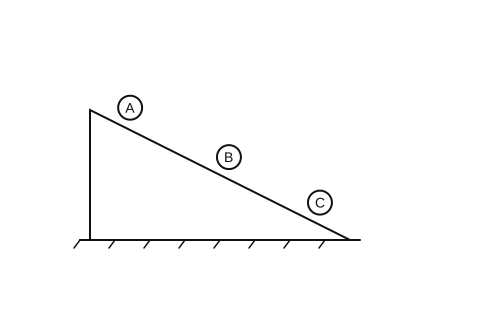
    A ball rolls down the frictionless ramp shown, from point A to point C, through point B. At which point does the ball have the greatest kinetic energy?

    A ramp sloping down to the right, with point A near the top, point B halfway down and point C near the bottom.
    1. Point B (middle)
    2. Point A (top)
    3. Point C (bottom)
    Show the answer

    Answer: Point C (bottom)

    On a frictionless ramp the ball keeps all its energy: every bit of potential energy it loses by dropping turns into kinetic energy.

    Point C is the lowest of the three points, so the ball has dropped the farthest there and moves fastest. Its kinetic energy is greatest at C.

    Point A, the top, is where the ball has the most potential energy and the least kinetic energy.

    At Point B the ball has only part of its drop behind it, so it is still speeding up.

  2. Item 2 of 15

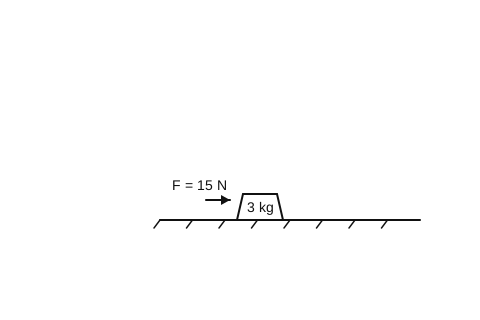
    A 3 kg block rests on a frictionless surface and is pushed by a force of 15 N, as shown. Find the block's acceleration.

    A 3 kg block on a flat, frictionless surface, pushed sideways by a 15 N force.
    1. 5 m/s²
    2. 2 m/s²
    3. 8 m/s²
    Show the answer

    Answer: 5 m/s²

    The surface is frictionless, so the net force is the 15 N push: a = F / m = 15 / 3 = 5 m/s².

    8 m/s² and 2 m/s² would need forces of 24 N and 6 N on the 3 kg block.

  3. Item 3 of 15

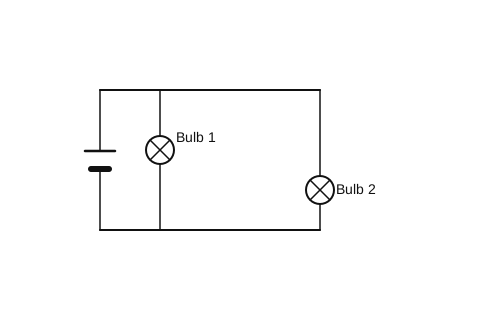
    The two bulbs shown are wired in parallel. If bulb 1 burns out, what happens to bulb 2?

    A battery wired to two bulbs, each bulb on its own branch between the top and bottom wires.
    1. It goes out too
    2. It gets brighter
    3. It stays lit, unaffected
    Show the answer

    Answer: It stays lit, unaffected

    In a parallel circuit each bulb has its own path back to the battery.

    When bulb 1 burns out, only its branch opens; bulb 2 keeps the same voltage and stays lit.

    Going out too is what a series circuit does, and bulb 2 does not get brighter because the voltage across it does not change.

  4. Item 4 of 15

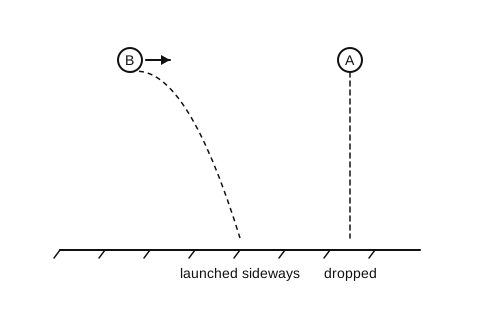
    Ball A is dropped straight down. At the same instant, from the same height, ball B is launched horizontally, as shown. Which ball spends more time falling before it lands?

    Ball A falling straight down and ball B curving away sideways, both from the same height to the ground.
    1. Ball A and Ball B fall for the same time
    2. Ball A falls for more time than Ball B does
    3. Ball B falls for more time than Ball A does
    Show the answer

    Answer: Ball A and Ball B fall for the same time

    Gravity pulls both balls down at the same rate, and a sideways speed does nothing to the vertical motion.

    From the same height, both reach the ground at the same time.

    Ball B lands farther away, not later, so neither ball falls for more time.

  5. Item 5 of 15

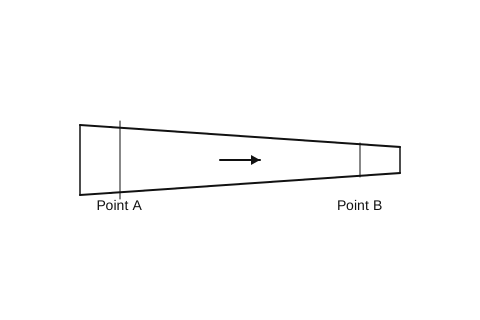
    The horizontal pipe shown carries a steady flow of an incompressible fluid. It narrows from point A to point B. Compared to point A, how do the fluid's speed and pressure change at point B?

    A horizontal pipe that narrows from point A on the left to point B on the right, with an arrow showing the direction of flow.
    1. Speed is higher and pressure is also higher at point B than at point A.
    2. Speed is higher and pressure is lower at point B than at point A.
    3. Speed and pressure are the same at points B and A.
    Show the answer

    Answer: Speed is higher and pressure is lower at point B than at point A.

    The same amount of fluid passes every point of the pipe each second, so where the pipe narrows, at point B, the fluid has to move faster.

    Bernoulli's principle: in a horizontal pipe, the pressure is lower where the fluid moves faster. At point B the speed is higher and the pressure is lower.

    Speed and pressure do not rise together, and they cannot stay the same, because the narrower section forces a faster flow.

  6. Item 6 of 15

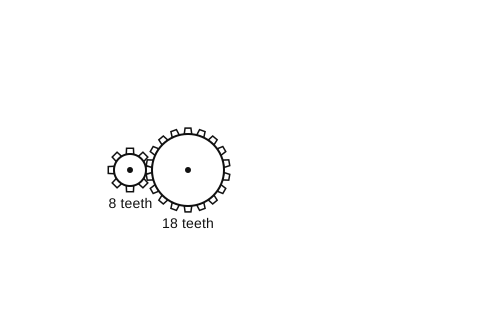
    Gear A (the driver) has 8 teeth and turns at 108 rpm. It meshes with Gear B, which has 18 teeth. Find Gear B's speed.

    An 8-tooth gear meshed with an 18-tooth gear.
    1. 48 rpm
    2. 108 rpm
    3. 243 rpm
    Show the answer

    Answer: 48 rpm

    At the mesh both gears pass the same number of teeth per minute: 8 × 108 = 864.

    Gear B: 864 / 18 = 48 rpm; the larger gear turns slower.

    108 rpm ignores the gear ratio, and 243 rpm inverts it, 108 × 18 / 8, making the larger gear faster.

  7. Item 7 of 15

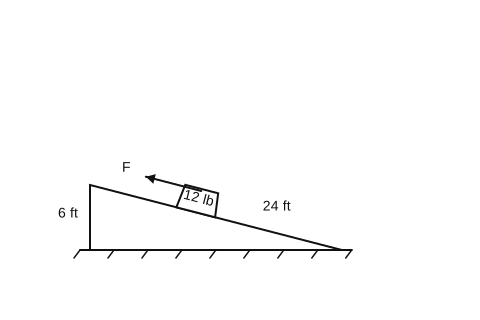
    A crate weighing 12 lb is pushed at constant velocity up a frictionless ramp 24 ft long that rises 6 ft. Find the work done.

    A 12 lb crate on a ramp 24 ft long and 6 ft high, with a force F pushing it up the slope.
    1. 72 ft-lb
    2. 288 ft-lb
    3. 48 ft-lb
    Show the answer

    Answer: 72 ft-lb

    On a frictionless ramp, pushing the crate to the top takes the same work as lifting it straight up the ramp's height.

    Work = weight × height = 12 × 6 = 72 ft-lb. The ramp cuts the push to 12 × 6 / 24 = 3 lb, but over 24 ft: 3 × 24 = 72 ft-lb.

    288 ft-lb multiplies the full weight by the ramp's length, 12 × 24, and 48 ft-lb multiplies the weight by the ramp's mechanical advantage, 12 × 24 / 6, which is not a work quantity.

  8. Item 8 of 15

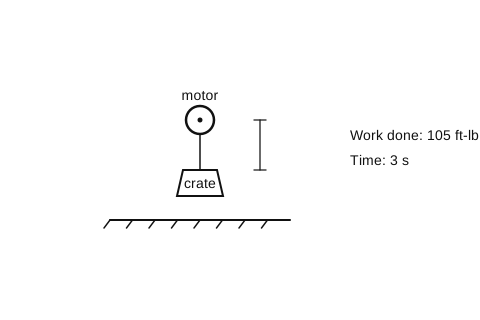
    A motor does 105 ft-lb of work in 3 seconds. Find the power delivered by the motor.

    A motor lifting a crate, labeled with the work done, 105 ft-lb, and the time, 3 s.
    1. 18 ft-lb/s
    2. 3 ft-lb/s
    3. 35 ft-lb/s
    Show the answer

    Answer: 35 ft-lb/s

    Power is work divided by time: 105 / 3 = 35 ft-lb/s.

    3 ft-lb/s repeats the time, and 18 ft-lb/s would mean the same work spread over about 6 seconds.

  9. Item 9 of 15

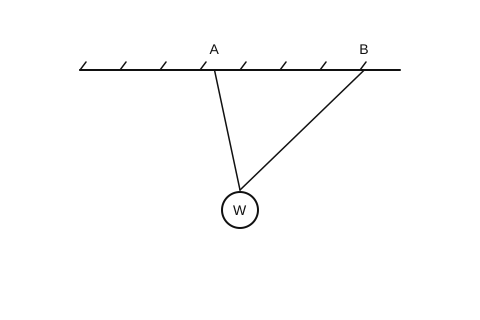
    The weight hangs at rest from two ropes anchored to the ceiling at different angles, as shown. Which rope is under greater tension?

    A weight W hanging from two ropes tied to the ceiling, rope A close to vertical and rope B slanting at about 44 degrees.
    1. Rope A
    2. Rope B
    3. Both ropes carry equal tension
    Show the answer

    Answer: Rope A

    The two ropes pull sideways in opposite directions, and those sideways pulls must cancel. A steep rope gets little sideways pull from each pound of tension, so it needs more tension.

    Rope A is drawn close to vertical, about 78 degrees above the ceiling line, and Rope B at about 44 degrees. Balancing T_A × cos 78 = T_B × cos 44 gives T_A about 3.5 times T_B.

    Rope B is the shallower rope, so it carries the smaller tension, even though it is longer.

    Equal tension would need the two ropes at the same angle.

  10. Item 10 of 15

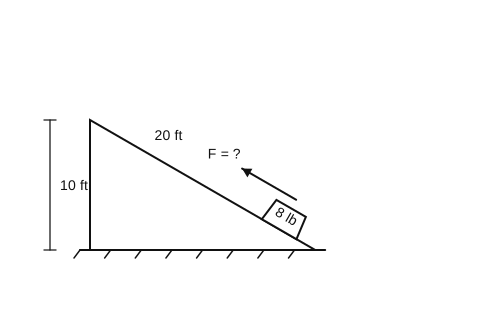
    An 8 lb crate sits at the bottom of the frictionless ramp shown. Find the force F needed to push the crate up the ramp at a constant, steady speed.

    An 8 lb crate at the foot of a ramp 20 ft long and 10 ft high, with a force F pointing up the slope.
    1. 16 lb
    2. 10 lb
    3. 4 lb
    Show the answer

    Answer: 4 lb

    A ramp's ideal mechanical advantage is length over height: 20 / 10 = 2.

    F = 8 / 2 = 4 lb.

    16 lb multiplies the weight by 2 instead of dividing, and 10 lb is the ramp's height, not a force.

  11. Item 11 of 15

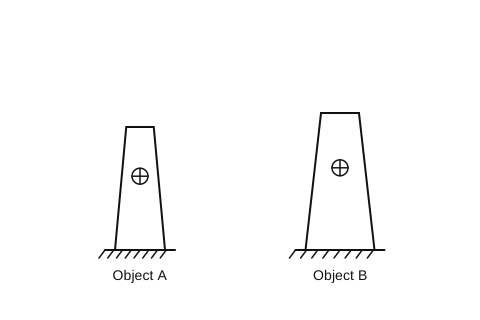
    Objects A and B are shown with their base width and height to scale. If both are tilted slowly from the side, which one tips over FIRST (at the smaller tilt angle)?

    Two tapered objects standing on the ground, Object A and Object B, each with its center of gravity marked.
    1. Object A
    2. Object B
    3. They tip at the same angle
    Show the answer

    Answer: Object A

    An object tips once its center of gravity passes over the edge of its base, so a narrow base under a high center of gravity tips sooner.

    Object A has the smaller ratio of base width to center-of-gravity height, so it tips first.

    Object B is taller, but its wider base more than makes up for it; with different ratios, the two cannot tip at the same angle.

  12. Item 12 of 15

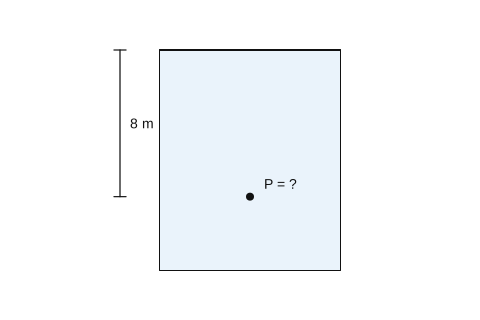
    A point in a tank of fresh water is 8 m below the surface. Find the water pressure at that depth (ignore atmospheric pressure at the surface). Use g = 9.8 m/s².

    A tank of water with a point marked 8 m below the surface.
    1. 156.8 kPa
    2. 78.4 kPa
    3. 80 kPa
    Show the answer

    Answer: 78.4 kPa

    Water pressure is density × g × depth: 1,000 kg/m³ × 9.8 m/s² × 8 m = 78,400 Pa, or 78.4 kPa (9.8 kPa for each meter).

    156.8 kPa doubles the answer, as at 16 m, and 80 kPa comes from rounding g up to 10 m/s², which the stem rules out.

  13. Item 13 of 15

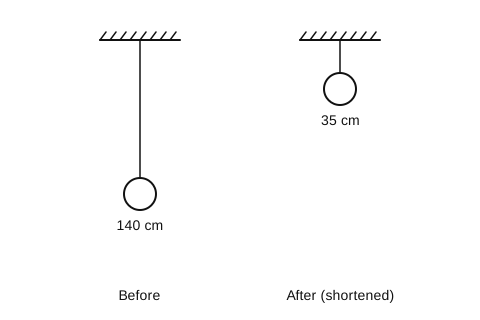
    A pendulum of length 140 cm completes 27 oscillations per minute. If the string is shortened to 35 cm, how many oscillations per minute will it complete?

    A pendulum with a 140 cm string before, and the same pendulum with a 35 cm string after shortening.
    1. 13 osc/min
    2. 216 osc/min
    3. 54 osc/min
    Show the answer

    Answer: 54 osc/min

    A pendulum's period grows with the square root of its length, so its rate falls with the square root.

    The length drops to a quarter, 140 / 35 = 4, and the square root of 4 is 2, so the rate doubles: 27 × 2 = 54 osc/min.

    13 osc/min halves the rate, as if a shorter pendulum swung slower, and 216 osc/min multiplies by 8 instead of 2.

  14. Item 14 of 15

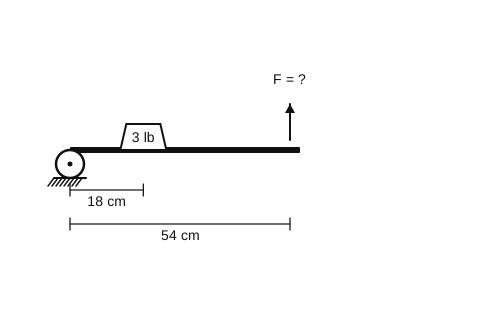
    The wheelbarrow has its wheel (the fulcrum) at the left. The load shown rests between the wheel and the handles. Find the upward effort force F needed at the handles to lift the load.

    A wheelbarrow drawn as a bar with the wheel at the left end, a 3 lb load 18 cm from the wheel, and an upward force F at the handles, 54 cm from the wheel.
    1. 9 lb
    2. 3 lb
    3. 1 lb
    Show the answer

    Answer: 1 lb

    The wheel is the pivot. The load's turning effect about the wheel, 3 lb × 18 cm = 54 lb-cm, must equal the effort's, F × 54 cm.

    F = 54 / 54 = 1 lb: the handles are three times as far from the wheel as the load, so the effort is a third of the load.

    3 lb is the load itself, as if it sat at the handles, and 9 lb inverts the ratio, 3 × 54 / 18, making the effort larger than the load.

  15. Item 15 of 15

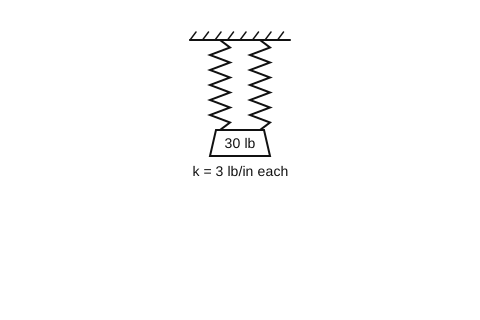
    Two identical springs, each with constant k = 3 lb/in, are arranged in parallel to support a 30 lb weight, as shown. Find how far the springs stretch.

    A 30 lb weight hanging from two springs side by side, labeled k = 3 lb/in each.
    1. 2 in
    2. 20 in
    3. 5 in
    Show the answer

    Answer: 5 in

    Springs side by side share the load, so their constants add: 3 + 3 = 6 lb/in.

    x = F / k = 30 / 6 = 5 in.

    20 in treats the springs as joined end to end, with k = 1.5 lb/in, and 2 in would need a constant of 15 lb/in.

Aviation and Nautical Information

15 questions

  1. Item 1 of 15

    Which term names the front of a ship?

    1. The bow
    2. The stern
    3. The waist
    4. The hull
    Show the answer

    Answer: The bow

    The bow is the front of a ship.

    The stern is the rear, at the opposite end.

    The waist is the middle of the upper deck, and the hull is the ship's whole body.

  2. Item 2 of 15

    Movement of an airplane around its longitudinal axis, which passes from nose to tail, is called

    1. pitch
    2. roll
    3. yaw
    4. sweep
    Show the answer

    Answer: roll

    Movement around the longitudinal axis, from nose to tail, is roll.

    Pitch turns the airplane around the lateral axis, and yaw around the vertical axis.

    Sweep is the backward angle of a wing, not a movement.

  3. Item 3 of 15

    Which gas makes up approximately 78 percent of the atmosphere by volume?

    1. Oxygen
    2. Argon
    3. Nitrogen
    4. Carbon dioxide
    Show the answer

    Answer: Nitrogen

    Nitrogen makes up about 78 percent of the atmosphere.

    Oxygen comes second, at about 21 percent.

    Argon and carbon dioxide belong to the last 1 percent.

  4. Item 4 of 15

    On December 17, 1903, at Kitty Hawk, North Carolina, the first successful man-carrying, power-driven airplane flight in history was made by

    1. Orville Wright
    2. Wilbur Wright
    3. Samuel Langley
    4. Otto Lilienthal
    Show the answer

    Answer: Orville Wright

    Orville Wright piloted the first powered flight at Kitty Hawk on December 17, 1903.

    Wilbur flew later that same day, not first.

    Langley's Aerodrome failed to fly in 1903, and Lilienthal, a glider pioneer, had died in 1896.

  5. Item 5 of 15

    On an airspeed indicator, the never-exceed speed is marked by the

    1. yellow arc
    2. green arc
    3. red line
    4. blue line
    Show the answer

    Answer: red line

    The red line marks the never-exceed speed.

    The green arc is the normal operating range, and the yellow arc a caution range for smooth air only.

    The blue line on a light twin marks the best single-engine rate-of-climb speed.

  6. Item 6 of 15

    The first aircraft to cross the Atlantic Ocean by air, arriving at Plymouth, England on May 31, 1919, was

    1. the NC-1
    2. the NC-3
    3. the NC-4
    4. the C-5
    Show the answer

    Answer: the NC-4

    The NC-4, a Navy flying boat commanded by Lieutenant Commander Albert C. Read, crossed by way of Newfoundland, the Azores and Lisbon and reached Plymouth on May 31, 1919.

    The NC-1 and NC-3, the two other Navy flying boats that set out with her, both came down at sea short of the Azores and never finished the crossing.

    The C-5 was a Navy airship, not one of the flying boats; it reached Newfoundland in May 1919 but broke loose from its moorings there and never crossed the ocean.

  7. Item 7 of 15

    The distance from a ship's waterline up to her main deck is called

    1. the ship's draft
    2. the ship's beam
    3. the ship's displacement
    4. the ship's freeboard
    Show the answer

    Answer: the ship's freeboard

    Freeboard is the height from the waterline up to the main deck.

    Draft is the depth from the waterline down to the keel, and beam is the ship's width.

    Displacement is the ship's weight, not a distance.

  8. Item 8 of 15

    In a standard left-hand traffic pattern, after flying the downwind leg a pilot turns onto the leg that runs perpendicular to the runway before turning onto final. This is the

    1. crosswind leg
    2. upwind leg
    3. base leg
    4. departure leg
    Show the answer

    Answer: base leg

    After the downwind leg, the base leg runs perpendicular to the runway, just before final.

    The crosswind leg is also perpendicular, but it is flown after takeoff, before downwind.

    The upwind and departure legs run in the runway's direction.

  9. Item 9 of 15

    Radiation fog typically forms in low-lying areas on clear nights with little wind because the

    1. surrounding air is compressed adiabatically, raising its temperature to the dew point
    2. ground absorbs enough solar heat during the day to warm the air to its dew point after sunset
    3. wind carries warm, moist air over the cooler low-lying ground, chilling it to its dew point
    4. ground loses heat rapidly after sunset, chilling the surrounding air to its dew point
    Show the answer

    Answer: ground loses heat rapidly after sunset, chilling the surrounding air to its dew point

    On a clear, calm night the ground loses heat fast and chills the air above it to its dew point.

    Warming the air, by compression or by the day's heat, moves it away from its dew point.

    Warm, moist air carried by wind over cooler ground makes advection fog.

  10. Item 10 of 15

    The freewheeling unit automatically disengages the engine from the main rotor whenever

    1. engine rpm falls below main rotor rpm
    2. the pilot moves the cyclic control fully forward
    3. the collective is lowered to the full-down position
    4. the engine overheats while still driving the main rotor
    Show the answer

    Answer: engine rpm falls below main rotor rpm

    The freewheeling unit disengages the engine whenever engine rpm falls below rotor rpm.

    That lets the rotor keep turning in autorotation after an engine failure.

    Cyclic and collective position and engine temperature do not trigger it.

  11. Item 11 of 15

    Before entering Class C or Class D airspace, a pilot must first

    1. file an IFR flight plan regardless of weather conditions
    2. obtain a written clearance from the airport's fixed-base operator
    3. contact the nearest flight service station for a standard weather briefing before departure
    4. establish two-way radio communications with the controlling ATC facility
    Show the answer

    Answer: establish two-way radio communications with the controlling ATC facility

    Class C and Class D airspace both require two-way radio contact with the controlling ATC facility before entry.

    A VFR flight may enter either class without an IFR flight plan.

    A fixed-base operator issues no clearance, and a weather briefing is not an entry requirement.

  12. Item 12 of 15

    A vessel is approaching another vessel, and its compass bearing does not appreciably change. Under the Navigation Rules, this situation means

    1. a risk of collision is deemed to exist
    2. the two vessels are in a narrow channel
    3. the other vessel is being overtaken
    4. restricted visibility is deemed to exist
    Show the answer

    Answer: a risk of collision is deemed to exist

    A compass bearing that does not appreciably change means a risk of collision is deemed to exist.

    A narrow channel and restricted visibility describe the waterway and the weather, not a bearing.

    Overtaking means coming up from more than 22.5° abaft the other vessel's beam.

  13. Item 13 of 15

    Carburetor ice can form even when the outside air temperature is as high as 100 degrees Fahrenheit because

    1. the outside air must already be at or below freezing, and the fuel must be cold as well
    2. the drop in air pressure and the vaporization of fuel in the venturi sharply cool the carburetor
    3. the carburetor heat system stops working correctly once outside air rises above 70 degrees Fahrenheit
    4. high relative humidity by itself is sufficient to freeze the throttle valve regardless of temperature
    Show the answer

    Answer: the drop in air pressure and the vaporization of fuel in the venturi sharply cool the carburetor

    Fuel vaporization and the pressure drop in the venturi sharply cool the air inside the carburetor, so ice can form on a hot day.

    The outside air need not be freezing, and humidity freezes nothing without that cooling.

    Carburetor heat is the pilot's remedy and has no 70 °F limit.

  14. Item 14 of 15

    An aircraft flying straight and level on an easterly heading accelerates. Because of acceleration error, the magnetic compass will briefly indicate a turn toward

    1. south
    2. east
    3. west
    4. north
    Show the answer

    Answer: north

    On an east or west heading, the compass shows a turn toward north when the aircraft accelerates: ANDS, Accelerate North, Decelerate South.

    A turn toward south shows when it decelerates.

    On that heading the error swings the card toward north or south, never toward east or west.

  15. Item 15 of 15

    A mariner sights a vessel showing three all-round lights in a vertical line, the highest and lowest red and the middle one white. This vessel is

    1. at anchor and aground
    2. not under command
    3. restricted in her ability to maneuver
    4. engaged in trawling
    Show the answer

    Answer: restricted in her ability to maneuver

    Red, white, red all-round lights in a vertical line mark a vessel restricted in her ability to maneuver.

    A vessel not under command shows two all-round red lights, and a trawler green over white.

    A vessel aground shows her anchor lights plus two all-round red lights.

Terrain Identification

15 questions

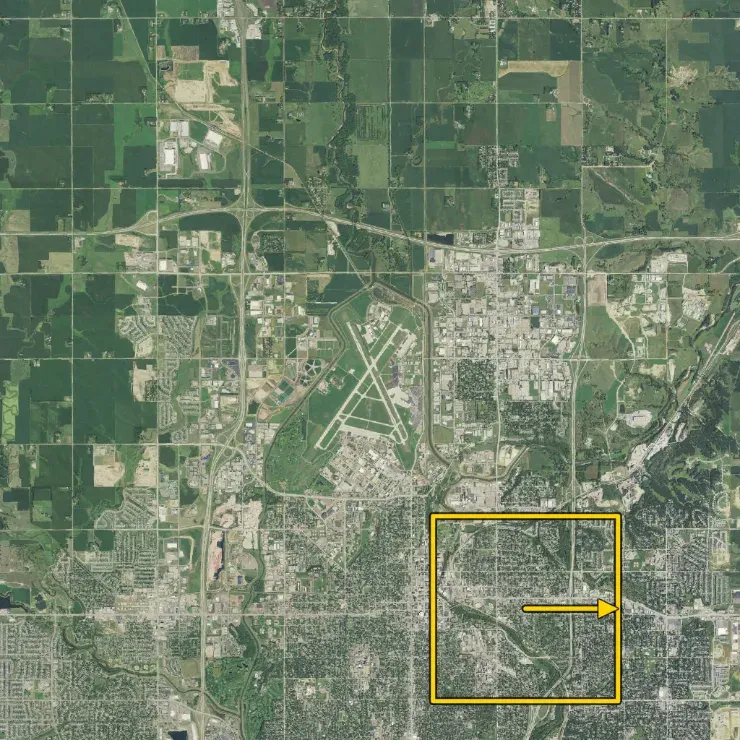
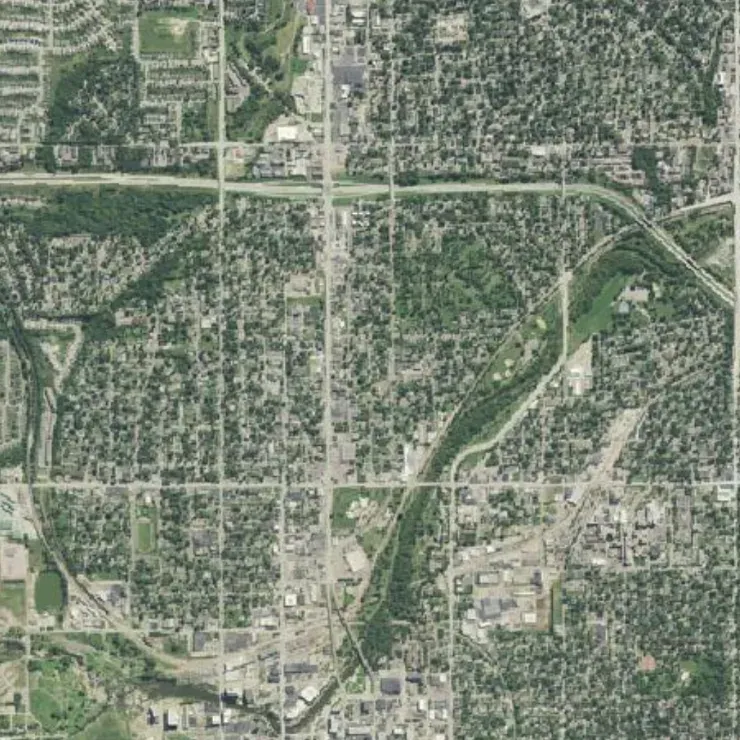
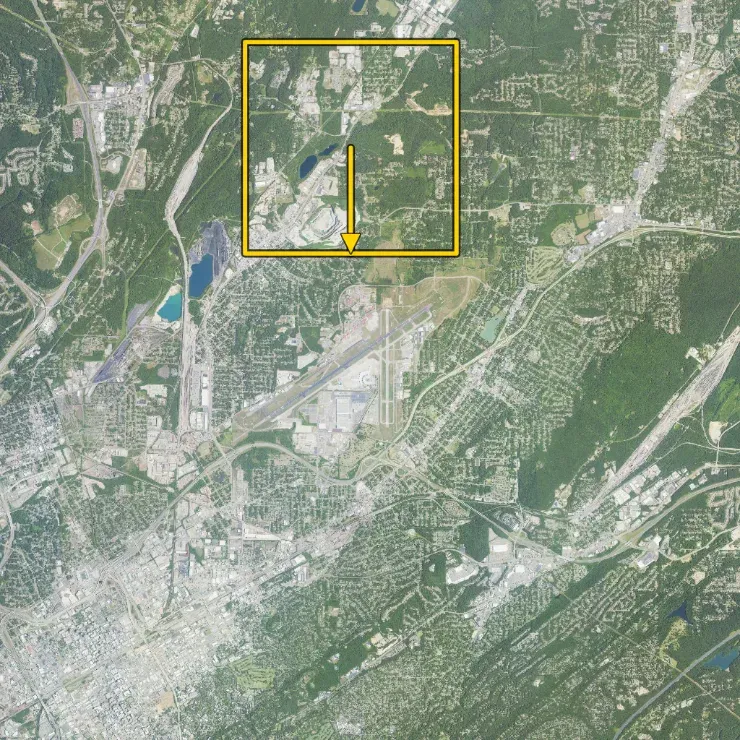
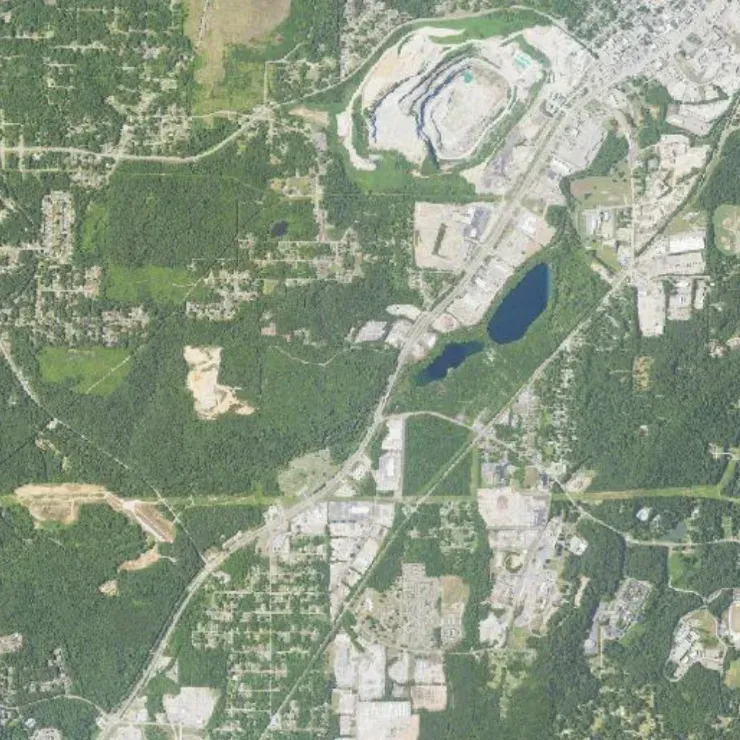
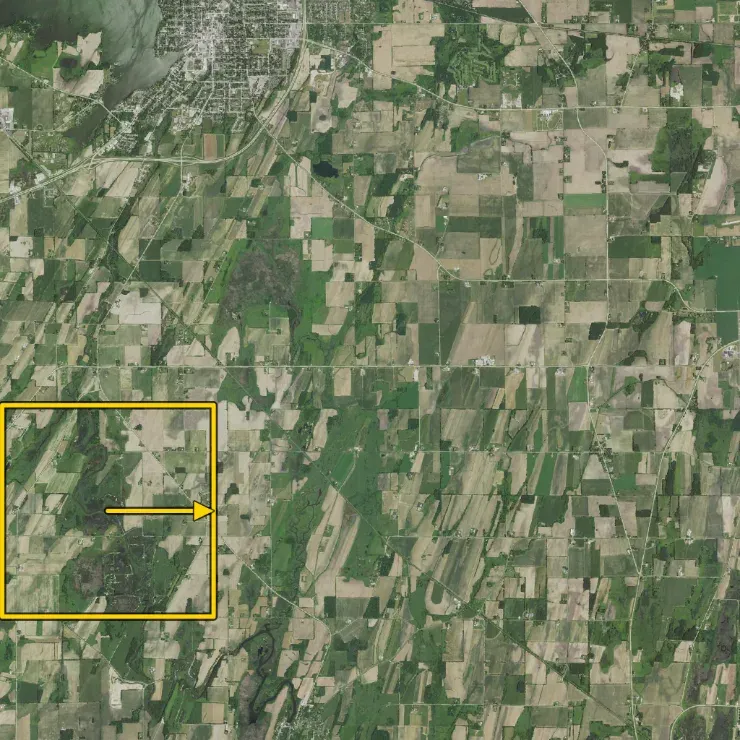
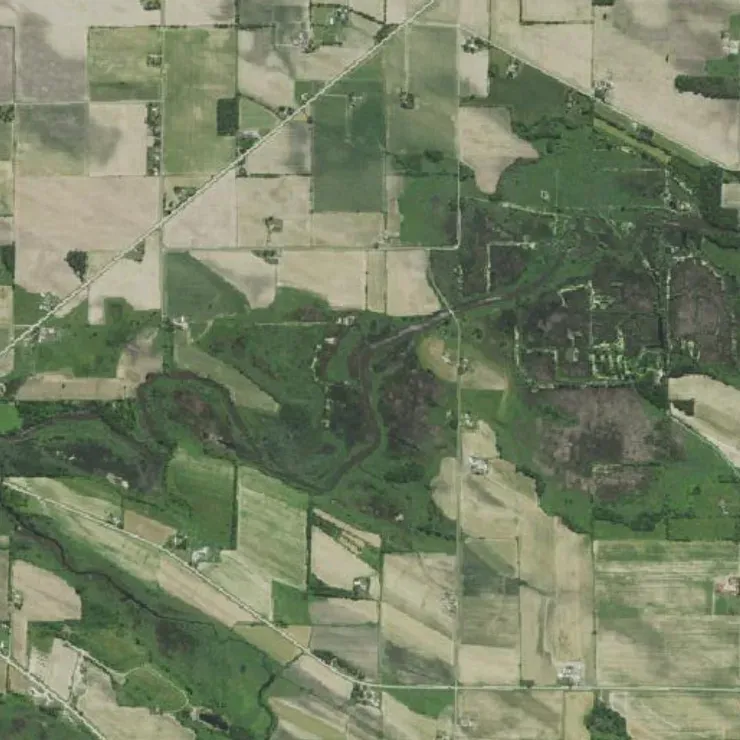
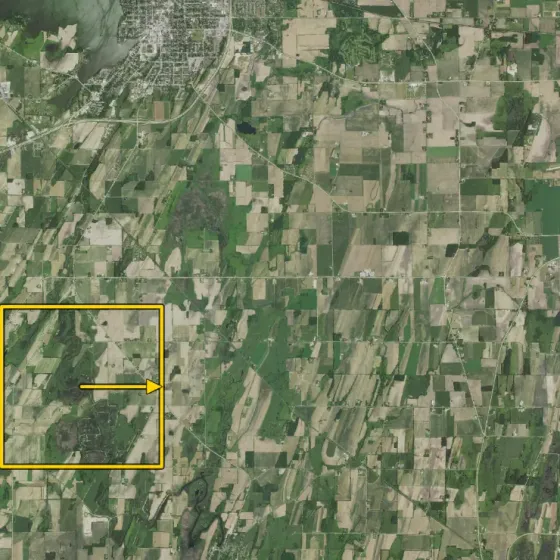
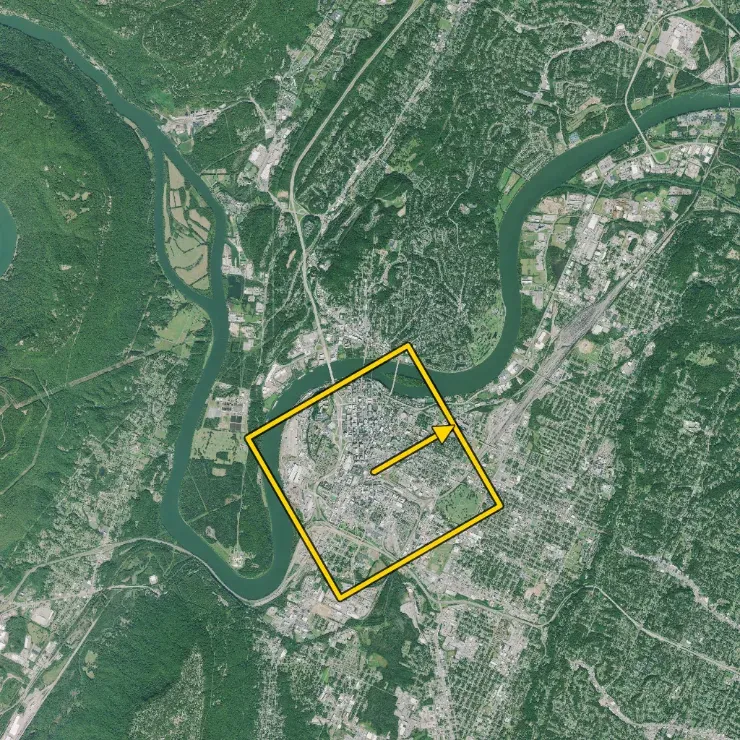
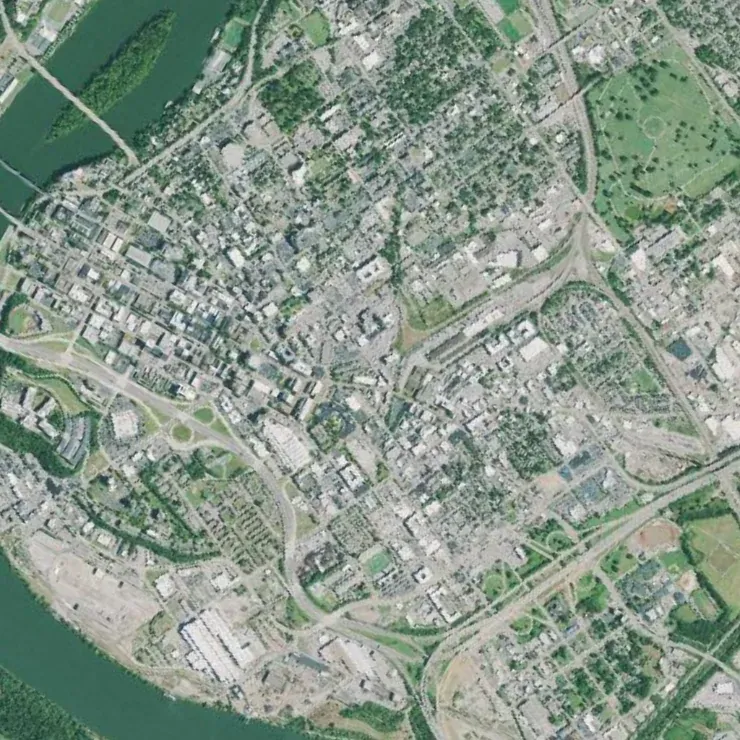
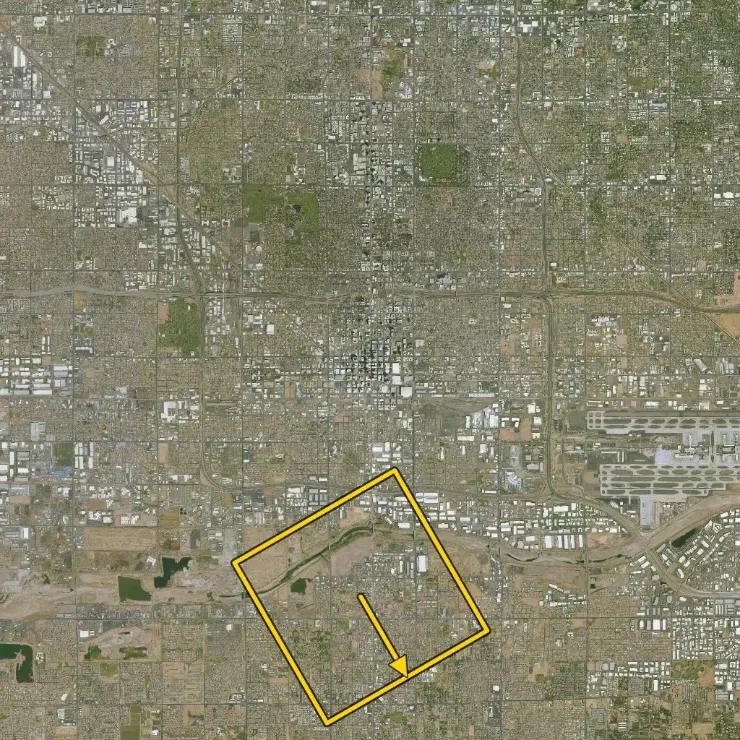
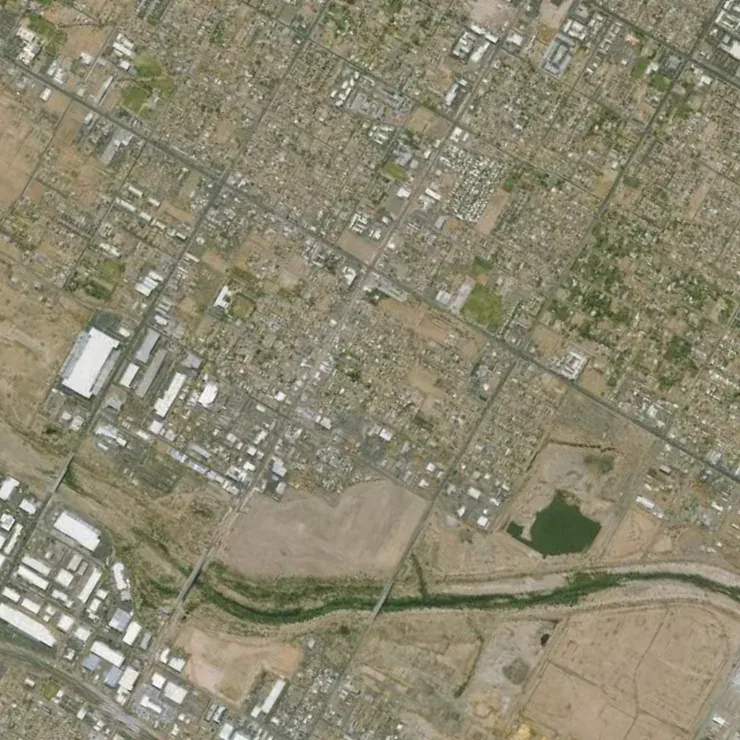
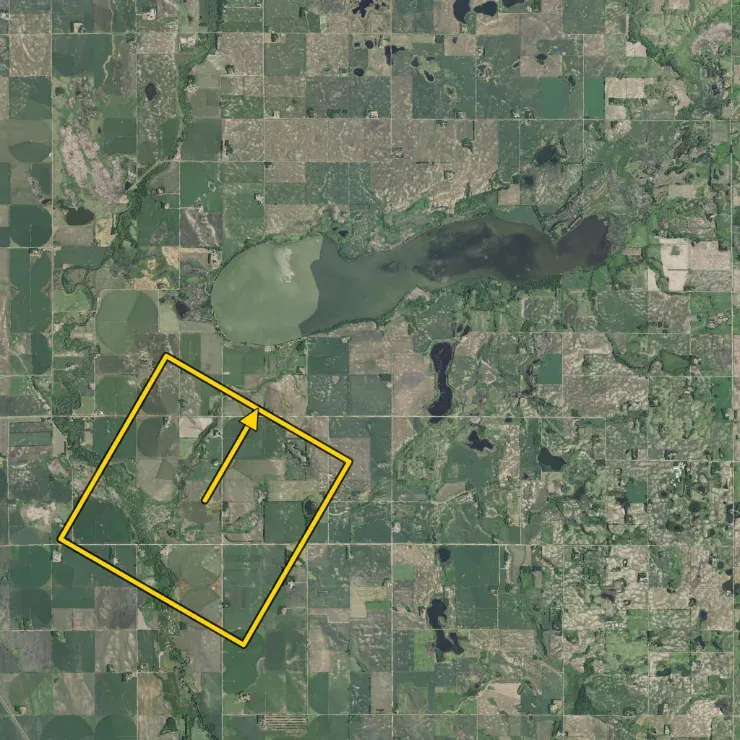
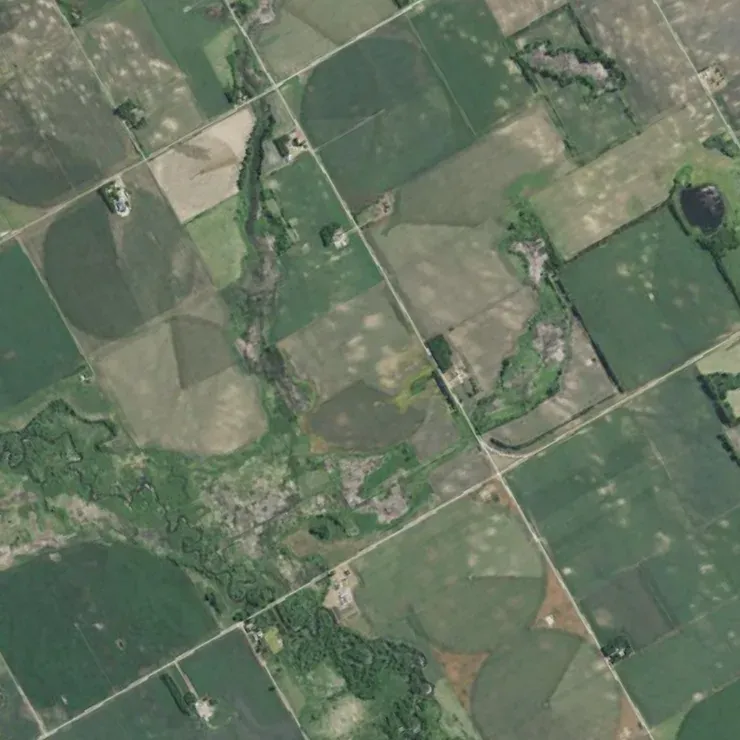
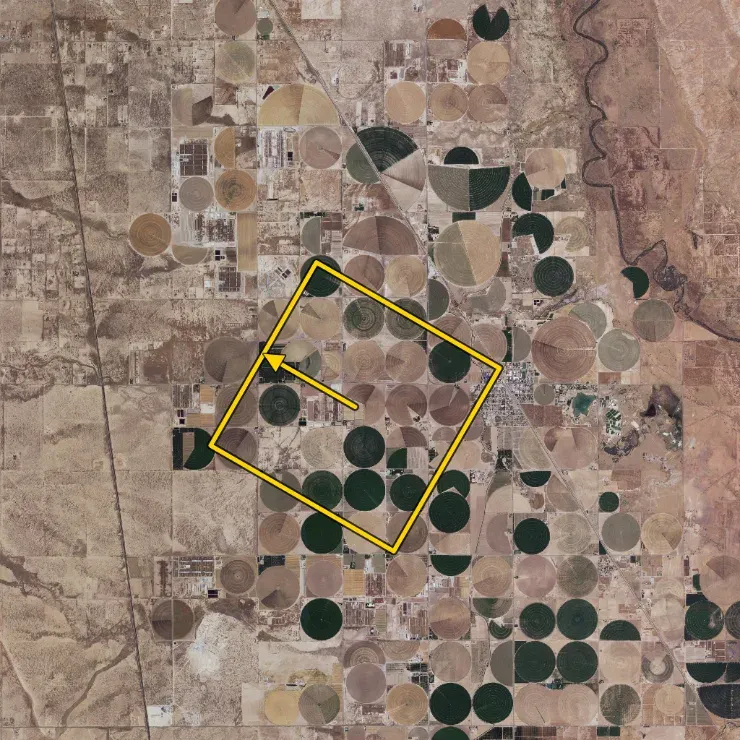
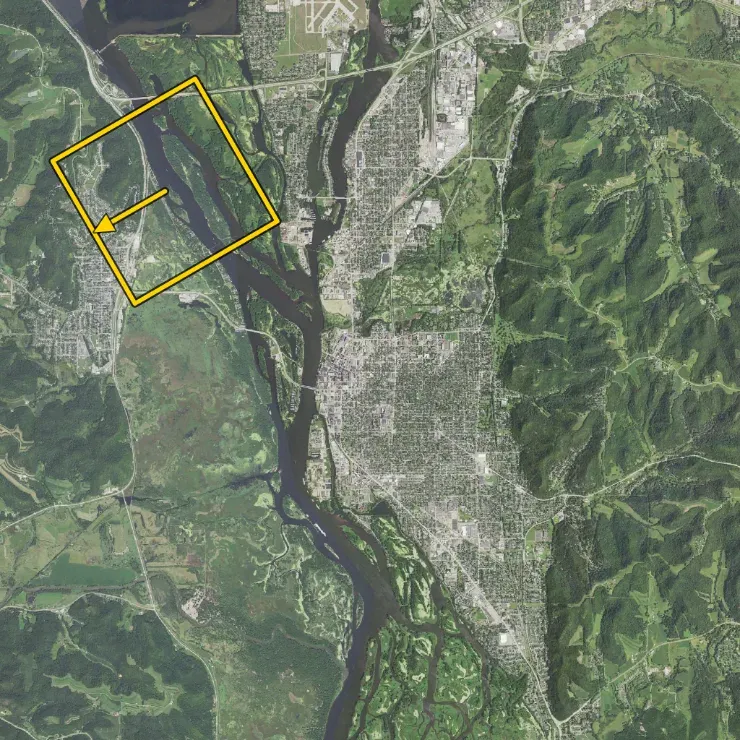
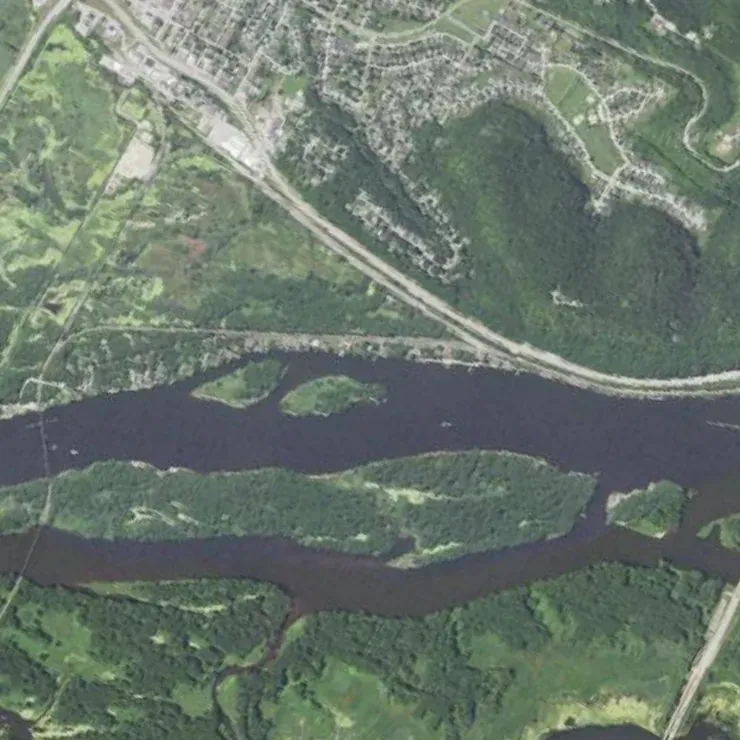
  1. Item 1 of 15

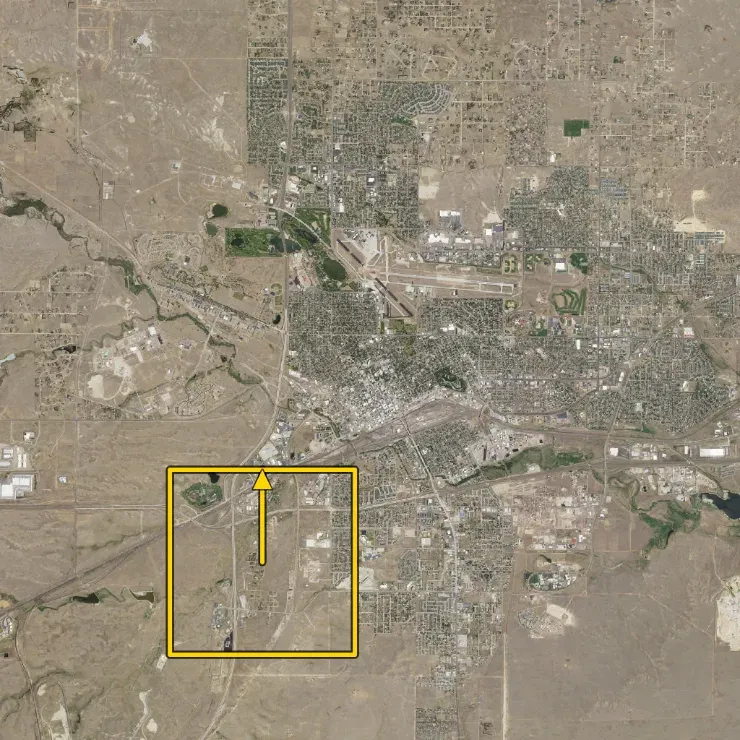
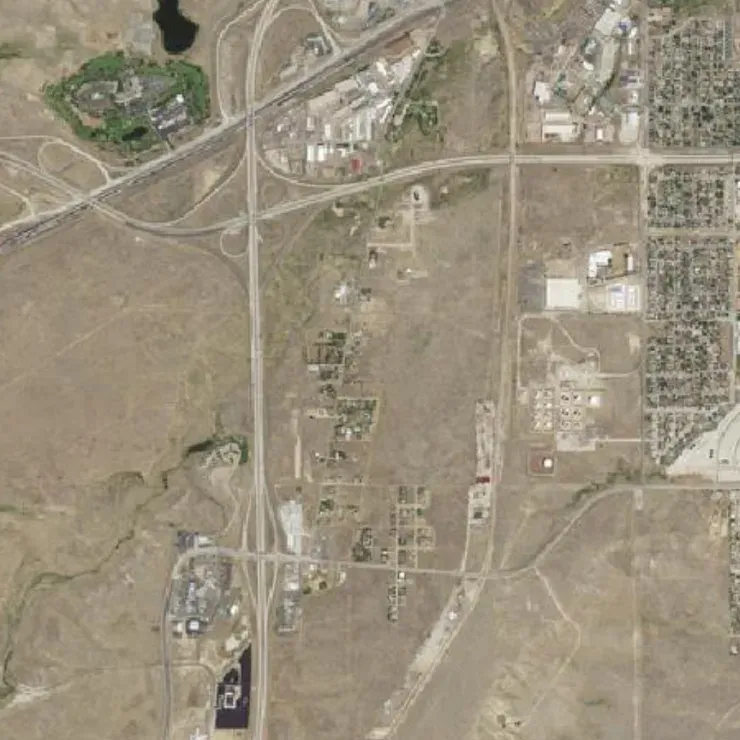
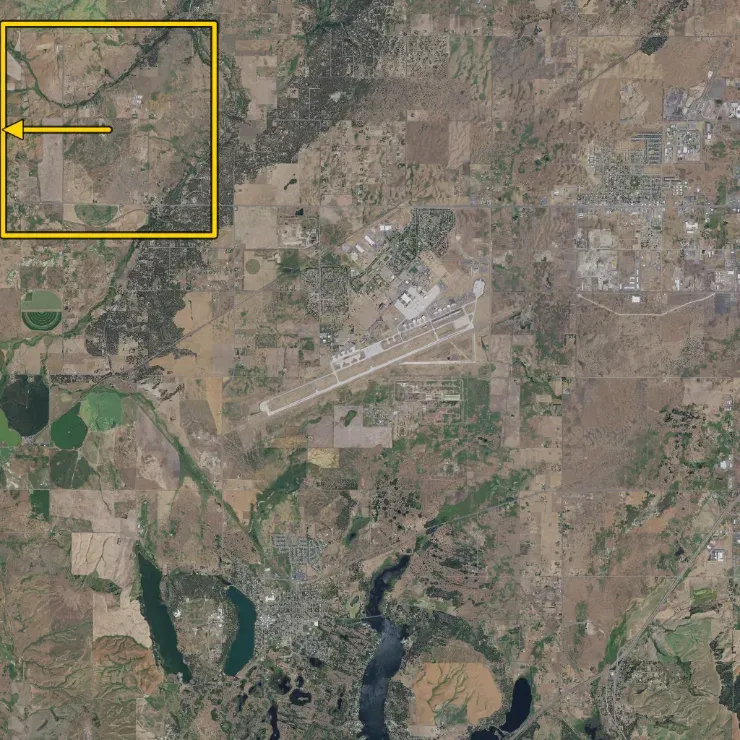
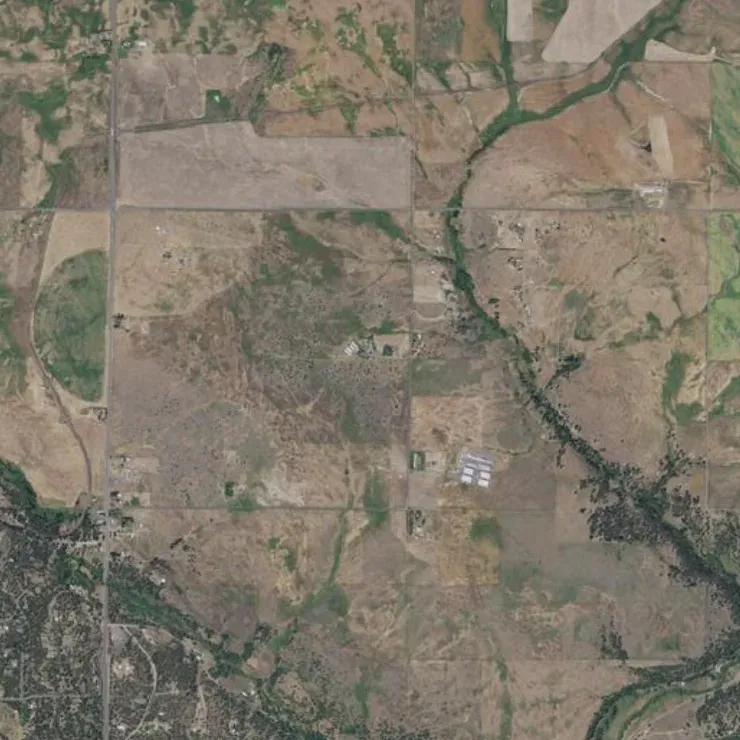
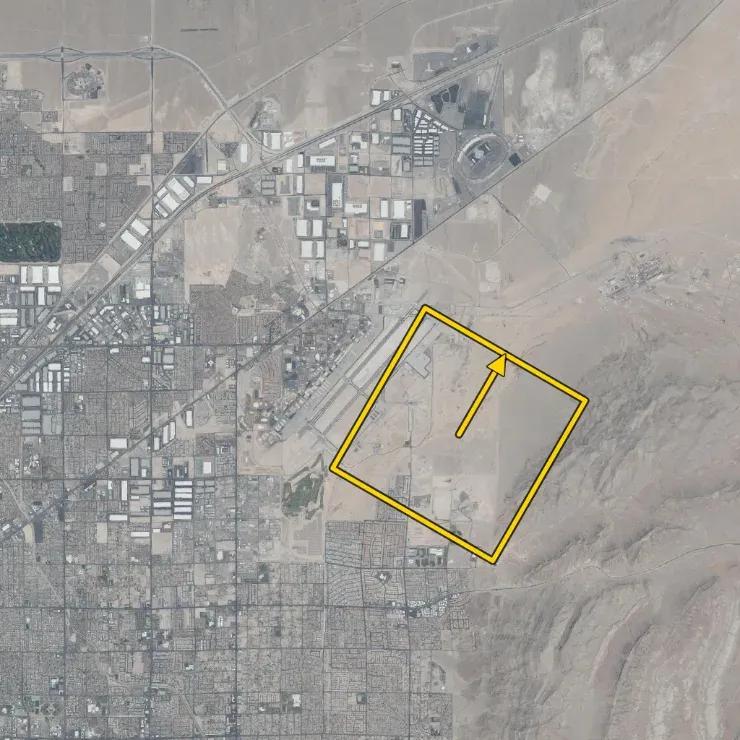
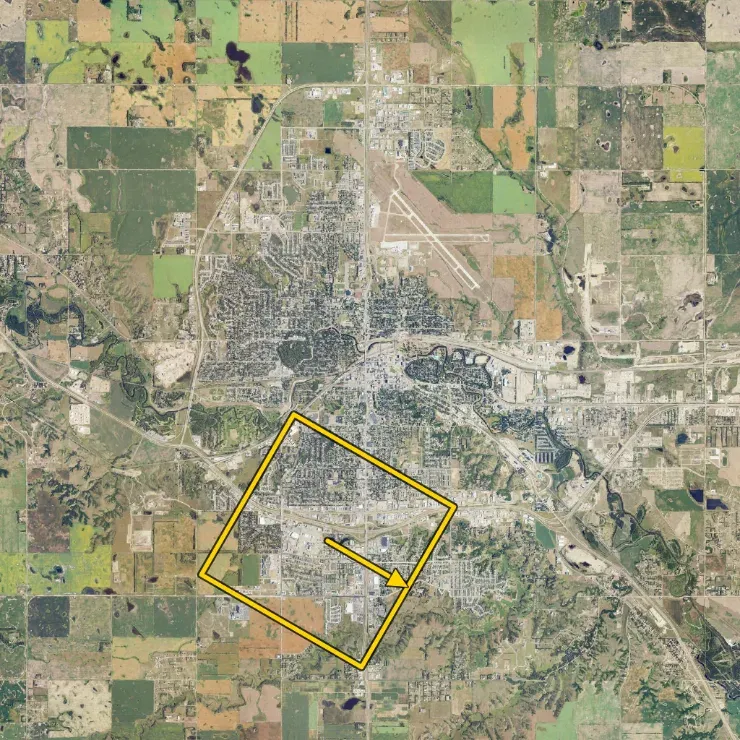
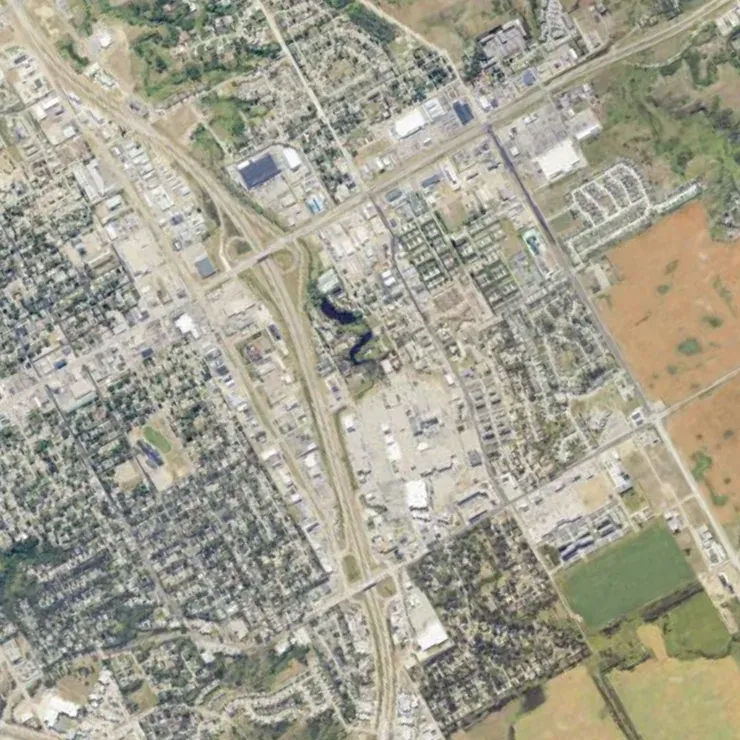
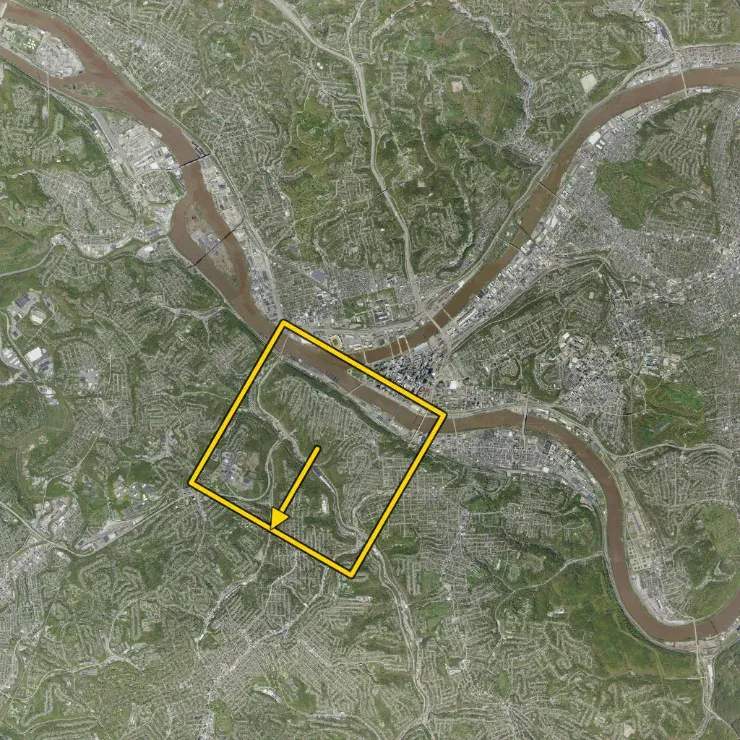
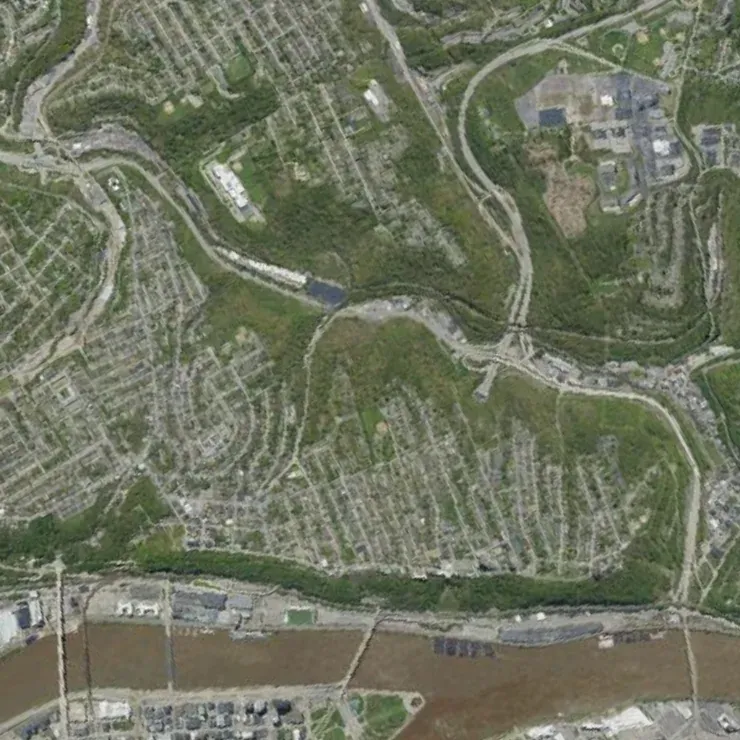
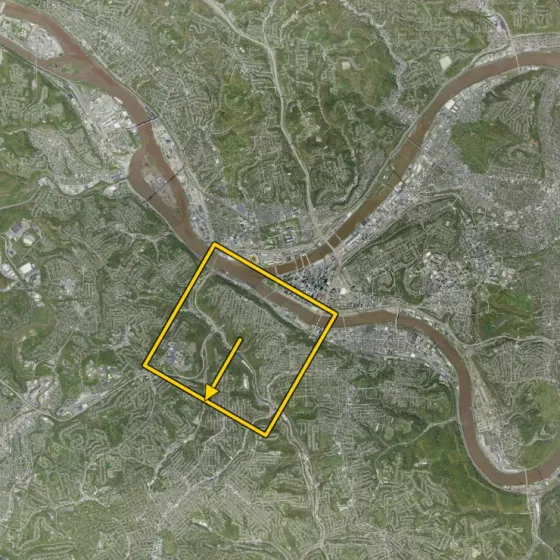
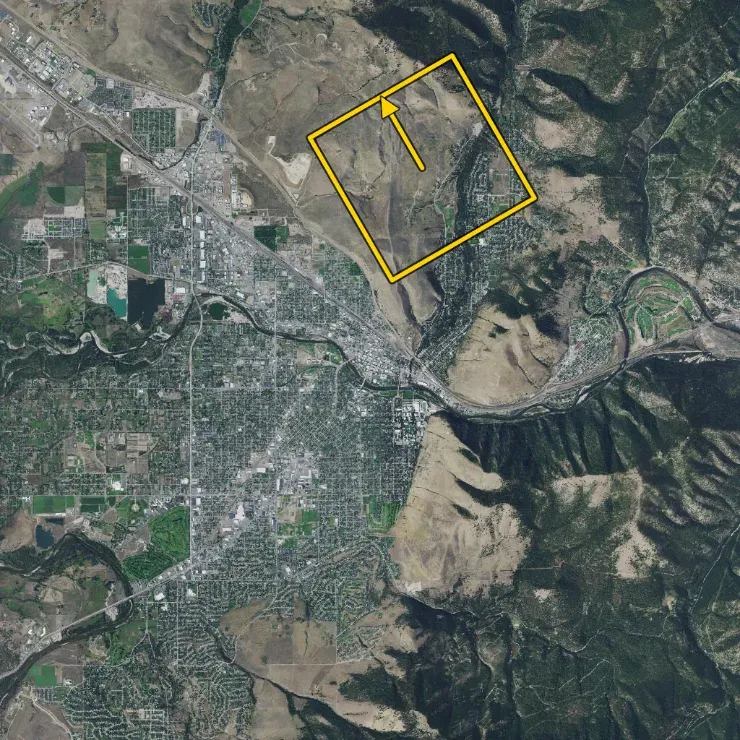
    Reference MapCamera View
    Reference Map, item 1: an aerial view of an area, north at the top.The Reference Map with the Camera View outlined; its arrow points north.
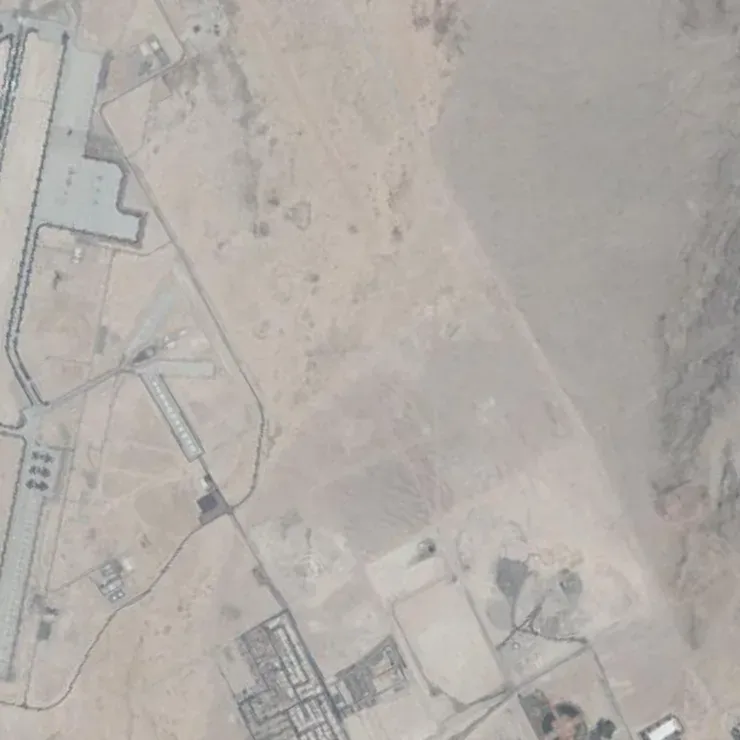
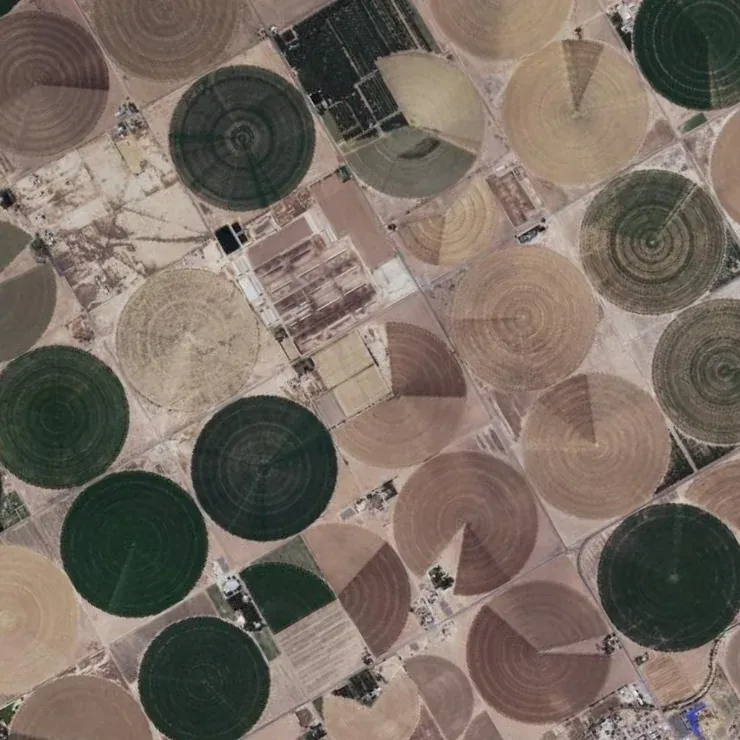
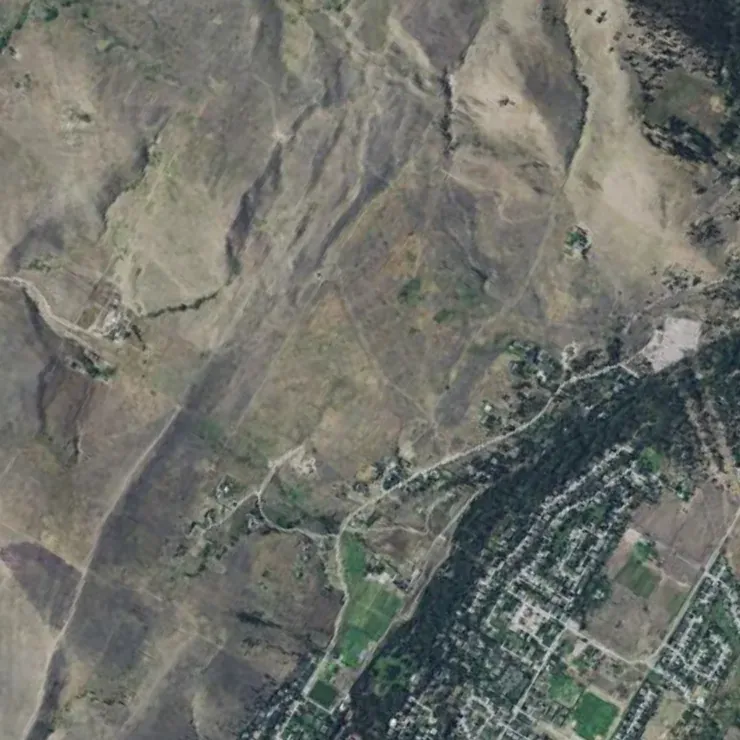
    Camera View, item 1: part of the same area, turned and enlarged, as seen from the vehicle.
    1. north
    2. 30°
    3. 60°
    4. east
    5. 120°
    6. 150°
    7. south
    8. 210°
    9. 240°
    10. west
    11. 300°
    12. 330°

    What direction is your vehicle traveling?

    Show the answer

    Answer: N

    The highway stands upright and the railroad climbs to the right in both images.

    The green patch with its pond sits upper left in both images.

    The view is only enlarged, so the vehicle heads north.

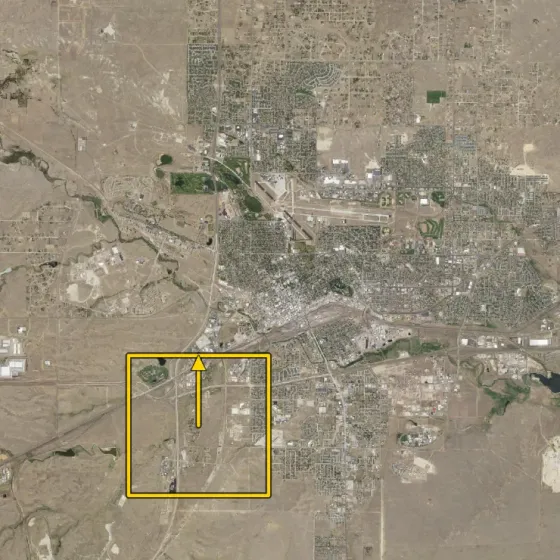
    The Reference Map with the Camera View outlined; its arrow points north.
  2. Item 2 of 15

    Reference MapCamera View
    Reference Map, item 2: an aerial view of an area, north at the top.The Reference Map with the Camera View outlined; its arrow points east.
    Camera View, item 2: part of the same area, turned and enlarged, as seen from the vehicle.
    1. north
    2. 30°
    3. 60°
    4. east
    5. 120°
    6. 150°
    7. south
    8. 210°
    9. 240°
    10. west
    11. 300°
    12. 330°

    What direction is your vehicle traveling?

    Show the answer

    Answer: E

    On the map, a highway runs north-south just east of the wooded river valley.

    In the view, that highway runs across the top, above the valley.

    East is at the top of the view: the vehicle heads east.

    The Reference Map with the Camera View outlined; its arrow points east.
  3. Item 3 of 15

    Reference MapCamera View
    Reference Map, item 3: an aerial view of an area, north at the top.The Reference Map with the Camera View outlined; its arrow points south.
    Camera View, item 3: part of the same area, turned and enlarged, as seen from the vehicle.
    1. north
    2. 30°
    3. 60°
    4. east
    5. 120°
    6. 150°
    7. south
    8. 210°
    9. 240°
    10. west
    11. 300°
    12. 330°

    What direction is your vehicle traveling?

    Show the answer

    Answer: S

    On the map, the quarry pit lies just south of the two dark ponds.

    In the view, the quarry is near the top, above the ponds.

    The view is turned upside down: the vehicle heads south.

    The Reference Map with the Camera View outlined; its arrow points south.
  4. Item 4 of 15

    Reference MapCamera View
    Reference Map, item 4: an aerial view of an area, north at the top.The Reference Map with the Camera View outlined; its arrow points west.
    Camera View, item 4: part of the same area, turned and enlarged, as seen from the vehicle.
    1. north
    2. 30°
    3. 60°
    4. east
    5. 120°
    6. 150°
    7. south
    8. 210°
    9. 240°
    10. west
    11. 300°
    12. 330°

    What direction is your vehicle traveling?

    Show the answer

    Answer: W

    On the map, the wooded neighborhood lies southeast of the fields, and the creek winds along their north side.

    In the view, the wooded neighborhood fills the lower left and the creek runs down the right side.

    East is at the bottom and north at the right: the vehicle heads west.

    The Reference Map with the Camera View outlined; its arrow points west.
  5. Item 5 of 15

    Reference MapCamera View
    Reference Map, item 5: an aerial view of an area, north at the top.The Reference Map with the Camera View outlined; its arrow points east.
    Camera View, item 5: part of the same area, turned and enlarged, as seen from the vehicle.
    1. north
    2. 30°
    3. 60°
    4. east
    5. 120°
    6. 150°
    7. south
    8. 210°
    9. 240°
    10. west
    11. 300°
    12. 330°

    What direction is your vehicle traveling?

    Show the answer

    Answer: E

    On the map, the dark marsh lies south of the farmland, whose strips run southwest to northeast.

    In the view, the marsh fills the right side and the strips run from lower right to upper left.

    South is at the right, so east is at the top: the vehicle heads east.

    The Reference Map with the Camera View outlined; its arrow points east.
  6. Item 6 of 15

    Reference MapCamera View
    Reference Map, item 6: an aerial view of an area, north at the top.The Reference Map with the Camera View outlined; its arrow points 30 degrees.
    Camera View, item 6: part of the same area, turned and enlarged, as seen from the vehicle.
    1. north
    2. 30°
    3. 60°
    4. east
    5. 120°
    6. 150°
    7. south
    8. 210°
    9. 240°
    10. west
    11. 300°
    12. 330°

    What direction is your vehicle traveling?

    Show the answer

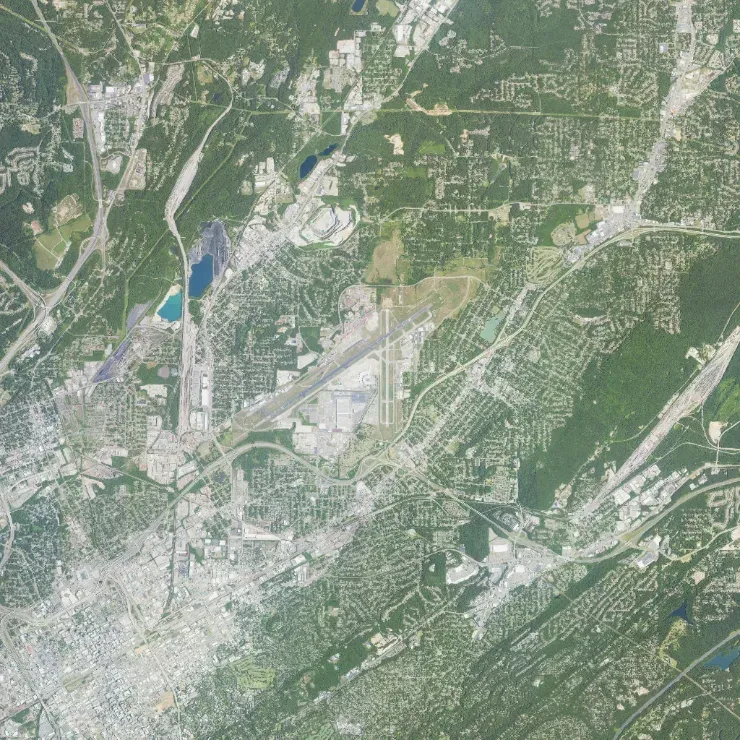
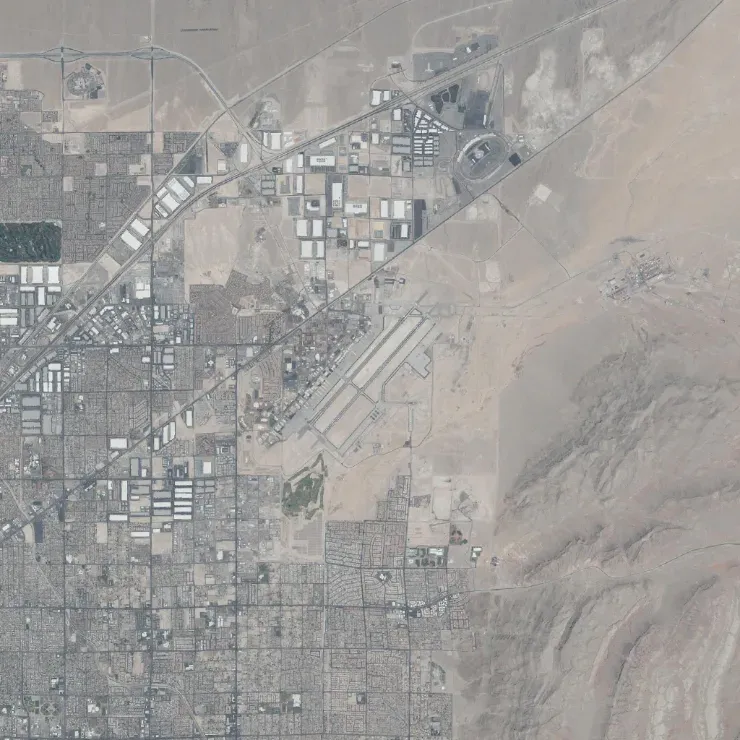
    Answer: 30°

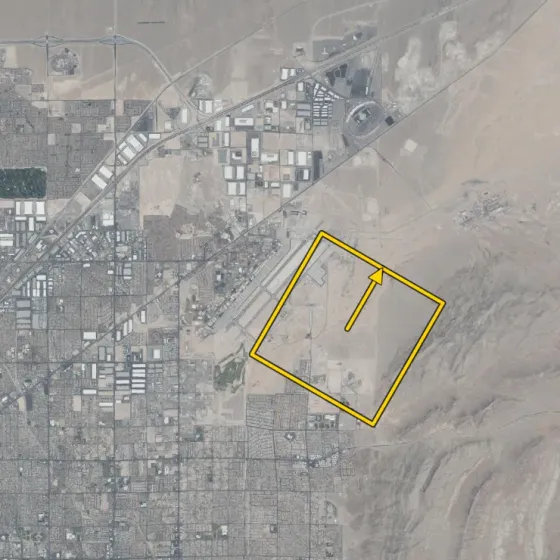
    On the map, the airfield's runways run southwest to northeast, mountains to the east.

    In the view, the runways run up the left edge, leaning slightly right, the mountains on the right.

    Up the view lies just left of the runways' line: the heading is 30°.

    The Reference Map with the Camera View outlined; its arrow points 30 degrees.
  7. Item 7 of 15

    Reference MapCamera View
    Reference Map, item 7: an aerial view of an area, north at the top.The Reference Map with the Camera View outlined; its arrow points 60 degrees.
    Camera View, item 7: part of the same area, turned and enlarged, as seen from the vehicle.
    1. north
    2. 30°
    3. 60°
    4. east
    5. 120°
    6. 150°
    7. south
    8. 210°
    9. 240°
    10. west
    11. 300°
    12. 330°

    What direction is your vehicle traveling?

    Show the answer

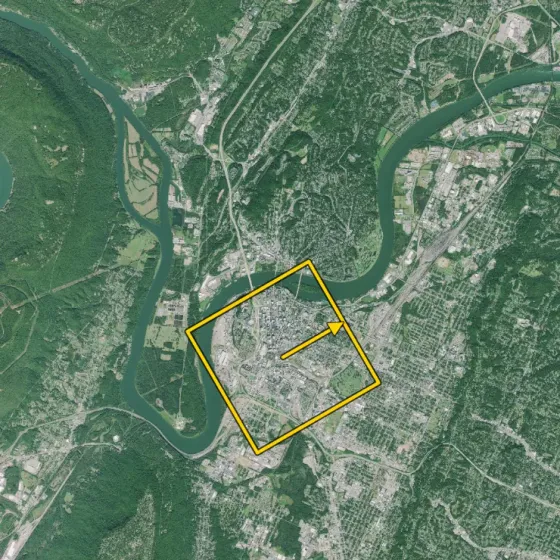
    Answer: 60°

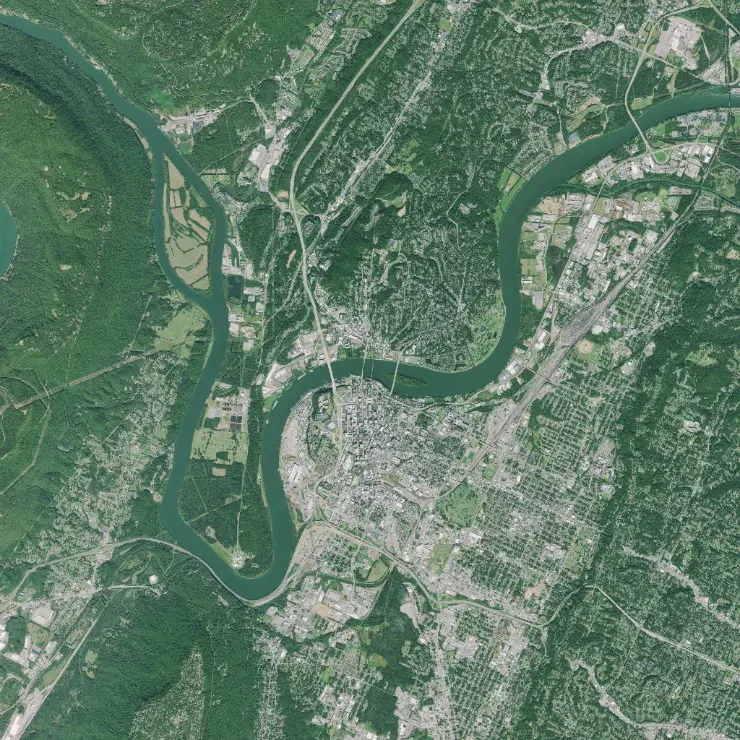
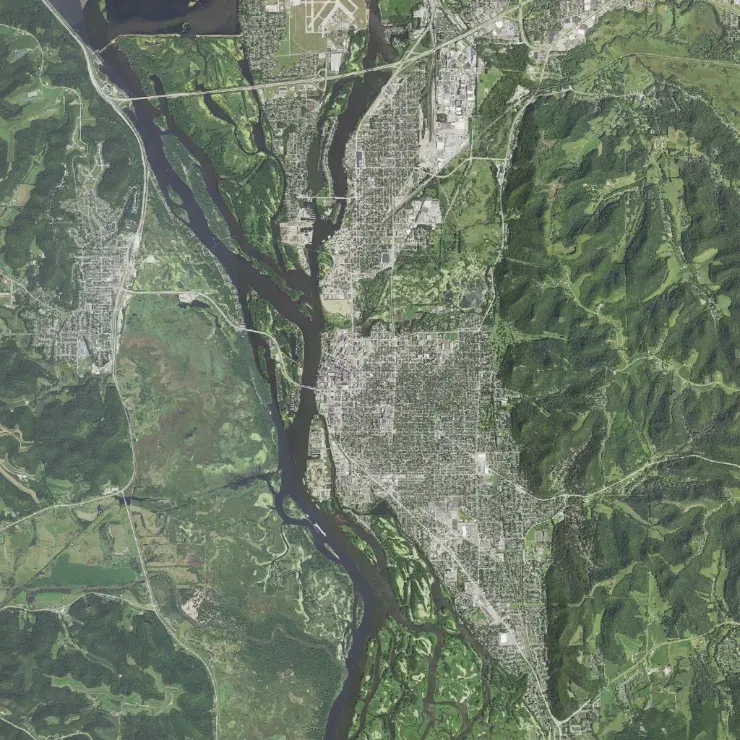
    On the map, the river curves around downtown from the north to the west, a large park to the southeast.

    In the view, the river shows at the upper left and lower left, the park at the upper right.

    North sits 60° left of straight up: the heading is 60°.

    The Reference Map with the Camera View outlined; its arrow points 60 degrees.
  8. Item 8 of 15

    Reference MapCamera View
    Reference Map, item 8: an aerial view of an area, north at the top.The Reference Map with the Camera View outlined; its arrow points 150 degrees.
    Camera View, item 8: part of the same area, turned and enlarged, as seen from the vehicle.
    1. north
    2. 30°
    3. 60°
    4. east
    5. 120°
    6. 150°
    7. south
    8. 210°
    9. 240°
    10. west
    11. 300°
    12. 330°

    What direction is your vehicle traveling?

    Show the answer

    Answer: 150°

    On the map, the dry riverbed's green channel runs southwest to northeast, a small pond just south of it.

    In the view, the channel runs across the bottom, the pond just above it.

    North lies 30° left of straight down: the heading is 150°.

    The Reference Map with the Camera View outlined; its arrow points 150 degrees.
  9. Item 9 of 15

    Reference MapCamera View
    Reference Map, item 9: an aerial view of an area, north at the top.The Reference Map with the Camera View outlined; its arrow points 120 degrees.
    Camera View, item 9: part of the same area, turned and enlarged, as seen from the vehicle.
    1. north
    2. 30°
    3. 60°
    4. east
    5. 120°
    6. 150°
    7. south
    8. 210°
    9. 240°
    10. west
    11. 300°
    12. 330°

    What direction is your vehicle traveling?

    Show the answer

    Answer: 120°

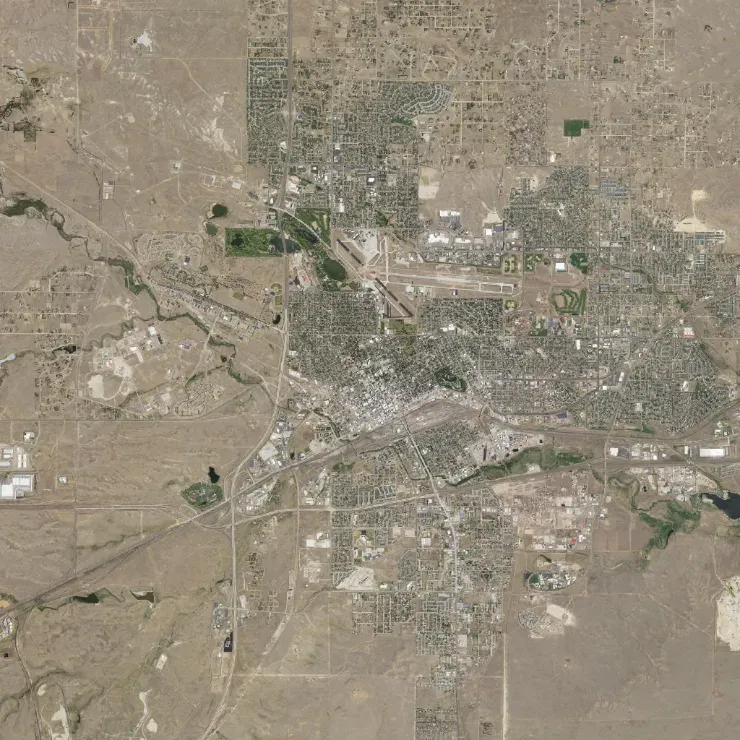
    On the map, the divided highway runs west to east along the south side of town, farm fields south of it.

    In the view, it runs from the bottom up to the upper left, the fields on the right.

    Its east end points 30° left of straight up: the heading is 120°.

    The Reference Map with the Camera View outlined; its arrow points 120 degrees.
  10. Item 10 of 15

    Reference MapCamera View
    Reference Map, item 10: an aerial view of an area, north at the top.The Reference Map with the Camera View outlined; its arrow points 210 degrees.
    Camera View, item 10: part of the same area, turned and enlarged, as seen from the vehicle.
    1. north
    2. 30°
    3. 60°
    4. east
    5. 120°
    6. 150°
    7. south
    8. 210°
    9. 240°
    10. west
    11. 300°
    12. 330°

    What direction is your vehicle traveling?

    Show the answer

    Answer: 210°

    On the map, the wide river runs west-northwest past downtown, a large gray building complex southwest of it.

    In the view, the river runs across the bottom and the complex sits upper right.

    North lies 30° right of straight down: the heading is 210°.

    The Reference Map with the Camera View outlined; its arrow points 210 degrees.
  11. Item 11 of 15

    Reference MapCamera View
    Reference Map, item 11: an aerial view of an area, north at the top.The Reference Map with the Camera View outlined; its arrow points 30 degrees.
    Camera View, item 11: part of the same area, turned and enlarged, as seen from the vehicle.
    1. north
    2. 30°
    3. 60°
    4. east
    5. 120°
    6. 150°
    7. south
    8. 210°
    9. 240°
    10. west
    11. 300°
    12. 330°

    What direction is your vehicle traveling?

    Show the answer

    Answer: 30°

    On the map, the section roads run north-south and east-west, a small dark pond east of the wooded creek.

    In the view, the pond sits at the right edge and the creek at the lower left.

    The north-south roads lean 30° left at the top: the heading is 30°.

    The Reference Map with the Camera View outlined; its arrow points 30 degrees.
  12. Item 12 of 15

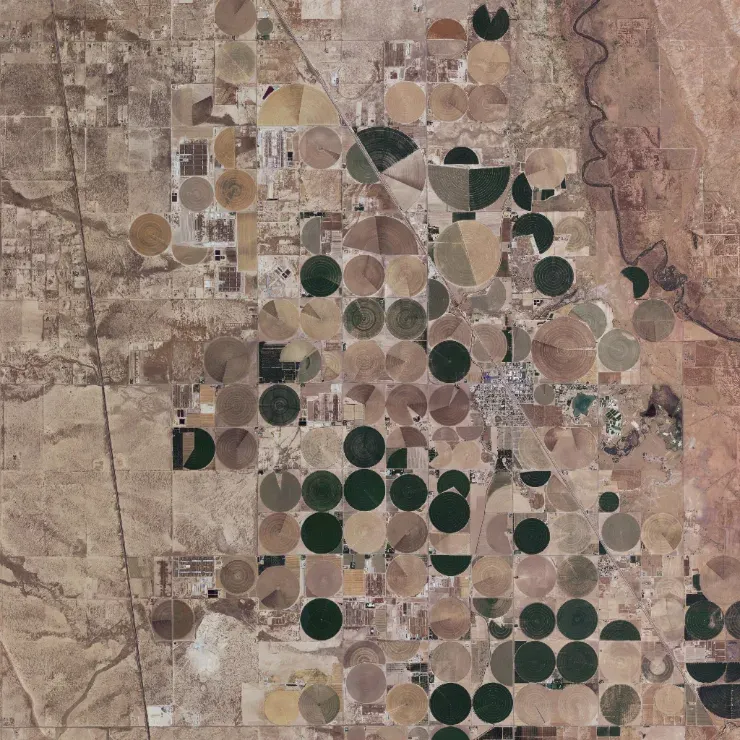
    Reference MapCamera View
    Reference Map, item 12: an aerial view of an area, north at the top.The Reference Map with the Camera View outlined; its arrow points 300 degrees.
    Camera View, item 12: part of the same area, turned and enlarged, as seen from the vehicle.
    1. north
    2. 30°
    3. 60°
    4. east
    5. 120°
    6. 150°
    7. south
    8. 210°
    9. 240°
    10. west
    11. 300°
    12. 330°

    What direction is your vehicle traveling?

    Show the answer

    Answer: 300°

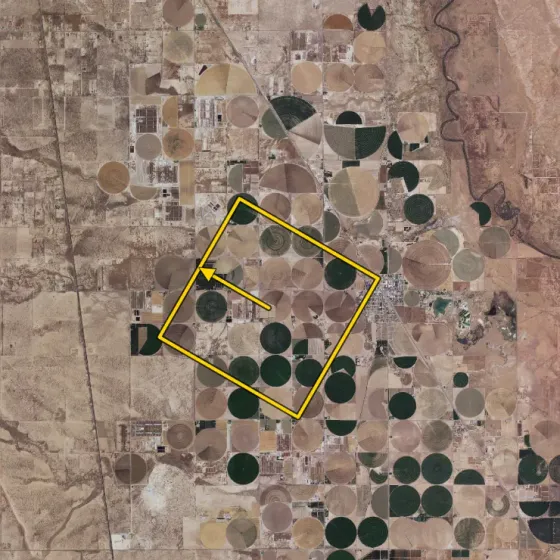
    On the map, a dark rectangular field lies west of the circles, the town and its blue roofs to their east.

    In the view, the dark field sits at the top and the edge of the town at the lower right.

    The field edges that run east to west on the map lean 30° left at the top of the view, and the dark field to the west sits at the top: west lies 30° left of straight up, so the heading is 300°.

    The Reference Map with the Camera View outlined; its arrow points 300 degrees.
  13. Item 13 of 15

    Reference MapCamera View
    Reference Map, item 13: an aerial view of an area, north at the top.The Reference Map with the Camera View outlined; its arrow points 240 degrees.
    Camera View, item 13: part of the same area, turned and enlarged, as seen from the vehicle.
    1. north
    2. 30°
    3. 60°
    4. east
    5. 120°
    6. 150°
    7. south
    8. 210°
    9. 240°
    10. west
    11. 300°
    12. 330°

    What direction is your vehicle traveling?

    Show the answer

    Answer: 240°

    On the map, the river and its channels run north-northwest to south-southeast, a small town on the west bank.

    In the view, the channels run across the image and the town sits at the top.

    The channels lie almost level, so up the view is square to their line, on the town side; 210° or 270° would tilt them about 30° one way or the other: the heading is 240°.

    The Reference Map with the Camera View outlined; its arrow points 240 degrees.
  14. Item 14 of 15

    Reference MapCamera View
    Reference Map, item 14: an aerial view of an area, north at the top.The Reference Map with the Camera View outlined; its arrow points 330 degrees.
    Camera View, item 14: part of the same area, turned and enlarged, as seen from the vehicle.
    1. north
    2. 30°
    3. 60°
    4. east
    5. 120°
    6. 150°
    7. south
    8. 210°
    9. 240°
    10. west
    11. 300°
    12. 330°

    What direction is your vehicle traveling?

    Show the answer

    Answer: 330°

    On the map, a narrow wooded valley with a neighborhood runs north-south, east of the bare hills.

    In the view, the neighborhood fills the lower right and the valley climbs toward the upper right.

    North lies 30° right of straight up: the heading is 330°.

    The Reference Map with the Camera View outlined; its arrow points 330 degrees.
  15. Item 15 of 15

    Reference MapCamera View
    Reference Map, item 15: an aerial view of an area, north at the top.The Reference Map with the Camera View outlined; its arrow points 240 degrees.
    Camera View, item 15: part of the same area, turned and enlarged, as seen from the vehicle.
    1. north
    2. 30°
    3. 60°
    4. east
    5. 120°
    6. 150°
    7. south
    8. 210°
    9. 240°
    10. west
    11. 300°
    12. 330°

    What direction is your vehicle traveling?

    Show the answer

    Answer: 240°

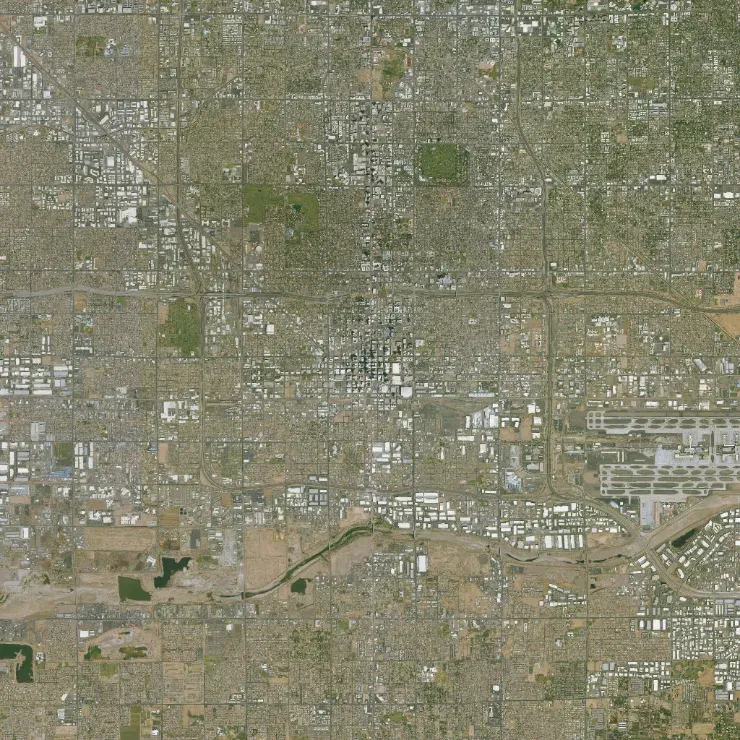
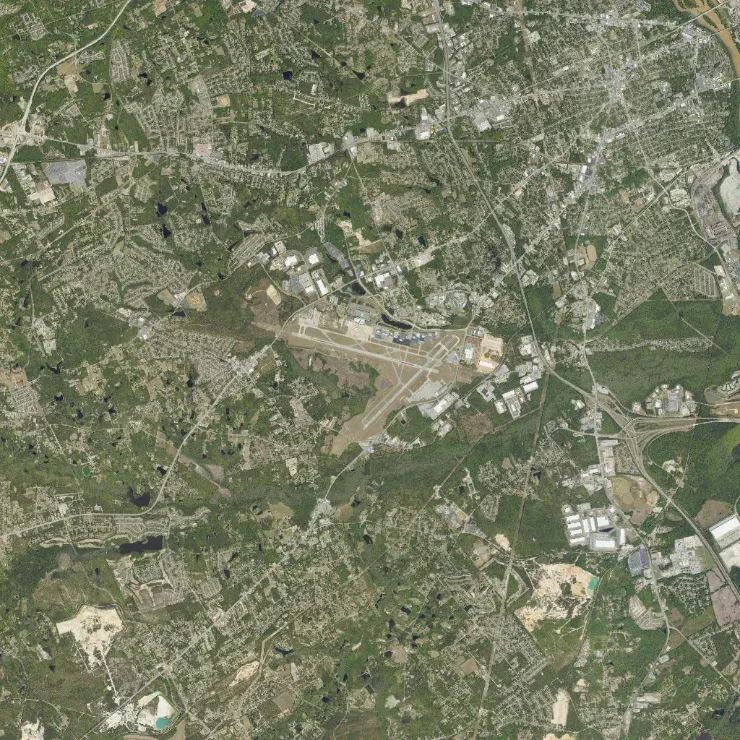
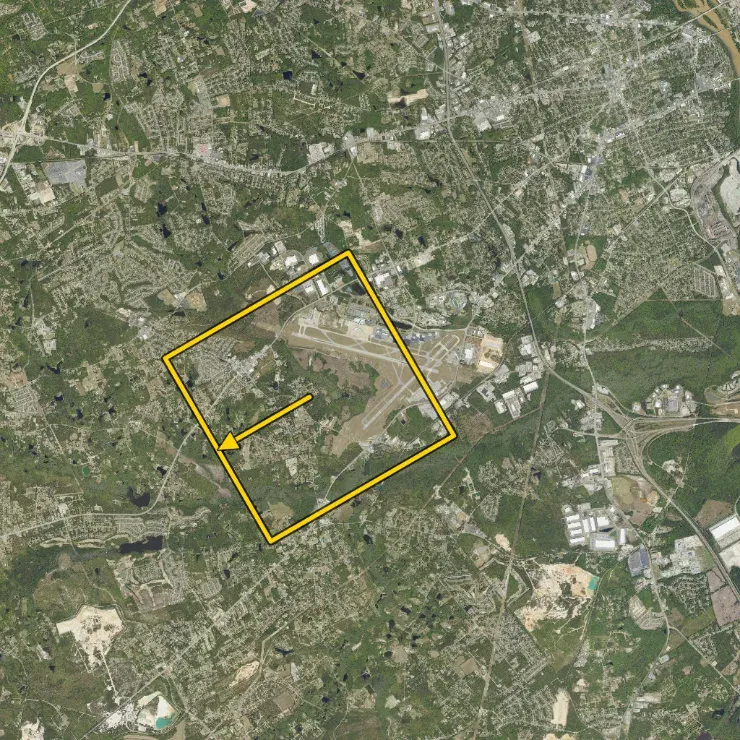
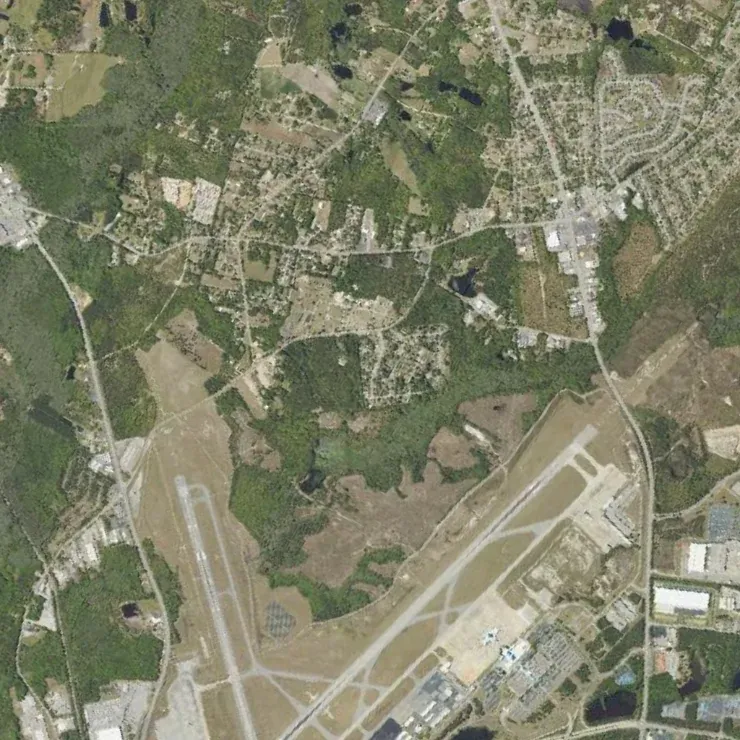
    On the map, one runway runs southwest to northeast and the longer one west-northwest to east-southeast, the terminal just north of the longer one.

    In the view, the runways fill the bottom: the first stands almost upright, leaning slightly left at the top, the other climbs to the right, the terminal at the lower right.

    Up the view lies just right of the first runway, toward its southwest end: the heading is 240°.

    The Reference Map with the Camera View outlined; its arrow points 240 degrees.

Explore each subtest

Format, scoring, and more free questions on the subtest pages.

The performance-based measures

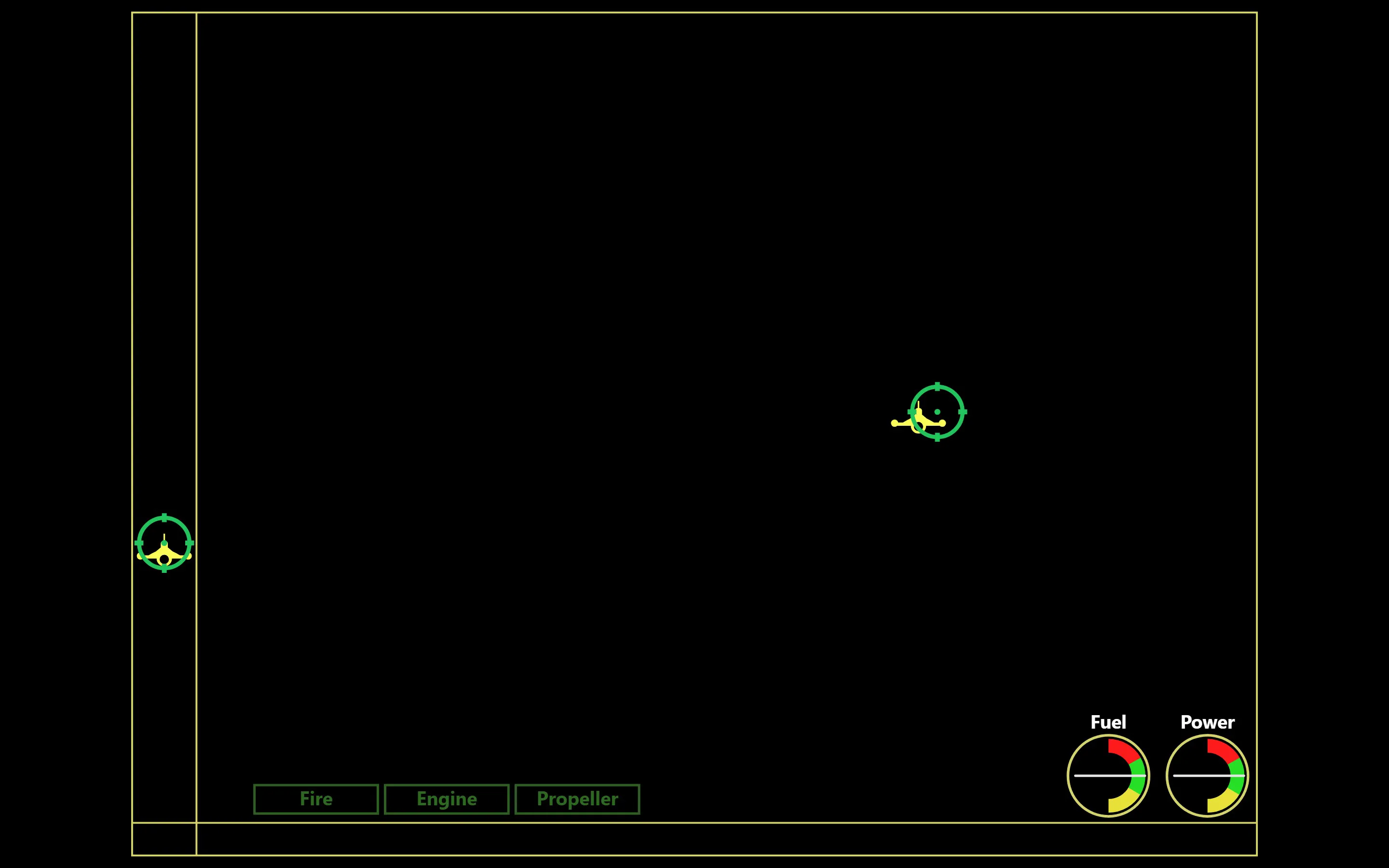
Stick and Throttle in play: on a black field, a red reticle to hold on a yellow aircraft in the main area and another in a narrow vertical lane.

Stick and Throttle (PBM)

Simulator · 5 min

Track two airplanes with stick and throttle, sort numbers heard in one ear, handle emergencies.

It tests eye-hand coordination and your ability to divide attention among different tasks.

How the subtest works
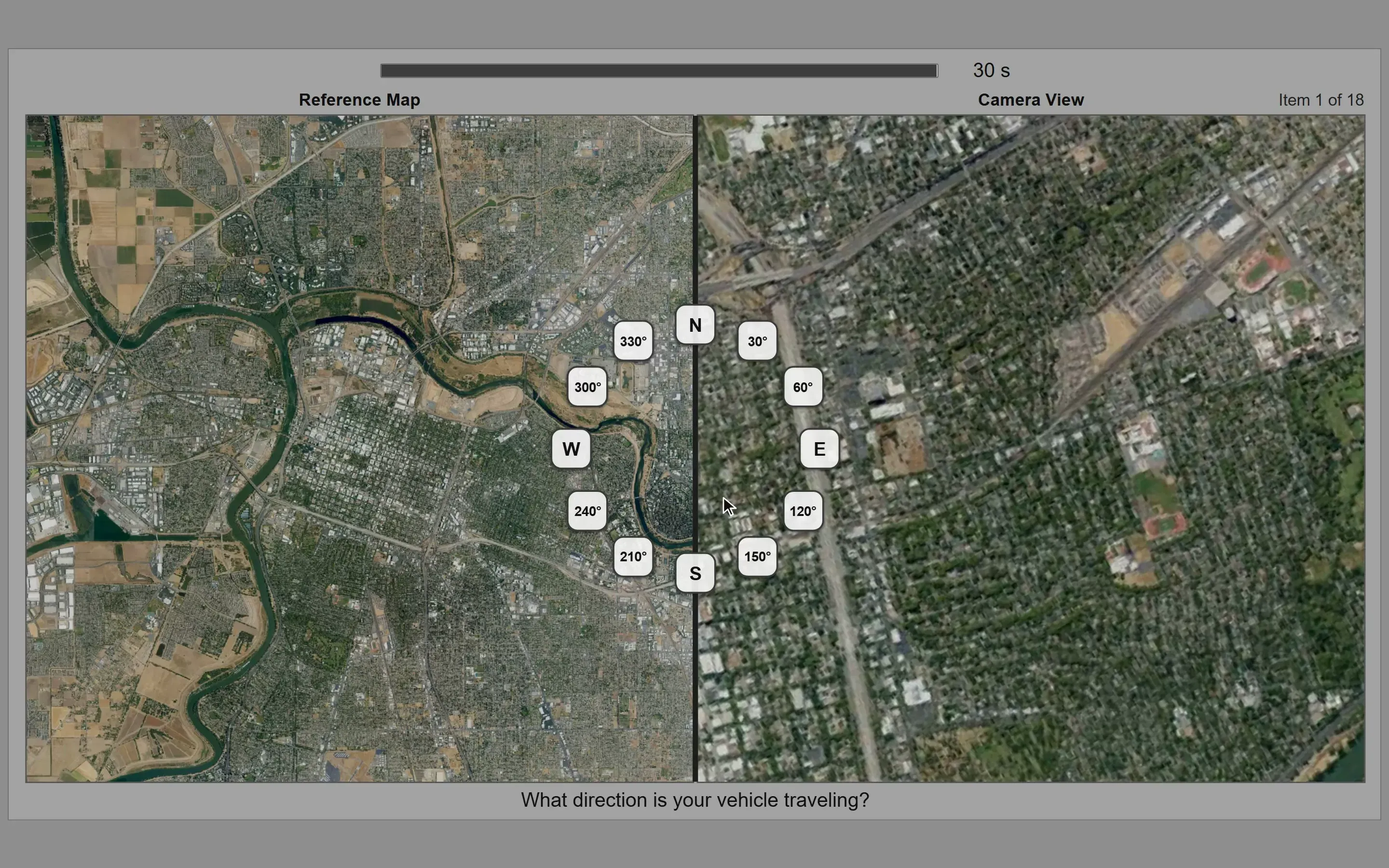
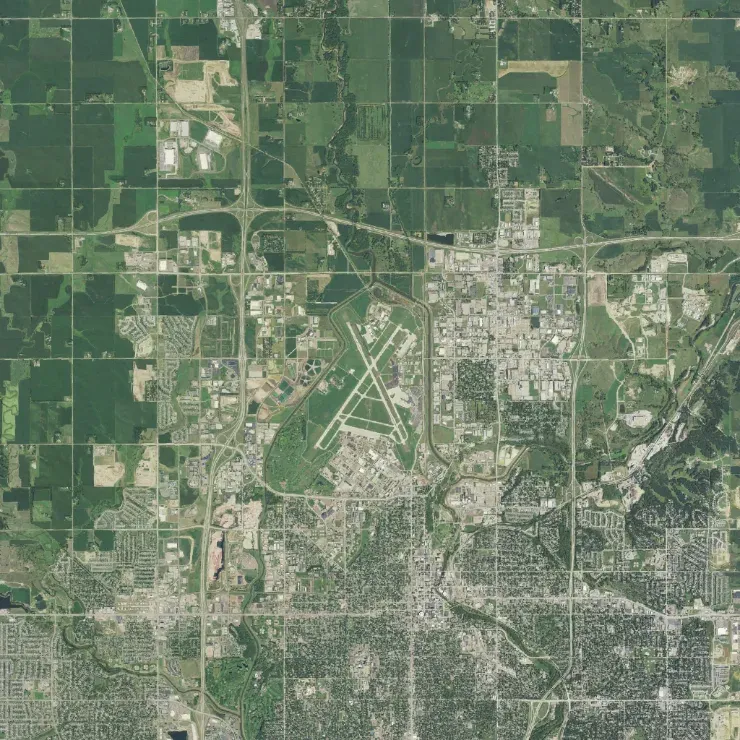
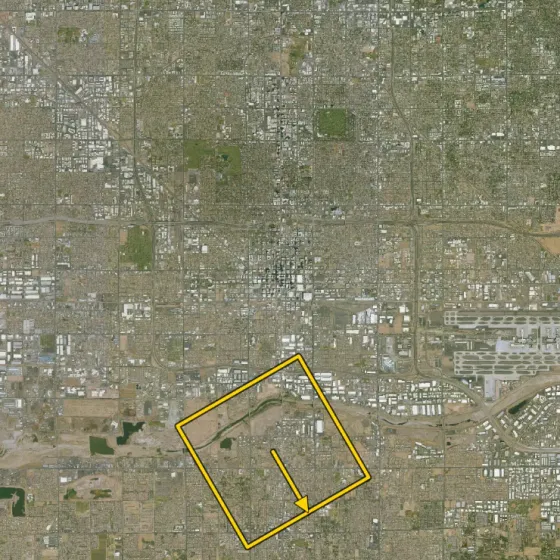
Terrain Identification in play: a turned camera view of the terrain next to the north-up map it must be matched to.

Terrain Identification (TOT)

18 items · 30 s per item

Match a turned camera view to a north-up map, then click the direction your vehicle travels.

It is a new spatial ability measure the Navy is evaluating for pilot selection.

How the subtest works
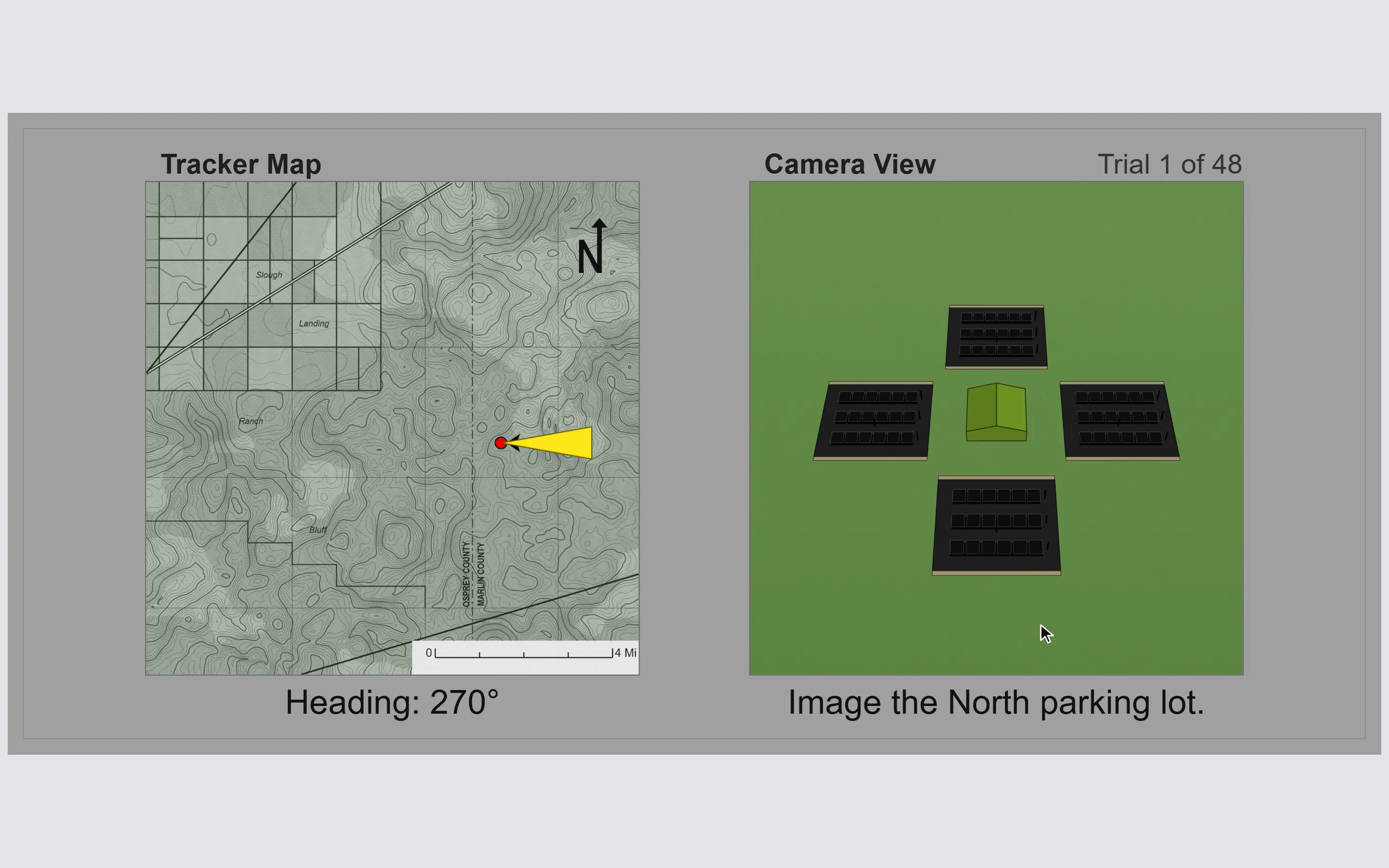
Directional Orientation in play: the drone's camera view of a compound and its parking lots, next to its heading.

Directional Orientation (DOT / UAV)

48 questions

Use the drone's heading to click the parking lot named aloud and on screen in the camera view.

It is a measure of spatial ability, added to the ASTB by the Navy in late 2013.

How the subtest works

And the five ASTB-E subtests

Train on every subtest.
Know your rank.

See pricing