
ASTB-E · Performance Based Measures
Stick and Throttle
Stick and Throttle is the six phases of the ASTB-E Performance Based Measures that follow the Directional Orientation Test, played with a stick, a throttle and headphones, from listening alone to tracking two aircraft while handling emergencies.
- Phases
- 6
- Practice
- 30 s before each phase but the last
- Scored lengths
- 120, 60, 60, 120, 180, 120 s
- Equipment
- Stick and throttle, headphones
Screens of the trainer
The subtest
Measures
The six phases measure processing speed, manual dexterity and divided attention: dichotic listening, tracking with a stick and throttle, and several of these tasks at once.
The listening composite pools the listening phase and the phase that adds listening to the tracking; the throttle and stick tracking composites each pool every phase that uses their hand, and both rise with the time the crosshair stays on its aircraft.
Format
The six phases come in this order: listening alone, throttle tracking, stick tracking, both tracking tasks at once, both with listening, then both with emergencies. The PBM is not adaptive.
Each phase but the last opens with 30 seconds of practice. The scored part then lasts 120 seconds for listening, 60 for throttle tracking, 60 for stick tracking, 120 for the combined tracking, 180 with listening added and 120 with the emergencies.
The aircraft speed up at each third of a tracking phase, and an aircraft changes direction once you have held the crosshair on it for a while.
Scoring
The formulas are proprietary.
Item types
Dichotic listening
Letters and numbers play in both ears at once, a different stream in each ear, and a voice names the ear to attend to. In that ear only, an even number calls for the stick trigger and an odd number for the throttle button. Letters and the other ear are ignored.
The phase runs four blocks of 30 seconds, and the ear to attend to changes between blocks.
Example
The voice says Left ear. A 4 in the left ear calls for the trigger, a 7 for the throttle button, and an 8 in the right ear calls for nothing.
Throttle tracking
A yellow aircraft moves up and down a narrow lane on the left of the screen, and the throttle, in your left hand, keeps a red crosshair on it.
Stick tracking
A second aircraft moves across the rest of the screen in straight lines, horizontal, vertical or diagonal, and the stick, in your right hand, keeps a crosshair on it. Pushing the stick forward moves the crosshair down the screen, and pulling it back moves the crosshair up.
Example
The aircraft heads for the top of the screen. You pull the stick back to raise the crosshair after it.
Both tracking tasks at once
Both aircraft move at the same time, the throttle in your left hand on the lane and the stick in your right hand on the rest of the screen.
Tracking with listening
Both tracking tasks continue while the listening plays again: a voice names the ear, and the trigger and the throttle button answer the numbers in that ear.
Example
The voice says Right ear. A 6 there calls for the trigger, pressed without letting either crosshair drift.
Tracking with emergencies
Three emergencies come one at a time while both tracking tasks continue: Fire, Engine and Propeller, in the order the instruction screen lists them. The screen shows the procedures before the phase, and you memorize them.
A voice in the headphones and a warning on the screen name the emergency. You set two knobs on the throttle, Fuel and Power, against two gauges on the screen, then press the clutch to confirm. Fire is Fuel low and Power low. Engine is Fuel high and Power high. Propeller is Fuel in the middle and Power high.
The screen turns red when the fix is late or wrong. The knobs keep their position, so the next setting can be dialed in before its emergency comes.
Example
The voice calls Fire. You turn Fuel low and Power low and press the clutch, while both crosshairs stay on their aircraft.
The trainer in play
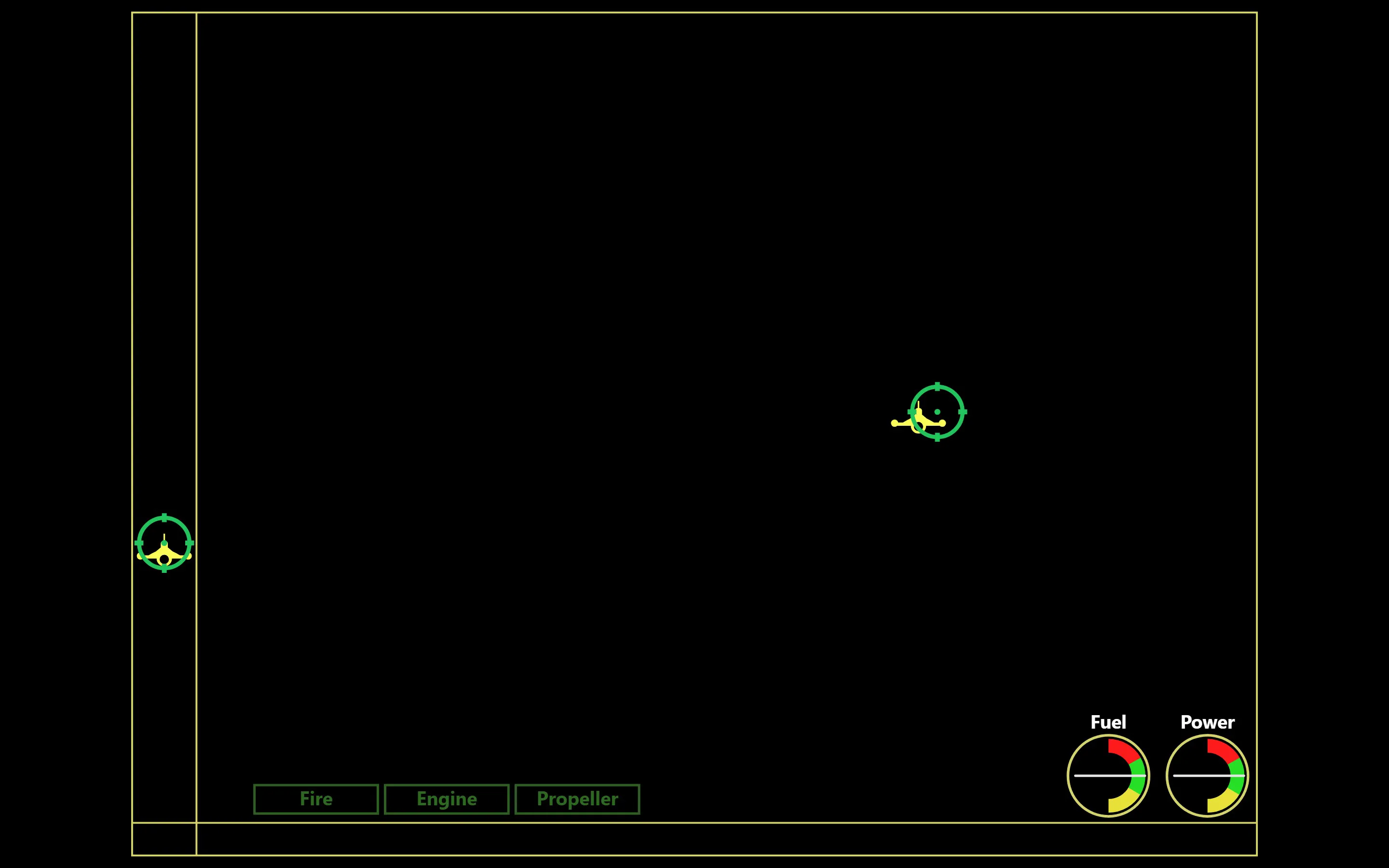
The Frontline Forge trainer
-
The scored trial
The scored trial plays the last two phases as the real test does: 3 minutes of both tracking tasks with listening, then 2 minutes of both with the three emergencies, no practice round. It scores time on target for the throttle and the stick, hits minus false alarms for listening, and the speed of each emergency fix, within 10 seconds. With random control settings on, each trial draws a new dead zone and a new crosshair speed, and the overall score is ranked against other test-takers; the Statistics page plots the rank of every attempt.
-
One element at a time, or the whole run
Custom practice runs any mix of throttle tracking, stick tracking, listening and emergencies for 60, 120 or 180 seconds, with or without the 30-second opening practice, and saves nothing. Its Full test order preset runs the six phases in the order of the real test, each but the last opening with its 30 seconds of practice, and the results split the score by phase.
-
Your stick and throttle, a gamepad, or keyboard and mouse
The trainer takes any stick and throttle through the browser, bound control by control; the X52, the set the PBM is taken on, binds by itself on connection. A gamepad or the keyboard and mouse works too: W and S for the throttle, the mouse as the stick, pushed and pulled the same way, left click for the trigger, Space for the clutch. For training, any stick and throttle beats the keyboard by far. The results say which controls you used.