
SIFT · Practice test
Free SIFT practice test
105 questions: the seven subtests at fifteen questions each, the right answer after every question, with no account and no clock.
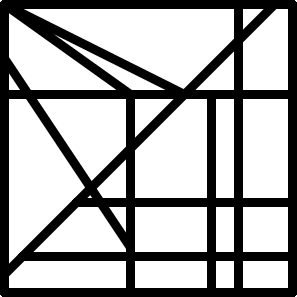
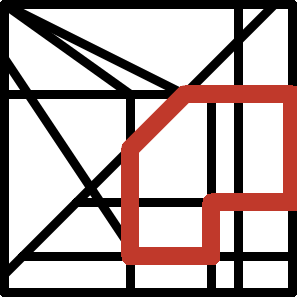
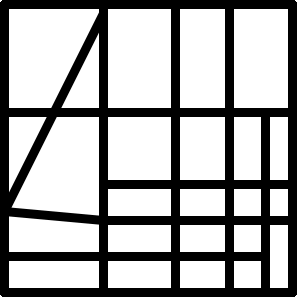
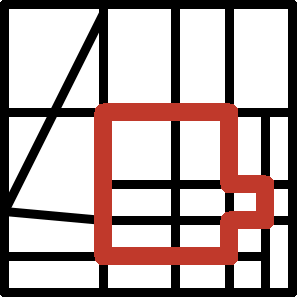
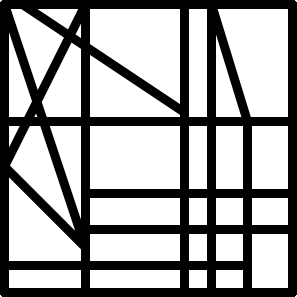
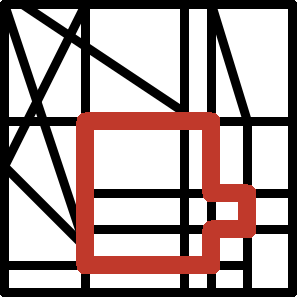
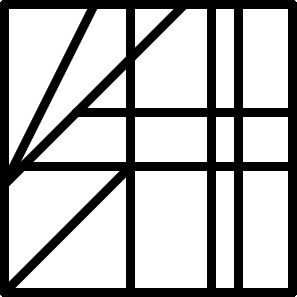
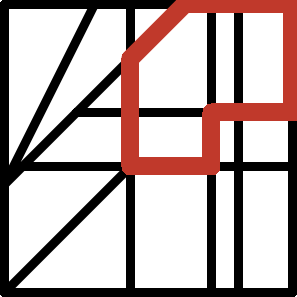
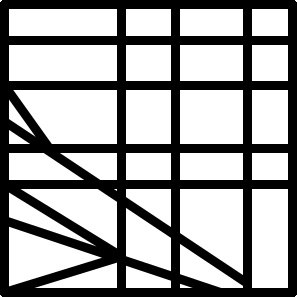
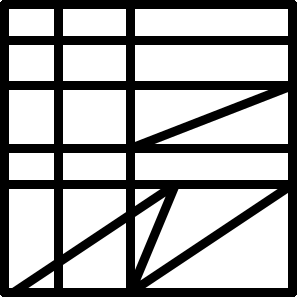
Simple Drawings
15 questions
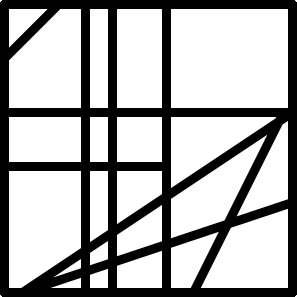
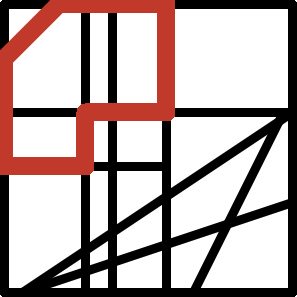
Item 1 of 15
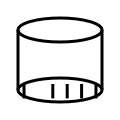
Pick the drawing that is different.
Show the answer
Answer: Drawing 2 of 5, item 1
One repeated element is missing.

Item 2 of 15
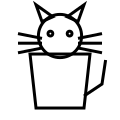
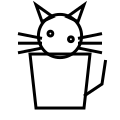
Pick the drawing that is different.
Show the answer
Answer: Drawing 3 of 5, item 2
The odd figure is rotated.

Item 3 of 15
Pick the drawing that is different.
Show the answer
Answer: Drawing 1 of 5, item 3
The odd figure is a different size.

Item 4 of 15
Pick the drawing that is different.
Show the answer
Answer: Drawing 2 of 5, item 4
The odd figure is mirrored.

Item 5 of 15
Pick the drawing that is different.
Show the answer
Answer: Drawing 1 of 5, item 5
One extra segment was added.

Item 6 of 15
Pick the drawing that is different.
Show the answer
Answer: Drawing 1 of 5, item 6
One segment is missing.
Item 7 of 15
Pick the drawing that is different.
Show the answer
Answer: Drawing 2 of 5, item 7
An inner detail is moved.

Item 8 of 15
Pick the drawing that is different.
Show the answer
Answer: Drawing 5 of 5, item 8
One corner is moved.
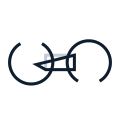
Item 9 of 15
Pick the drawing that is different.
Show the answer
Answer: Drawing 1 of 5, item 9
The odd figure is mirrored.
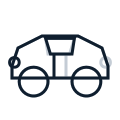
Item 10 of 15
Pick the drawing that is different.
Show the answer
Answer: Drawing 3 of 5, item 10
The odd figure is rotated.
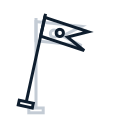
Item 11 of 15
Pick the drawing that is different.
Show the answer
Answer: Drawing 3 of 5, item 11
The odd figure is a different size.
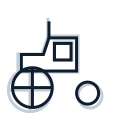
Item 12 of 15
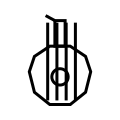
Pick the drawing that is different.
Show the answer
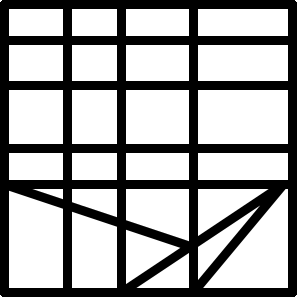
Answer: Drawing 4 of 5, item 12
One segment is missing.
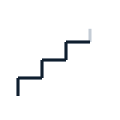
Item 13 of 15
Pick the drawing that is different.
Show the answer
Answer: Drawing 4 of 5, item 13
One repeated element is missing.
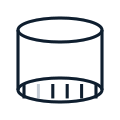
Item 14 of 15
Pick the drawing that is different.
Show the answer
Answer: Drawing 5 of 5, item 14
An inner detail is moved.

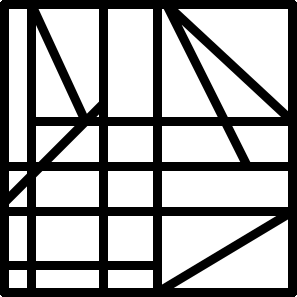
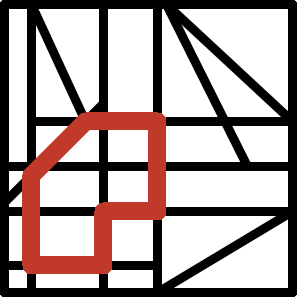
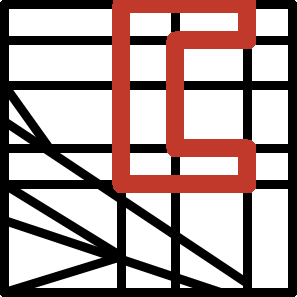
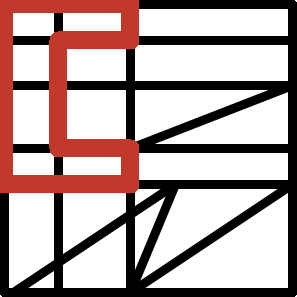
Item 15 of 15
Pick the drawing that is different.
Show the answer
Answer: Drawing 3 of 5, item 15
One corner is moved.



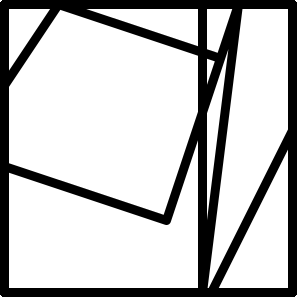
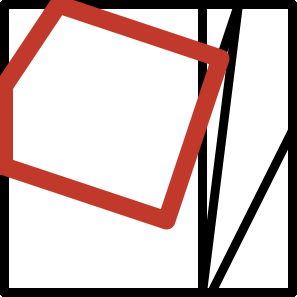
Army Aviation Information
15 questions
Item 1 of 15
If the cyclic is moved forward, the rotor disk tilts
Show the answer
Answer: forward
The cyclic tilts the rotor disk in the direction it is moved, so forward cyclic tilts the disk forward and the helicopter moves forward.
Aft is the response to rearward cyclic, a sideways tilt comes from lateral cyclic, and a disk that stayed level or tilted against the input would leave the pilot without directional control.
Item 2 of 15
On an instrument marking, a green range indicates
Show the answer
Answer: a range of continuous operation
A green arc marks the normal operating range, where the system can run continuously.
A red line marks the maximum or minimum allowed, yellow marks a caution or transition range, and no standard color is set aside for emergency-only operation.
Item 3 of 15
An attack mission calls for precision engagement against ground targets. Based on its role in the current fleet, which Army aircraft fits?
Show the answer
Answer: The AH-64 Apache
The AH-64 Apache is the Army's attack helicopter, built to find and engage ground targets with precision weapons.
The UH-60 Black Hawk is the utility and assault helicopter, the CH-47 Chinook the heavy-lift aircraft, the UH-72 Lakota a light utility and training helicopter, and the RC-12X Guardrail an unarmed fixed-wing intelligence aircraft.
Item 4 of 15
A drain valve on the bottom of the fuel tank exists mainly so the pilot can
Show the answer
Answer: drain water and sediment collected in the tank
Water and sediment are heavier than fuel and settle at the bottom of the tank, so the drain valve there lets the pilot draw them off before flight.
Venting is the job of the tank vent, stopping fuel flow is the job of the shut-off valve, and neither the filter nor the expansion of the fuel depends on a valve at the bottom of the tank.
Item 5 of 15
At the moment of an engine failure in cruise flight, what must the pilot do immediately?
Show the answer
Answer: Lower the collective
When the engine quits, rotor rpm decays quickly unless the pilot lowers the collective at once. The reduced pitch lets the upward airflow keep the rotor turning and begins the autorotation.
Raising the collective bleeds rotor rpm even faster, more throttle does nothing with the engine out, and a steep bank loads a rotor that is already slowing.
Pedal is only adjusted to keep the nose straight as torque disappears; full pedal is not the first action.
Item 6 of 15
In a normal helicopter traffic pattern, the leg flown parallel to the runway at pattern altitude, prior to the base leg, is the
Show the answer
Answer: downwind leg
The downwind leg runs parallel to the runway at pattern altitude, opposite the direction of landing, and ends with the turn onto base.
The departure and initial takeoff legs follow the runway heading after takeoff, the crosswind leg runs perpendicular to the runway, and final approach comes after base, lined up with the runway.
Item 7 of 15
A diagram that shows the combinations of height above the ground and airspeed from which an average pilot can complete a safe landing after an engine failure is called the
Show the answer
Answer: height/velocity diagram
The height/velocity diagram plots the combinations of height above the ground and airspeed from which an average pilot can make a safe landing after an engine failure.
An autorotation chart gives glide performance once the autorotation is established, the in-ground-effect hover ceiling gives the highest altitude at which the helicopter can hover near the surface, and the relative wind and rate-of-climb charts deal with wind limits and climb performance.
Item 8 of 15
If a main drive shaft or belt breaks, why does the engine tend to overspeed?
Show the answer
Answer: The engine suddenly has no load driving it
The engine was driving the rotor. Once the shaft or belt breaks, the engine is suddenly unloaded and its rpm runs away unless the throttle is closed.
Nothing opens the throttle or adds fuel by itself, a governor reduces power as rpm rises rather than adding it, and the freewheeling unit only lets the rotor turn faster than the engine; it never locks the two together.
Item 9 of 15
An articulated rotor disk compensates for dissymmetry of lift mainly through a
Show the answer
Answer: flapping hinge
On a fully articulated rotor each blade has its own flapping hinge: the advancing blade flaps up, the retreating blade flaps down, and the change in angle of attack evens out the lift across the disk.
The lead-lag hinge lets the blade move in its plane of rotation, the pitch horn transmits pitch changes to the blade, the droop stop limits blade sag at low rpm, and the freewheeling unit sits in the drive train.
Item 10 of 15
Vortex ring state, formerly called settling with power, describes an aerodynamic condition in which a helicopter is in a
Show the answer
Answer: vertical descent with power applied and no climb performance
In vortex ring state the helicopter descends vertically, or nearly so, into its own downwash, and adding power produces little or no climb.
A roll around a skid touching the surface is dynamic rollover, a vibration at certain rotor speeds on the ground is ground resonance, and neither a hover taxi in ground effect nor a climbing turn describes this condition.
Item 11 of 15
A helicopter's blade tip speed is about 400 knots. Flying forward at 100 knots, the airflow speed the retreating blade encounters compared with a hover is
Show the answer
Answer: lower, by roughly 100 knots
On the retreating side the blade moves away from the direction of flight, so forward airspeed subtracts from its rotational speed: about 400 − 100 = 300 knots instead of 400.
The advancing blade meets the higher figure, 400 + 100 = 500 knots. On the retreating side the airflow is lower at any forward speed: not unchanged, not higher above some threshold, and not zero.
Item 12 of 15
Why does the coning angle become much larger if rotor rpm is allowed to decay too far below the minimum power-on value?
Show the answer
Answer: Centrifugal force decreases as rpm drops, leaving less force to oppose lift
Lift bends the blades upward and centrifugal force holds them out flat. As rpm decays, centrifugal force falls with it, lift is left less opposed and the coning angle grows, to the point where the blades can fold.
Blade twist is built into the blade and does not change with rpm, a yawing fuselage does not bend the blades, induced drag acts in the plane of rotation rather than lifting the blades, and a governor answers falling rpm by adding power, not pitch.
Item 13 of 15
The mechanical linkages for the cyclic control rods are rigged so a control input is applied roughly 90 degrees before the desired blade response. This rigging compensates for
Show the answer
Answer: gyroscopic behavior of the rotor disk
A spinning rotor behaves like a gyroscope: a force applied to it takes effect about 90 degrees later in the direction of rotation. The cyclic linkages apply each input 90 degrees ahead so the disk tilts the way the pilot moved the stick.
Dissymmetry of lift is answered by blade flapping, translating tendency by rigging or cyclic input, blade twist evens out lift along the span, and ground effect changes the power required, not the timing of a control input.
Item 14 of 15
A rotor blade section is producing some lift, but that lift is offset by drag, causing an overall deceleration. Which region of the autorotating rotor disk is being described?
Show the answer
Answer: The driven region
In autorotation the disk divides into three regions. The driven region, near the tips, produces some lift, but its drag outweighs the driving force and slows the blade.
The driving region, between the driven region and the root, produces the force that keeps the rotor turning, and the stall region, at the root, works above the stall angle and adds drag. Neither tip vortices nor the root cutout is one of the three regions.
Item 15 of 15
Which combination of conditions is most conducive to retreating blade stall?
Show the answer
Answer: High weight with low rotor rpm at high density altitude
Retreating blade stall comes at high forward speed, when the retreating blade must fly at a high angle of attack. High gross weight, low rotor rpm and high density altitude all raise that angle, so together they bring the stall on sooner.
A hover, a vertical descent and a slow approach lack the high forward speed the stall needs, and less collective in smooth air lowers the blade angles that cause it.
Spatial Apperception
15 questions
Item 1 of 15
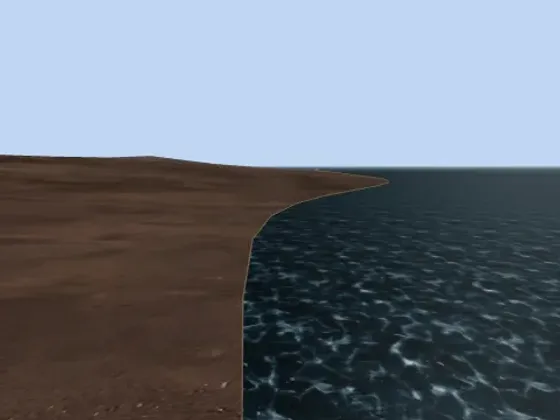
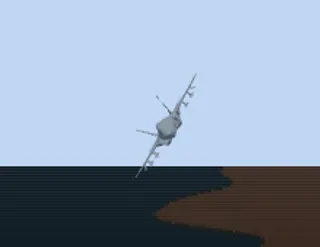
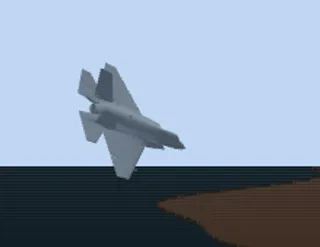
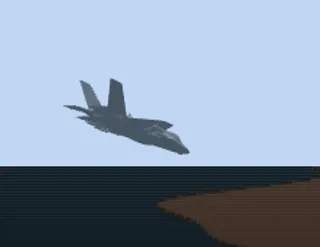
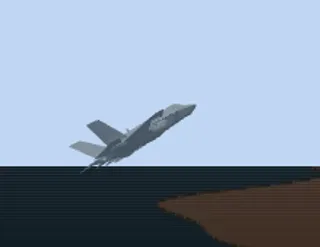
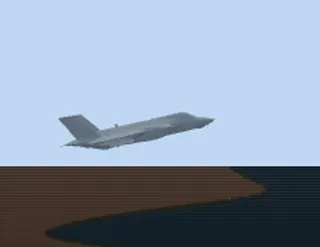
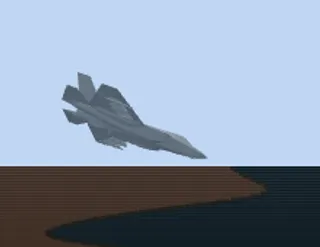
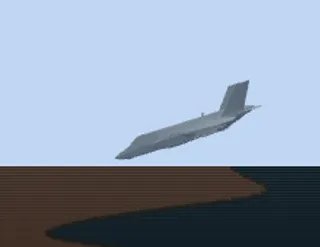
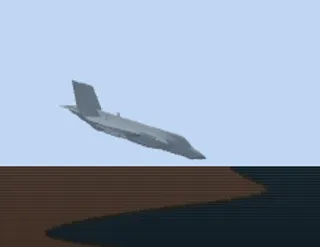
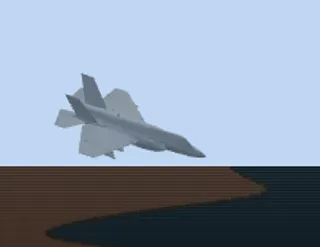
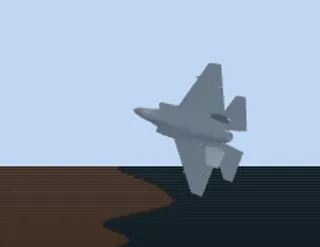
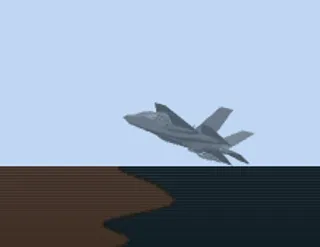
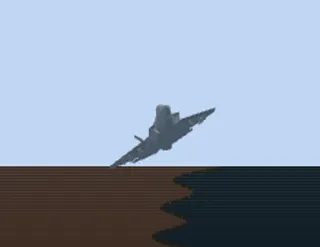
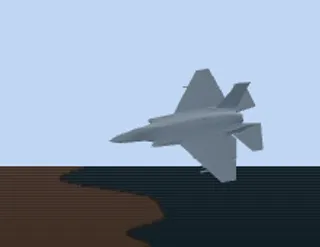
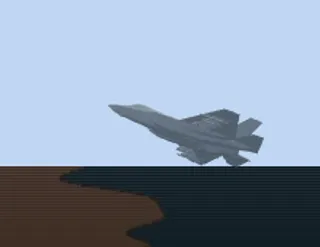
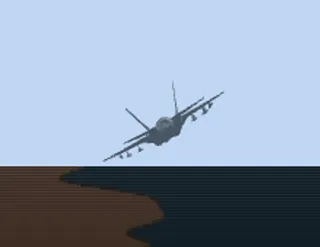
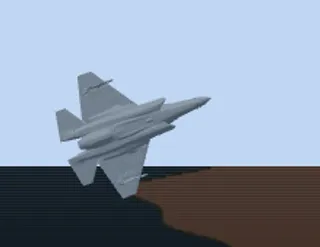
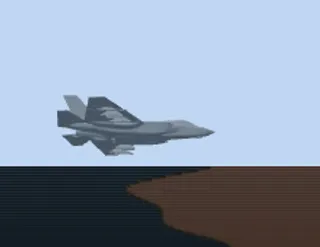
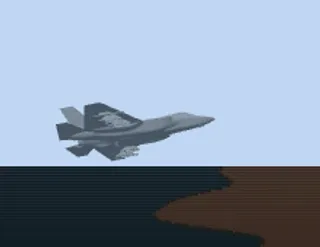
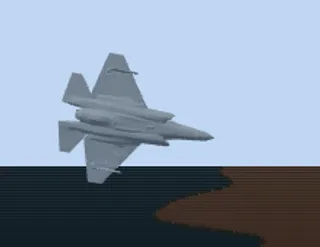
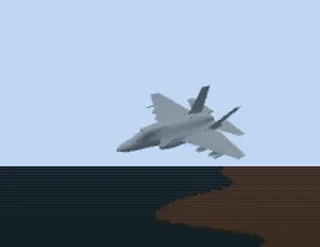
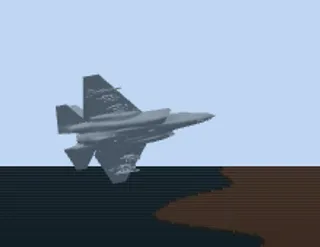
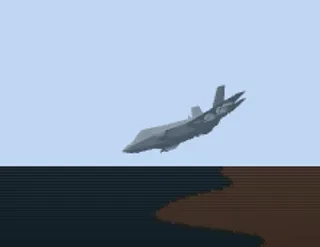
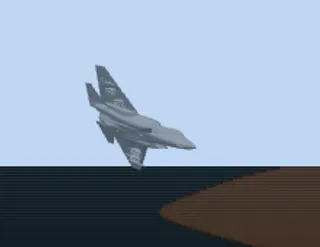
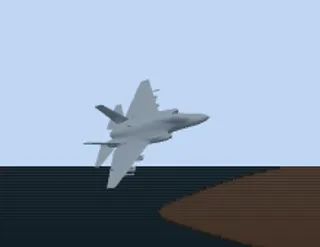
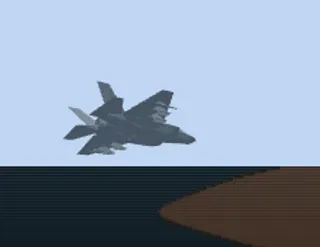
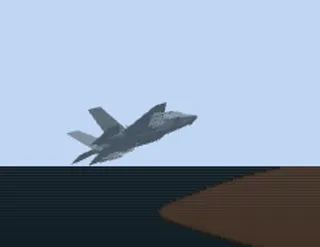
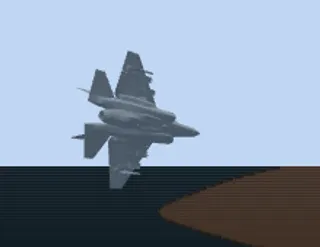
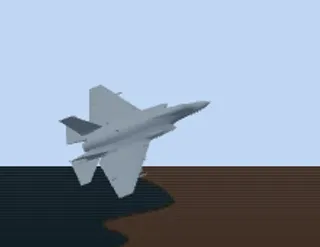
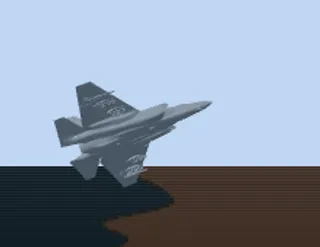
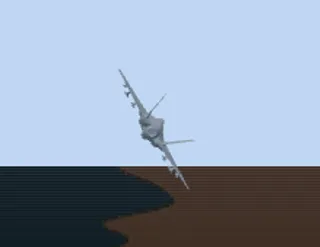
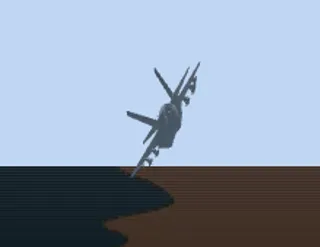
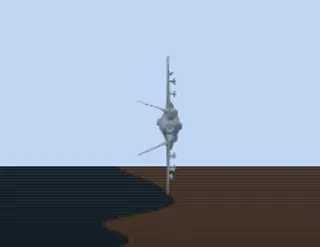
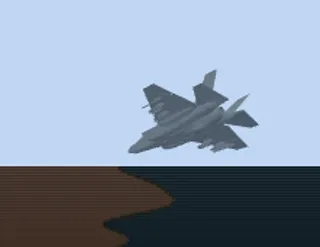
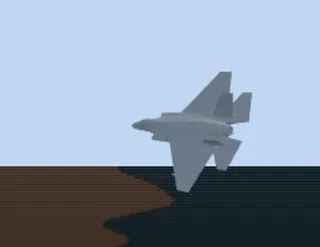
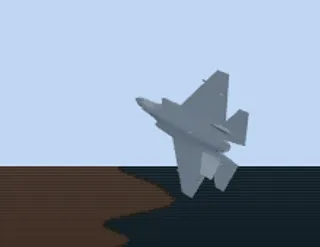
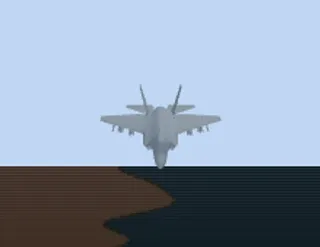
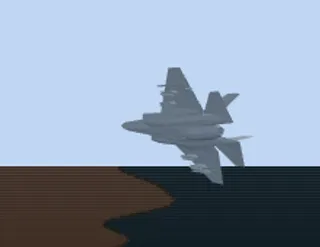
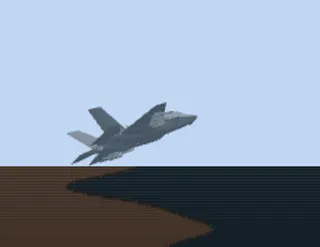
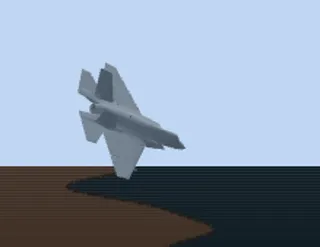
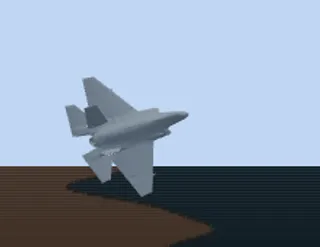
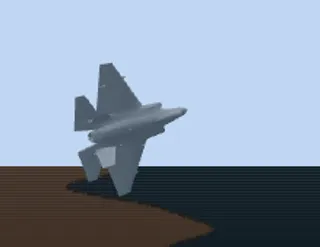
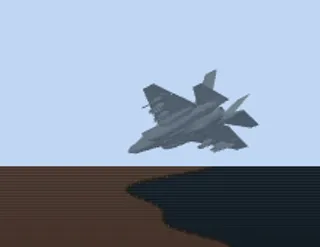
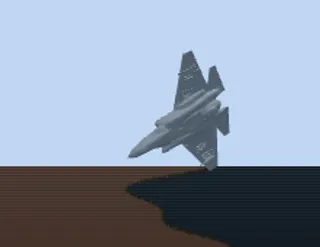
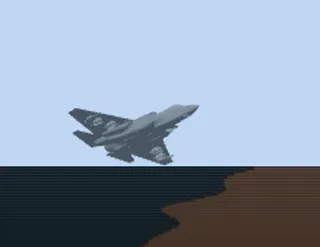
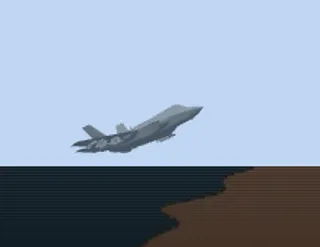
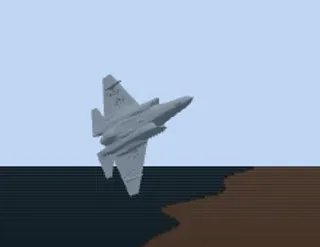
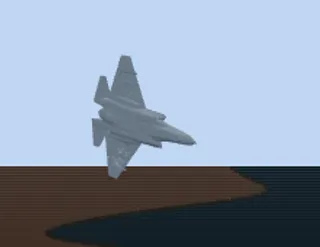
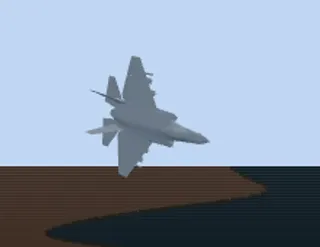
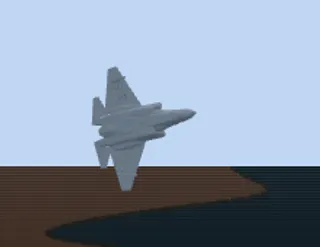
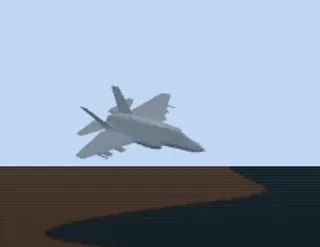
Which picture matches the cockpit view?
Show the answer
Answer: Picture 2 of 5: the aircraft over the coastline
Horizon level, at center: wings level, level flight.
Land left, sea right: flying along the coast.
Wings level, head-on. Not the nose-down or banked ones.
Item 2 of 15
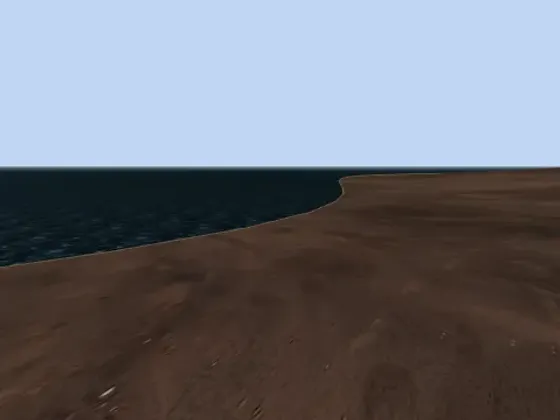
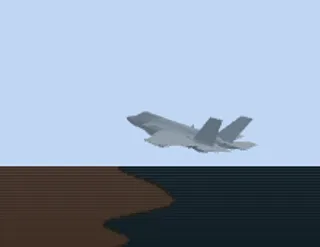
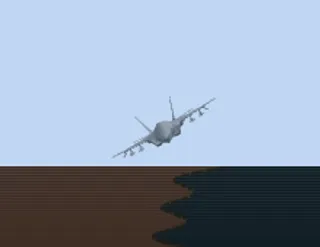
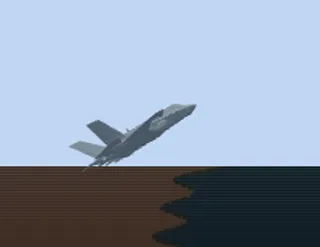
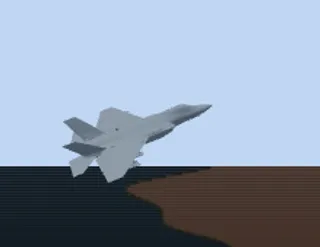
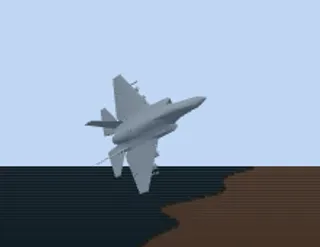
Which picture matches the cockpit view?
Show the answer
Answer: Picture 2 of 5: the aircraft over the coastline
Horizon level, near center: wings level, level flight.
Sea ahead to the left, land below: heading out to sea, angling left.
Wings level, nose toward the sea. Not the banked ones, nor the nose-down one heading inland.
Item 3 of 15
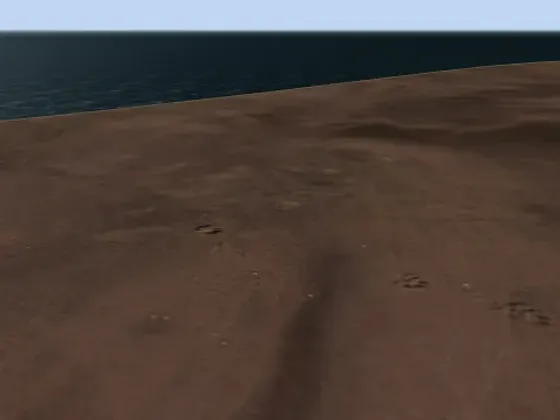
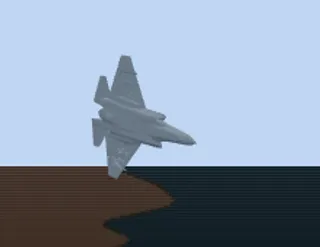
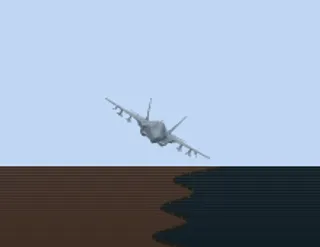
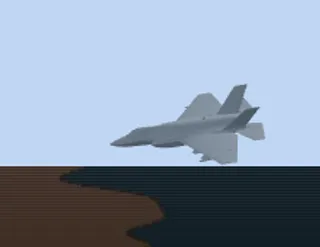
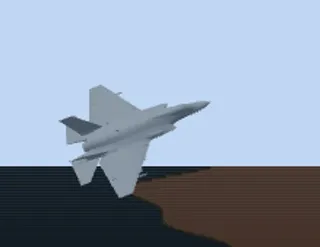
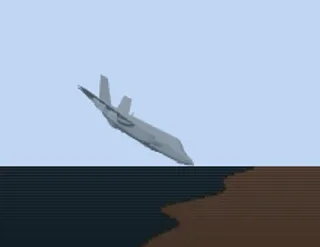
Which picture matches the cockpit view?
Show the answer
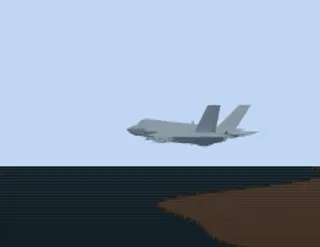
Answer: Picture 4 of 5: the aircraft over the coastline
Horizon level, near the top: wings level, dive.
Land below, sea ahead: flying straight out to sea.
Wings level, nose down, toward the sea. Not the nose-up, banked or inland ones.
Item 4 of 15
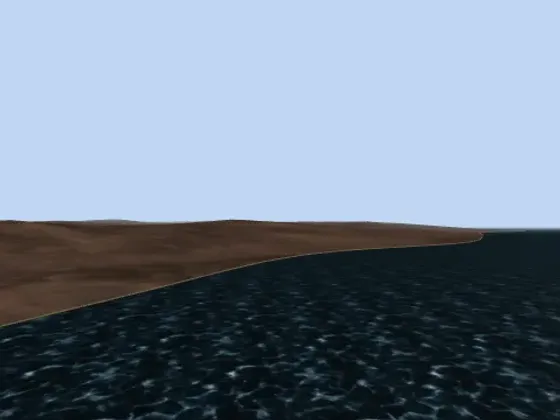
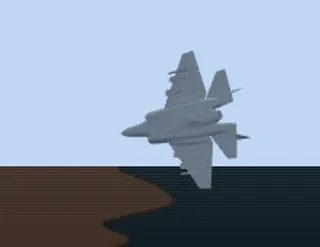
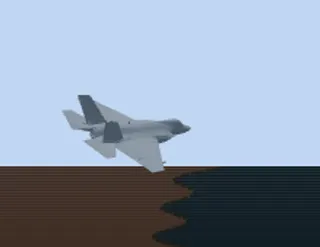
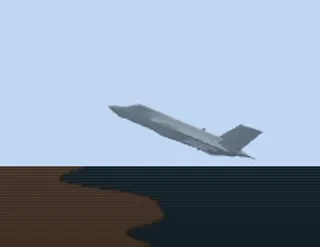
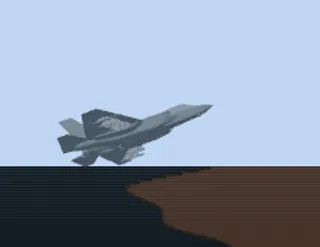
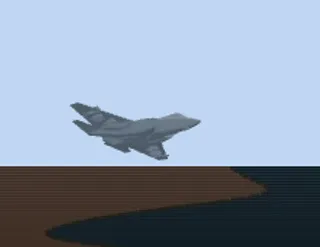
Which picture matches the cockpit view?
Show the answer
Answer: Picture 2 of 5: the aircraft over the coastline
Horizon level, just below center: wings level, slight climb.
Sea below, land ahead: heading inland, angling right.
Wings level, nose slightly up, toward the land. Not the banked ones.
Item 5 of 15
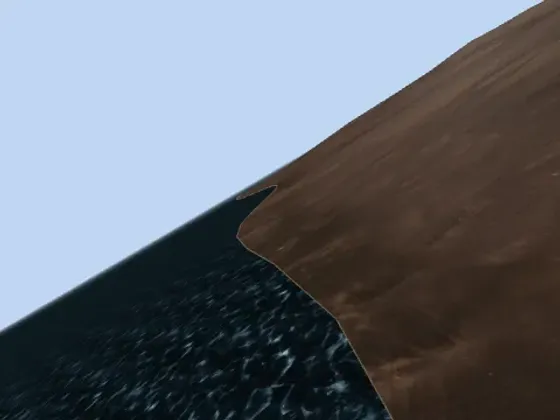
Which picture matches the cockpit view?
Show the answer
Answer: Picture 1 of 5: the aircraft over the coastline
Horizon higher on the right, through the center: right bank, level flight.
Land right, sea left: flying along the coast.
Banked right, head-on. Not the left bank, the nose-up one or those heading out to sea.
Item 6 of 15
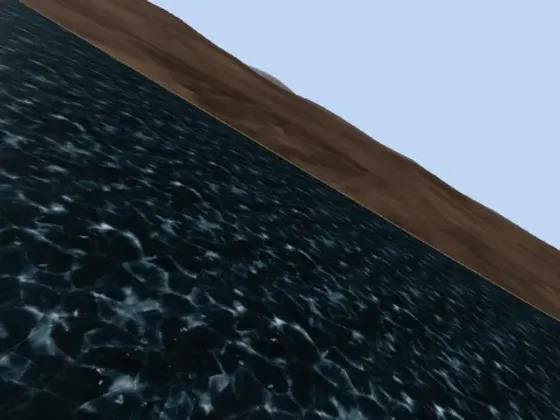
Which picture matches the cockpit view?
Show the answer
Answer: Picture 1 of 5: the aircraft over the coastline
Horizon higher on the left, above center: left bank, slight dive.
Sea below, land ahead: heading straight inland.
Banked left, nose slightly down, toward the land. Not the steeper bank, the nose-up ones or the one along the coast.
Item 7 of 15
Which picture matches the cockpit view?
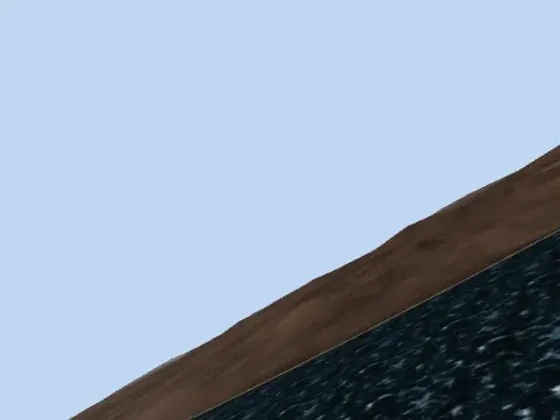
Show the answer
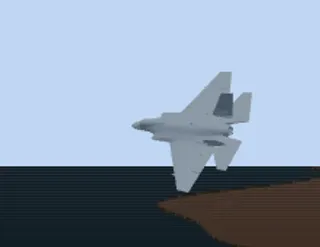
Answer: Picture 3 of 5: the aircraft over the coastline
Horizon higher on the right, low in the view: right bank, climb.
Sea below, land ahead: heading straight inland.
Banked right, nose up, toward the land. Not the steeper right bank or the left-banked ones.
Item 8 of 15
Which picture matches the cockpit view?
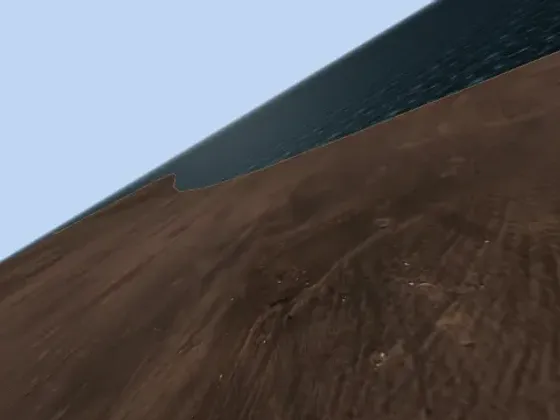
Show the answer
Answer: Picture 5 of 5: the aircraft over the coastline
Horizon higher on the right, above center: right bank, slight dive.
Land below, sea ahead: heading out to sea, angling right.
Banked right, nose toward the sea. Not the left bank or those heading inland.
Item 9 of 15
Which picture matches the cockpit view?
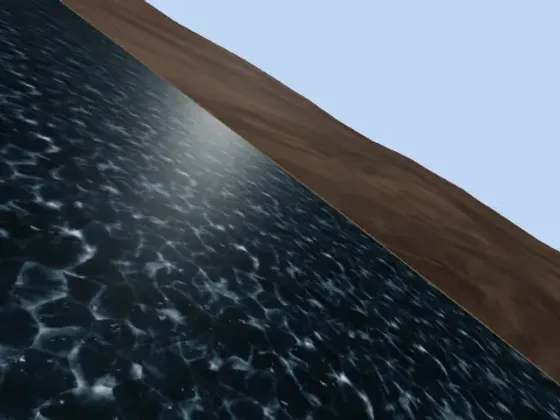
Show the answer
Answer: Picture 3 of 5: the aircraft over the coastline
Horizon higher on the left, above center: left bank, slight dive.
Sea below, land ahead: heading inland, angling left.
Banked left, nose slightly down. Not the nose-up one, the steeper banks or the right bank.
Item 10 of 15
Which picture matches the cockpit view?
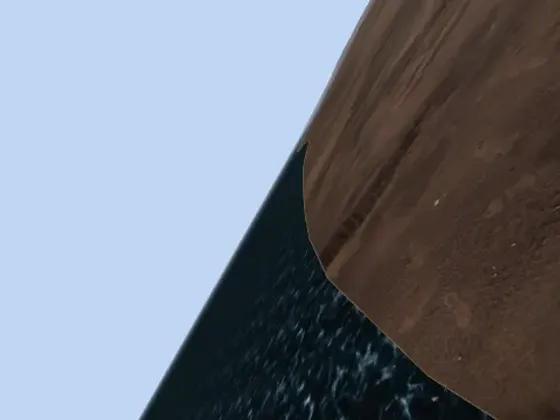
Show the answer
Answer: Picture 3 of 5: the aircraft over the coastline
Horizon steep, higher on the right: steep right bank, level flight.
Land right, sea left: flying along the coast.
Banked steeply right, flying away. Not the left banks or the ones heading inland.
Item 11 of 15
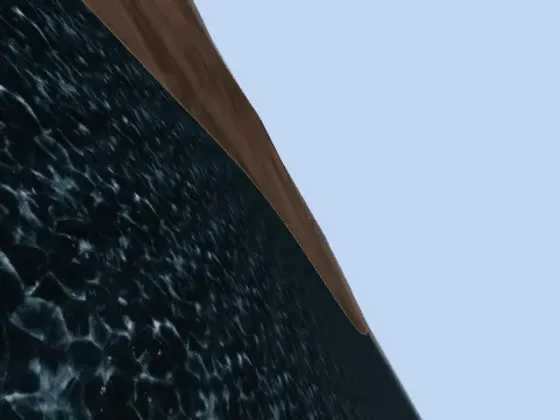
Which picture matches the cockpit view?
Show the answer
Answer: Picture 2 of 5: the aircraft over the coastline
Horizon steep, higher on the left: steep left bank, level flight.
Sea below, land ahead: heading inland, angling right.
Banked steeply left, nose level. Not the right banks, the vertical one or the wings-level one.
Item 12 of 15
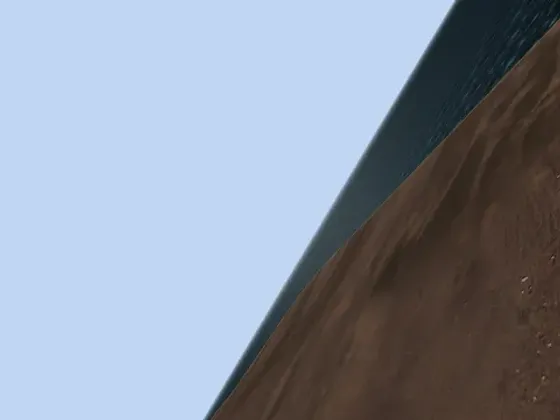
Which picture matches the cockpit view?
Show the answer
Answer: Picture 3 of 5: the aircraft over the coastline
Horizon steep, higher on the right, just below center: steep right bank, slight climb.
Land below, sea ahead: heading out to sea, angling right.
Banked steeply right, nose slightly up. Not the vertical, left-banked or nose-down ones.
Item 13 of 15
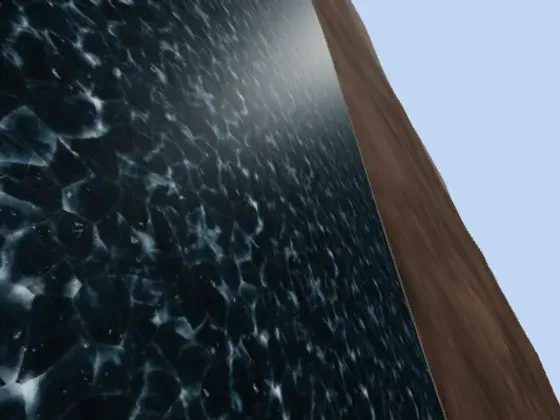
Which picture matches the cockpit view?
Show the answer
Answer: Picture 2 of 5: the aircraft over the coastline
Horizon steep, higher on the left, high in the view: steep left bank, dive.
Sea below, land ahead: heading inland, angling left.
Banked steeply left, nose down. Not the nose-up ones or the right banks.
Item 14 of 15
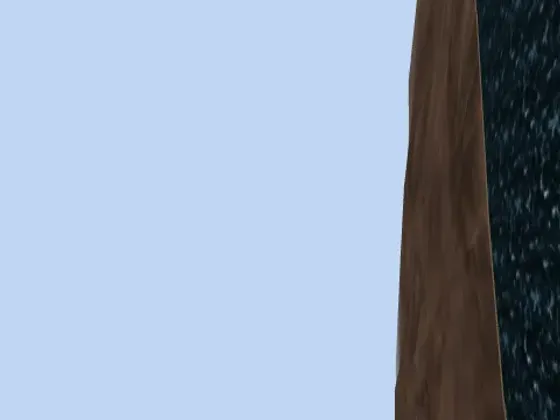
Which picture matches the cockpit view?
Show the answer
Answer: Picture 4 of 5: the aircraft over the coastline
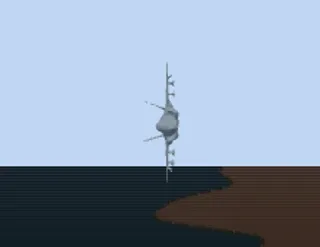
Horizon vertical, ground to the right: 90° right bank, climb.
Sea nearer, land toward the horizon: heading inland, angling right.
Banked 90° right, nose up. Not the wings-level one or the left banks.
Item 15 of 15
Which picture matches the cockpit view?
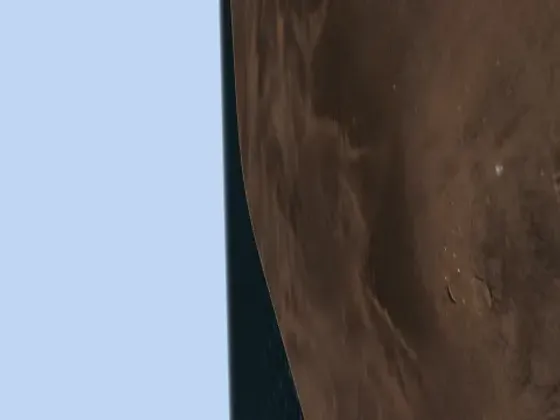
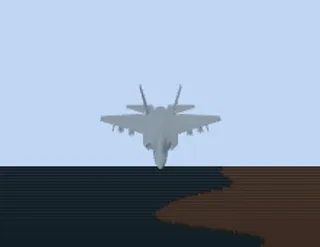
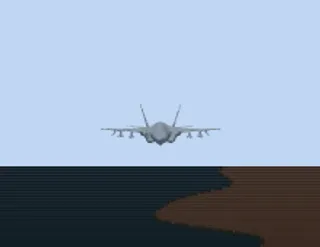
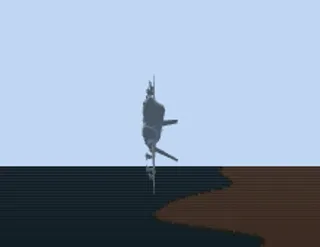
Show the answer
Answer: Picture 3 of 5: the aircraft over the coastline
Horizon vertical, ground to the right: 90° right bank, slight dive.
Land nearer, sea toward the horizon: heading out to sea, angling left.
Banked 90° right, nose toward the sea. Not the left banks or the shallower right bank.
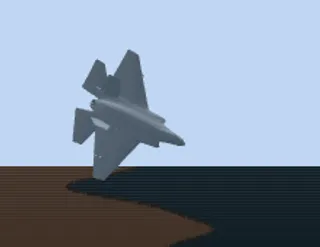
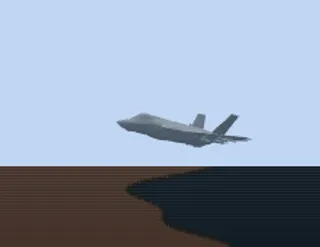
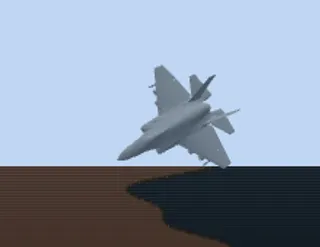
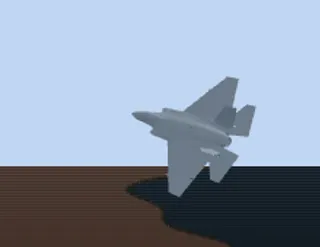
Reading Comprehension
15 questions
Item 1 of 15
A pilot planning a flight needs less a description of the weather than a small set of numbers that can be compared with a limit. The routine surface observation issued by airfields around the world serves that purpose, reporting in a fixed order the wind, the visibility, the significant weather, the state of the sky, the temperature and dew point, and the pressure setting for the altimeter. Two of those items do most of the work. Visibility, measured horizontally at the surface, and the ceiling, defined as the height of the lowest layer that covers more than half the sky, together decide whether an approach may be attempted at all, since every published procedure sets a lowest altitude to which the approach may be flown and a minimum visibility for flying it. The observation is a report rather than a prediction, and it describes one point on the field at one moment, so a runway can be clear while fog sits over the far end of it. Pilots therefore read the sequence of observations instead of the latest one alone, since the air stands nearest to saturation, and so to fog and low cloud, when the temperature and the dew point converge, and a dew point creeping toward the temperature across three successive reports says more about the next hour than any single line does. The forecast, issued separately and less often, is where the airfield commits itself to what it expects.
According to the passage, how is the ceiling defined?
Show the answer
Answer: The height of the lowest layer covering more than half the sky
The passage defines the ceiling as the height of the lowest layer that covers more than half the sky.
The lowest cloud of any kind does not count unless it covers more than half the sky, the visibility limit is a separate measure taken horizontally at the surface, and the forecast is a separate product from the observation that reports the ceiling.
Item 2 of 15
Time is the one resource a leader cannot generate, and the procedures armies use to plan under pressure are organized around that fact. A leader who receives a mission is expected to issue a warning order almost immediately, long before the plan itself exists, because subordinate elements have their own preparation to do, and every hour they spend waiting for details is an hour subtracted from drawing ammunition, rehearsing and resting. The familiar rule of thumb allots the leader no more than a third of the available time for planning and reserves the remaining two-thirds for the units that must execute, which inverts the instinct to keep working on a plan until it is complete. Reconnaissance is inserted before the plan is finished rather than after, since information gathered once the order is written tends to arrive as an inconvenience rather than as an input. The order itself is followed by rehearsal and by inspection, on the assumption that a plan understood in a briefing tent is not yet a plan the unit can execute in the dark. None of these steps assumes a complete picture. They assume instead that preparation and information will keep arriving, and they distribute the available time so that the arrival is useful.
According to the passage, how much of the available time is the leader allotted for planning?
Show the answer
Answer: No more than a third, with two-thirds left to subordinates
The passage gives the rule of thumb: the leader takes no more than a third of the available time for planning and leaves the remaining two-thirds to the units that must execute.
An even split and an open-ended allotment contradict that stated proportion, and leaving the leader whatever remains after rehearsal reverses the priority the rule sets.
Item 3 of 15
The purpose of a telescope is less to magnify than to gather, since the faintest object it can register depends on the area of its main mirror, which grows with the square of the diameter. Aperture governs a second quantity as well, because the finest detail an optical system can separate is set by the way light waves interfere at the edge of the opening, and that limit improves steadily as the opening widens. A large telescope on the ground, however, rarely achieves the sharpness its aperture would allow. Air of differing temperature drifts in cells across the line of sight, each cell bending the arriving wavefront a little, so the image of a point source dissolves into a shifting blur that astronomers call seeing. Seeing imposes a floor of roughly one second of arc at an ordinary site, a limit that no increase in aperture can pass, which is why the great observatories occupy high, dry mountains where the air is thin and steady. Two remedies go further: a deformable mirror can be adjusted hundreds of times a second to undo the distortion measured on a reference star, and an instrument in orbit escapes the atmosphere altogether at the cost of a smaller mirror and a far larger budget. Choosing between them is less a question of principle than of what a program of observation is worth.
According to the passage, what produces the blur that astronomers call seeing?
Show the answer
Answer: Pockets of warmer and cooler air bending the light as it arrives
The passage says that air of differing temperature drifts in cells across the line of sight, each cell bending the arriving wavefront, and that the resulting blur is called seeing.
City lights, dust and moisture, and vibration of the mounting are never offered as causes. The passage names temperature differences in the air alone.
Item 4 of 15
The brown crust on a seared steak, the color of toasted bread and the aroma of roasted coffee arise from one family of reactions, described early in the twentieth century by the French chemist Louis-Camille Maillard. Amino acids from protein and certain sugars combine under high heat and rearrange into hundreds of new compounds, many of them volatile and responsible for the smells that reach the eater before the food does. The process is often confused with caramelization, which involves sugar alone and yields a narrower range of flavors, although the two proceed together in many pans. What both require is a temperature well over that of boiling water, and that requirement accounts for a great deal of ordinary cooking practice. A surface covered in liquid cannot rise past the boiling point until the liquid has gone, so a wet steak steams itself gray while a dried one browns, and a crowded pan floods and cools before anything can color. Bakers exploit the same chemistry deliberately, brushing loaves with egg or milk to supply the protein and sugar that a lean dough lacks. Because the compounds are generated at the surface, browning remains a coating rather than a transformation of the food underneath.
In the passage, the word "volatile" most nearly means
Show the answer
Answer: Ready to evaporate
The volatile compounds are the ones responsible for the smells that reach the eater before the food does, so they turn to vapor readily: volatile means ready to evaporate.
Nothing in the sentence concerns cold, taste or quantity, so unstable when cold, bitter and produced in small amounts do not fit.
Item 5 of 15
A quota limits the quantity of a good that may be imported, whereas a tariff taxes each unit, yet in a simple competitive market the two can raise the domestic price by the same amount. The difference lies in who collects the gap between the world price and the higher price at home, and under a tariff the government receives it as revenue. Under a quota the gap goes to whoever holds the right to import, a windfall that economists call the quota rent. The voluntary export restraint that Japan accepted on automobile shipments to the United States in 1981 shows how much the distinction can matter. Because Japanese firms themselves controlled the limited number of cars sent, they captured the higher price, and they responded by shifting their exports toward larger and better-equipped models that earned more per vehicle. Japanese producers also expanded the assembly of cars inside the United States, where the limit did not apply. A quota behaves differently from a tariff when demand grows as well, since the fixed quantity lets the domestic price keep rising, whereas a tariff lets additional imports enter at the same taxed price.
In the passage, the word "windfall" most nearly means
Show the answer
Answer: An unearned gain
The gap between the world price and the price at home goes to whoever holds the right to import, a gain the holder did nothing to earn: a windfall is an unearned gain.
The tax paid to the government is the tariff case, the limit on goods admitted is the quota itself, and the buyers' loss is the higher price they pay, not what the license holder receives.
Item 6 of 15
A short thick post fails by crushing once the load on it exceeds what the material can bear, and that is the failure most people picture when they imagine a column giving way. A slender column does something else entirely. Long before the stress in the material approaches the crushing strength the column bows sideways, and once it has bowed the load is no longer aligned with its axis, so the load begins to bend the column further and the deflection accelerates until the member folds. The load at which this starts depends on the length of the column, the stiffness of the material and the shape of the cross section, and the length enters the calculation as a square, so doubling the unsupported height cuts the buckling load to a quarter. Nothing about the strength of the material appears in that relation, which is why a stronger steel does nothing for a column failing in this manner while a brace at midheight does a great deal. Designers therefore speak of the effective length of a column, meaning the distance between the points where it is genuinely held, and much of the steelwork in a building exists to shorten that distance. The failure arrives suddenly and gives no warning, which is one reason temporary bracing during construction is treated as seriously as the permanent structure.
According to the passage, what happens to the buckling load when the unsupported height of a column is doubled?
Show the answer
Answer: It falls to a quarter, since the length counts as a square
The passage states that the length enters the calculation as a square, so doubling the unsupported height cuts the buckling load to a quarter.
Halving would mean the load changes in simple proportion to the length, the load cannot hold steady when one of its three factors has changed, and the passage says the strength of the material does not appear in the relation at all.
Item 7 of 15
Hovering close to the ground is easier than hovering at a height, and the explanation has nothing to do with the pilot's confidence. A rotor works by driving a column of air downward, and the power it consumes depends on how fast that column has to move, and near a surface the downwash cannot escape freely, because the ground interrupts the circulation of air that would otherwise roll up around the blade tips and spill back into the disc. The result is a cushion of higher pressure beneath the aircraft, a flatter path for the air leaving the rotor, and a measurable reduction in the power needed to stay in one place. The benefit is substantial within roughly one rotor diameter of the surface and diminishes to nothing beyond that height. Pilots therefore distinguish two kinds of hover, and performance charts give two sets of figures for them, because an aircraft able to hold a hover near the ground may be unable to hold one at the height of a rooftop. Tall grass, water, and broken ground all weaken the cushion, and a departure planned on the wrong set of figures can end with an aircraft that lifts and then refuses to climb.
Which statement best expresses the main idea of the passage?
Show the answer
Answer: A rotor near the ground needs less power, and that changes what is possible
The passage explains why a rotor near a surface needs less power to hover, then draws the consequences: two kinds of hover, two sets of chart figures, and a departure that can fail on the wrong set.
It never presents a low hover as an emergency precaution, it says uneven surfaces weaken the cushion rather than that the charts are unreliable, and it states that the benefit fades beyond about one rotor diameter, so height does matter.
Item 8 of 15
For three and a half centuries after Gutenberg, the printing press remained a hand-operated machine, and a skilled crew could produce no more than a few hundred impressions an hour. In November 1814 The Times of London announced that it had been printed on a steam-powered press designed by the German engineer Friedrich Koenig, a machine that used a revolving cylinder to press paper against the type and turned out about eleven hundred sheets an hour. The proprietor had the machines assembled in secret, fearing that his pressmen would destroy them. Faster presses, however, exposed a slower step that no press could accelerate: every letter of every page still had to be picked from a case and set by hand, and a large daily paper required a small army of compositors. That bottleneck lasted until the 1880s, when Ottmar Mergenthaler's Linotype, first used at the New York Tribune in 1886, let an operator at a keyboard assemble molds for a whole line of text and cast it in hot metal. Together with paper made from wood pulp, which became common in the second half of the century, these machines made possible the thick, cheap daily newspapers of the late nineteenth century. The cheap daily paper was therefore the product of a whole sequence of machines and materials rather than of the press alone.
Which statement best expresses the main idea of the passage?
Show the answer
Answer: Cheap daily papers needed fast typesetting and cheap paper as well as fast presses
The last sentence carries the point: the cheap daily paper was the product of a whole sequence of machines and materials, the fast press, the Linotype and wood-pulp paper, rather than of the press alone.
That sentence rules out the steam press as the one invention. The proprietor feared his pressmen would destroy the new machines, which is not a refusal to work the old ones, and the Linotype solved hand typesetting rather than replacing the press.
Item 9 of 15
Fatigue degrades performance in a way that differs from other hazards, because it also degrades the judgment by which a person would ordinarily recognize the problem. Reaction time lengthens, attention narrows, and the willingness to consider alternatives falls well before a tired person feels unable to continue. Self-assessment is therefore an unreliable safeguard, and regulation has largely taken the place of the personal discretion crews once exercised. The body's internal clock complicates the matter further, since alertness follows a daily cycle with a pronounced low in the hours before dawn. An identical period of duty consequently produces different degrees of impairment depending on when it falls. Two crews with the same number of hours on duty may be in quite different condition, and rules written only in terms of elapsed time will treat them as equivalent. Modern duty regulations accordingly weigh the time of day, the number of flights undertaken, and the opportunity for recovery sleep instead of counting hours alone. The remaining difficulty is cultural, since an occupation that admires endurance is slow to accept that a tired professional is impaired in ways that willingness cannot correct.
Which statement best expresses the main idea of the passage?
Show the answer
Answer: Fatigue impairs performance and the self-awareness needed to detect it
The first sentence states the idea the rest develops: fatigue degrades performance and also the judgment a person would use to recognize the problem.
The passage credits modern rules with weighing more than hours rather than calling them failures, treats the hours before dawn as one factor among several, and blames a culture that admires endurance for slow acceptance, not for causing fatigue.
Item 10 of 15
The first missions that made the helicopter indispensable were not attacks but rescues. In 1944 an American machine operating in Burma carried wounded men out of jungle clearings that no airplane could have reached, lifting them one or two at a time over ridges that would otherwise have taken days to cross on foot. The aircraft was underpowered for the heat and the terrain, and the pilot had to make several trips, yet the men reached care they would not otherwise have reached at all. During the Korean War the practice was organized rather than improvised, and casualties were flown from the field to surgical units waiting a short distance behind the line. Shortening the interval between wounding and surgery improves the chances of survival, and the helicopter shortened that interval drastically; the consequences reached well past medicine, because a force that can be resupplied and evacuated by air is less bound to roads than any army before it. Commanders who had first accepted helicopters as ambulances soon found other uses for them. That sequence, from rescue to routine transport, repeated itself in most of the services that adopted the aircraft.
What is the author's purpose in describing the ridges around the jungle clearings?
Show the answer
Answer: To convey how slow an evacuation on foot would have been
The ridges would otherwise have taken days to cross on foot, so the detail sets the flight against the slow alternative of carrying the wounded out overland.
The passage says nothing about flying altitude, never compares Burma with other battlefields, and mentions no damage to the aircraft, only that it was underpowered.
Item 11 of 15
A pure metal is a surprisingly soft material, because its atoms are stacked in orderly planes and one plane can slide over its neighbor without the metal ever coming apart. The sliding does not happen at once across the whole plane but travels through it as a line of misfit, in the way a rumple travels along a rug that is being straightened, and little force is needed to move that line along. Anything that obstructs the line makes the metal harder. Atoms of a second element serve that purpose well, since they differ in size from the atoms they sit among, and the strain they impose on the surrounding structure stands as an obstacle the misfit must be pushed past. Bronze is harder than the copper it is mostly made of, and the difficulty of putting a durable edge on copper is what made the alloy worth the trouble of obtaining tin. The same interference works against other properties, because the electrons that carry a current are scattered by the same disorder that impedes the sliding, and an alloy conducts noticeably worse than the pure metal it began as. That is why a cable strung between towers is made of metal as pure as the cost allows, while a tool is not.
Why does the author bring in a rumple traveling along a rug?
Show the answer
Answer: To picture a movement that crosses a plane a little at a time
The passage says the sliding travels through the plane as a line of misfit, the way a rumple travels along a rug, rather than happening across the whole plane at once.
The image says nothing about a metal springing back after a load, alloys make sliding harder rather than more frequent, and the strain the added atoms impose is never described as temporary.
Item 12 of 15
John Boyd, an American fighter pilot who spent much of his career studying air combat, traced the origins of his thinking about decision making to a question about the Korean War, namely why American pilots prevailed more often than a comparison of the two aircraft's published performance figures would have predicted. His answer stressed transitions rather than raw capability. A pilot who could see out of the cockpit easily and shift from one maneuver to the next quickly was able to finish a cycle of observing, orienting, deciding and acting faster than an opponent. Each finished cycle left that opponent one step behind, facing a situation not yet made sense of. Boyd argued that the orienting step carries the most weight, because it is where training, memory and expectation turn raw observation into meaning, and an enemy working from a distorted picture will act boldly on the wrong problem. The practical aim, in his account, is not merely speed but the power to create change faster than an enemy can read it, so that the enemy's decisions arrive late every time. The idea has since been applied well beyond flying, in part because it describes rivalry under uncertainty rather than any one weapon.
The final sentence of the passage serves mainly to
Show the answer
Answer: Indicate why the idea travels beyond its original setting
The final sentence says the idea has been applied well beyond flying because it describes rivalry under uncertainty rather than any one weapon: it explains why the idea travels.
It raises no doubt about Boyd's conclusions, introduces no rival theory, and says nothing about how aircraft design has changed since Korea.
Item 13 of 15
Primary radar works by brute force: a transmitter floods the sky with energy and a receiver listens for the faint fraction that bounces off an aircraft, which reveals a target's range and bearing but says nothing about its identity or its height. Secondary radar was developed to augment that thin return. A ground station transmits an interrogation, and equipment carried in the aircraft, the transponder, answers with a coded reply far stronger than any echo, carrying information the echo never could. The pilot sets a four-digit code on the transponder, and the controller, having assigned that code, sees the aircraft labeled on the display rather than merely painted as a blip. Certain codes are reserved by international agreement and are understood without a word being spoken: one signals a radio failure, another an emergency, another unlawful interference with the flight. A pilot operating under visual rules and talking to nobody sets a standard code that identifies the flight as exactly that. Because the reply is generated rather than reflected, a transponder gives a small aircraft much the same presence on a controller's screen as a large one, which is why the device matters most to the aircraft least able to be seen.
What can be inferred about a controller tracking an aircraft that carries no transponder?
Show the answer
Answer: A small aircraft will be harder to hold than a large one
Without a transponder the controller has only the primary echo, the faint fraction of energy that bounces off the aircraft. The passage credits the generated reply with giving a small aircraft much the same presence on the screen as a large one, so without it the small aircraft is the harder one to hold.
A reserved code is set on the transponder this aircraft lacks, the passage never ties the flight rules to the equipment carried, and it calls the coded reply far stronger than any echo, not weaker.
Item 14 of 15
Sailing south along the coast of West Africa was comparatively easy for Portuguese ships, because the prevailing northeast trade winds and the current both carried them in that direction. Coming home was another matter, since the same winds blew steadily against any vessel trying to work its way north along the coast. The solution that pilots developed over the fifteenth century, known as the volta do mar or turn of the sea, was counterintuitive: rather than fighting the wind near the shore, a returning ship stood far out into the Atlantic on a long northwesterly course until it reached the latitude of the Azores, where westerly winds could carry it back to Portugal. The maneuver demanded confidence in the open ocean, since it meant sailing away from home and out of sight of land for weeks. It also taught a general lesson about the Atlantic, which is that its winds turn in great circuits and that the fastest route between two points may be a wide curve. Vasco da Gama applied that lesson in 1497 when, instead of hugging the African coast southward, he swung far out into the South Atlantic and spent more than three months out of sight of land before meeting the westerlies that carried him toward the southern tip of Africa. What had started as a practical fix for getting home became a way of reading the whole ocean.
What can be inferred about the pilots who used the turn of the sea?
Show the answer
Answer: They needed some way to judge their position while far from any coast
A returning ship stood out on a long course until it reached the latitude of the Azores, out of sight of land for weeks, so the pilot had to judge when that latitude was reached with no coast to go by.
The passage calls the route a wide curve that may be faster, not shorter, describes no wait in port for the trade winds to change, and never limits the westerlies to a season.
Item 15 of 15
Insurance rests on a statistical regularity rather than on any ability to foresee which particular house will burn or which particular driver will crash. For a single household, a fire is a rare and ruinous event whose timing cannot be predicted, yet across many thousands of similar households the number of fires in a given year varies surprisingly little from one year to the next. This is the law of large numbers at work: as a pool of independent risks grows, the average loss per member settles ever closer to its expected value. An insurer can therefore charge each member a premium close to that expected loss, adding an allowance for expenses and for the chance that the year turns out worse than average. The member trades an uncertain and possibly crushing loss for a small and certain payment, while the insurer carries a total that it can forecast with some confidence. The arrangement depends, however, on the word independent. When a single hurricane or earthquake strikes thousands of insured buildings at once, the losses arrive together rather than scattering across years, and a larger pool offers little protection against them. Risks of that kind are the ones private insurers have historically been most reluctant to cover without help from reinsurers or governments.
What does the passage suggest about an insurer whose policies are concentrated along a single hurricane-prone coast?
Show the answer
Answer: It needs a bigger margin for bad years than an insurer with scattered risks
The passage says a premium carries an allowance for a year worse than average, and that one hurricane brings its losses together instead of scattering them across years. An insurer concentrated on one coast faces a greater chance of a bad year, so it needs a bigger margin.
Adding policies on the same coast is what the passage says offers little protection against a shared disaster, it mentions a historical reluctance to cover such risks rather than a legal ban, and it describes premiums set close to the expected loss, not below it.
Math Skills
15 questions
Item 1 of 15
A crew chief pays $45.00 for 9 identical tie-down straps. What is the price of one strap?
Show the answer
Answer: $5.00
The nine straps share the cost evenly: $45.00 ÷ 9 = $5.00 for one strap.
$36.00 subtracts 9 from 45, $0.20 divides 9 by 45, and $405.00 multiplies the two numbers instead of dividing.
Item 2 of 15
What is 45% of 260?
Show the answer
Answer: 117
45% is 0.45, and 0.45 × 260 = 117.
305 and 215 add and subtract 45 as if it were a count, and 130 is half of 260, which is 50%, not 45%.
Item 3 of 15
2/5 × 3/4 =
Show the answer
Answer: 3/10
Multiply the numerators and the denominators: (2 × 3)/(5 × 4) = 6/20, which reduces to 3/10.
8/15 is the quotient 2/5 ÷ 3/4, 5/9 adds the numerators and the denominators, and 2/3 is 6/9, the numerators multiplied over the denominators added.
Item 4 of 15
A courier recorded the number of parcels delivered on each of seven days: 4, 8, 4, 11, 6, 4 and 12. What is the median number of parcels delivered on a day?
Show the answer
Answer: 6
In order the seven counts are 4, 4, 4, 6, 8, 11, 12, and the fourth, the middle one, is 6.
7 is the mean (49 ÷ 7), 4 is the mode, the count that appears most often, and 11 is the fourth number of the list before it is put in order.
Item 5 of 15
A paint mix uses 5 quarts of base for every 1 quart of tint. A crew uses 40 quarts of base. How many quarts of tint does the crew use?
Show the answer
Answer: 8
Base and tint are in the ratio 5 to 1, so the tint is one fifth of the base: 40 ÷ 5 = 8 quarts.
48 adds the 8 quarts of tint to the 40 of base, 200 multiplies 40 by 5 instead of dividing, and 35 subtracts 5 from 40.
Item 6 of 15
A rectangular water trough is 10 feet long, 3 feet wide and 4 feet deep. It is filled with water to two thirds of its depth. How many cubic feet of water does it hold? (Use V = lwh.)
Show the answer
Answer: 80
Filled to two thirds of 4 feet, the water stands 8/3 feet deep, so it holds 10 × 3 × 8/3 = 80 cubic feet, two thirds of the full 120.
40 is the third left empty, 20 is a sixth of the trough, and 90 is three quarters of it, not two thirds.
Item 7 of 15
Solve for x: 18 − 2x > x − 6
Show the answer
Answer: x < 8
Add 2x and 6 to both sides: 24 > 3x. Dividing by 3 gives 8 > x, which is x < 8.
x < 4 subtracts 6 from 18 instead of adding it (12 > 3x).
Testing x = 10 rules out the other two: 18 − 20 = −2 is not greater than 10 − 6 = 4, yet both x > −24 and x < 21 allow x = 10.
Item 8 of 15
2⁻² + 2⁻¹ =
Show the answer
Answer: 3/4
A negative exponent is a reciprocal: 2⁻² = 1/4 and 2⁻¹ = 1/2. Then 1/4 + 2/4 = 3/4.
1/8 multiplies the two terms, 1/3 adds numerators and denominators (2/6), and 5/8 takes 2⁻² for 1/8.
Item 9 of 15
x² − 3x − 28 factors as
Show the answer
Answer: (x − 7)(x + 4)
The two numbers must multiply to −28 and add to −3: −7 and 4. So x² − 3x − 28 = (x − 7)(x + 4).
(x + 7)(x − 4) gives a middle term of +3x, (x − 7)(x − 4) gives +28 as the constant, and (x − 14)(x + 2) multiplies to −28 but gives −12x.
Item 10 of 15
A helicopter takes off with 240 gallons of fuel. The crew burns 25% of it on the outbound leg and 40% of what is left on the return leg. How many gallons remain after the return leg?
Show the answer
Answer: 108
The outbound leg leaves 0.75 × 240 = 180 gallons. The return leg burns 40% of those 180, or 72, which leaves 180 − 72 = 108 gallons.
180 is the fuel left after the outbound leg only, 72 is the fuel burned on the return leg, and 84 burns 25% + 40% = 65% of the original 240 instead of 40% of what was left.
Item 11 of 15
A rectangular garden plot is 54 feet by 72 feet. A path runs straight from one corner to the opposite corner. How many feet long is the path?
Show the answer
Answer: 90
The path is the diagonal, the hypotenuse of a right triangle with legs 54 and 72: 54² + 72² = 2,916 + 5,184 = 8,100, and √8,100 = 90 feet.
The sides are the 3-4-5 triangle taken 18 times, so 18 is only the multiplier, and 75 and 78 fall short: 75² = 5,625 and 78² = 6,084.
Item 12 of 15
If x + 3y = 17 and x − y = 1, then y =
Show the answer
Answer: 4
Subtracting the second equation from the first removes x: (x + 3y) − (x − y) = 17 − 1, so 4y = 16 and y = 4.
5 is the value of x, not y, 16 stops before dividing by 4, and 8 treats 3y − (−y) as 2y.
Item 13 of 15
A bowl holds 9 green apples and 15 red apples. Four of the red apples are taken out and eaten before anyone else reaches in. If one apple is then taken from the bowl at random, what is the probability that it is red?
Show the answer
Answer: 11/20
After four red apples are eaten the bowl holds 15 − 4 = 11 red and 9 green, 20 in all, so the probability of red is 11/20.
11/24 keeps the original total of 24, 5/8 is the chance of red before any were eaten (15/24), and 9/20 is the chance of green.
Item 14 of 15
If f(x) = x² and g(x) = x − 5, then g(f(4)) − f(g(4)) =
Show the answer
Answer: 10
Work from the inside out: f(4) = 16, so g(f(4)) = 16 − 5 = 11, and g(4) = −1, so f(g(4)) = (−1)² = 1. The difference is 11 − 1 = 10.
11 is g(f(4)) alone, 17 adds the two values instead of subtracting, and −10 subtracts them in the wrong order.
Item 15 of 15
A truck leaves a depot at 8:00 in the morning and drives at a steady 40 miles per hour. A car leaves the same depot an hour and a half later and drives along the same road at a steady 60 miles per hour. How many minutes after the car leaves does it draw level with the truck?
Show the answer
Answer: 180
By 9:30 the truck has driven 40 × 1.5 = 60 miles. The car gains 60 − 40 = 20 miles every hour, so it closes the gap in 60 ÷ 20 = 3 hours, or 180 minutes.
90 is the head start itself, 120 minutes would need the car to gain 30 miles an hour, and 36 divides the gap by 60 + 40 = 100 miles per hour, as if the two drove toward each other.
Mechanical Comprehension
15 questions
Item 1 of 15
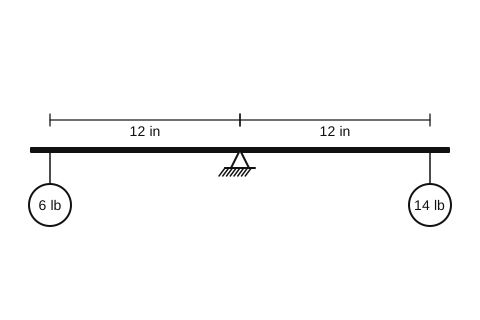
The beam shown rests on the pivot, with a weight hanging on each side. Which way does the beam tip?
Show the answer
Answer: The right side goes down
Moment = weight × distance from the pivot.
Left: 6 × 12 = 72 lb-in. Right: 14 × 12 = 168 lb-in.
The right side has the greater moment, so it goes down; the beam cannot stay level.
Item 2 of 15
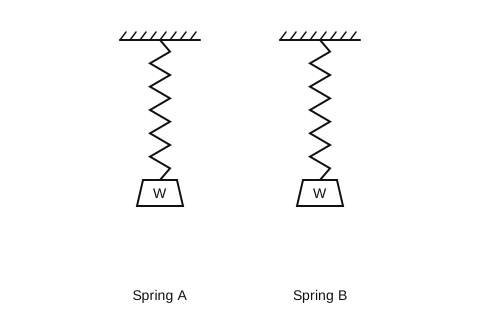
Springs A and B support identical weights, as shown. Both are stretched from the same natural length. Which spring is stiffer (has the greater spring constant)?
Show the answer
Answer: Both springs are equally stiff
Same weight, same stretch: by F = kx, the same spring constant.
A stiffer spring would stretch less under the same weight.
Both stretch equally here, so neither is stiffer.
Item 3 of 15
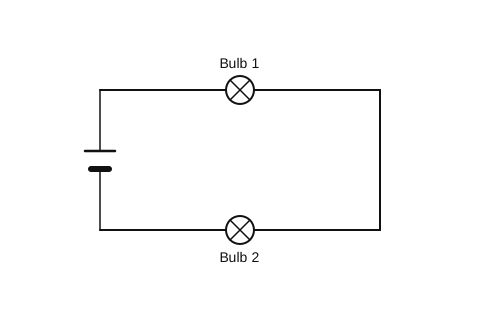
The two bulbs shown are wired in series. If bulb 1 burns out, what happens to bulb 2?
Show the answer
Answer: It goes out too
In series, the current has only one path.
When bulb 1 burns out, that path is broken.
No current reaches bulb 2, so it goes out too: it cannot stay lit, dim or brighten.
Item 4 of 15
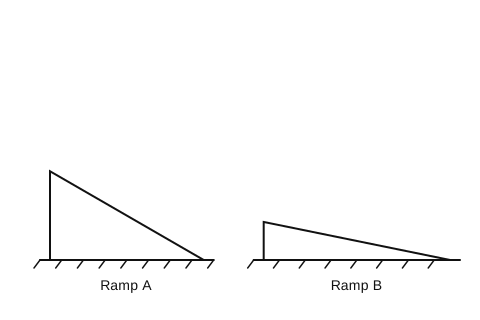
Ramps A and B are shown, each frictionless. An identical crate is pushed to the top of each ramp at a constant speed. Which ramp requires LESS force to push the crate up?
Show the answer
Answer: Ramp B
On a frictionless ramp, the push = weight × height / length.
Ramp B rises less over a longer run: it is the shallower slope.
The shallower ramp needs less force: Ramp B.
Item 5 of 15
The pulley system shown is used to raise a load. Which statement about the rope pulled through the system, compared to the height the load rises, is TRUE?
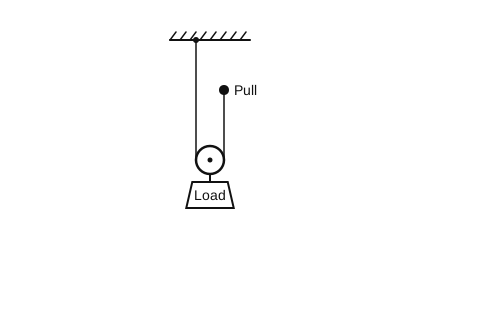
Show the answer
Answer: TWICE as much rope is pulled through the system as the load rises
One rope end is tied off, so the pulley hangs on two rope segments.
Raising the load 1 ft shortens both segments by 1 ft: 2 ft of rope pulled.
Twice as much rope as the load rises, not the same, less or three times.
Item 6 of 15
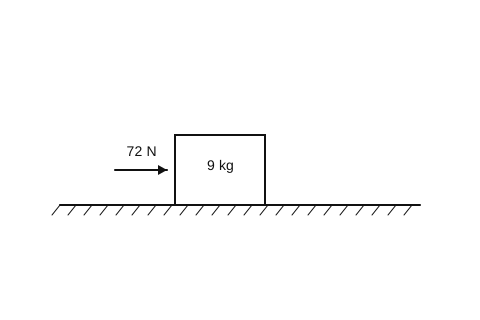
The crate has a mass of 9 kg. A net force of 72 N pushes it, as shown. Find its acceleration.
Show the answer
Answer: 8 m/s²
a = F / m = 72 / 9 = 8 m/s².
1, 2 or 4 m/s² would need a force of 9, 18 or 36 N.
Item 7 of 15
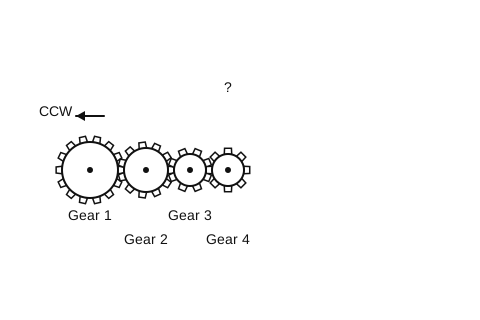
Gear 1 turns counterclockwise. Gear 1 is the first of the train of meshed gears shown, each meshing with the next. Which statement about the LAST gear in the train is TRUE?
Show the answer
Answer: Opposite direction to the first gear, and FASTER
Each meshing pair turns in opposite directions: 4 gears, 3 reversals.
An odd number of reversals: the last gear turns opposite to Gear 1.
The last gear is smaller than Gear 1, so it turns faster.
Item 8 of 15
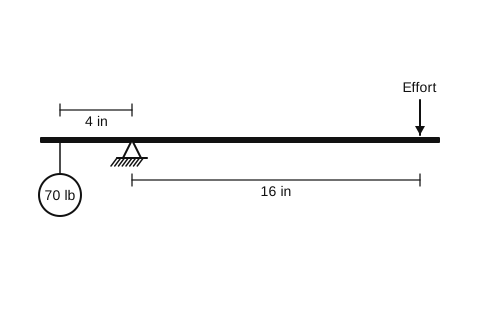
A first-class lever has an effort arm of 16 in and a load arm of 4 in. What is its mechanical advantage?
Show the answer
Answer: 4x
MA = effort arm / load arm = 16 / 4 = 4x.
16x is the effort arm alone and 12x the difference of the arms; 2x would need an 8 in effort arm.
Item 9 of 15
Pistons A and B are connected by an enclosed, incompressible liquid, as shown: pushing on one moves the other. For the same amount of liquid displaced, which piston travels a GREATER distance?
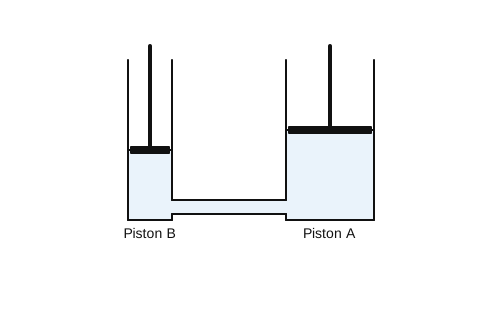
Show the answer
Answer: Piston B moves farther
The liquid one piston pushes out, the other receives: area × distance is the same for both.
Piston B has the narrower bore, so it must travel farther.
The wider Piston A moves less; the distances are not equal.
Item 10 of 15
Blocks A and B weigh the same but rest on the ground through footprints, as shown. Which block exerts GREATER pressure on the ground (or do they exert the same pressure)?
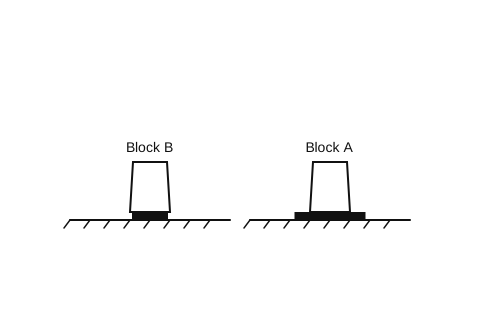
Show the answer
Answer: Block B
Pressure = force / area.
Same weight, but Block B stands on the smaller footprint.
Less area, more pressure: Block B, not Block A, and not equal.
Item 11 of 15
Two identical shelving units, shown side by side with their shelves and stacked load drawn, carry the same load. Which one is LESS stable (more likely to tip over), or are they equally stable?
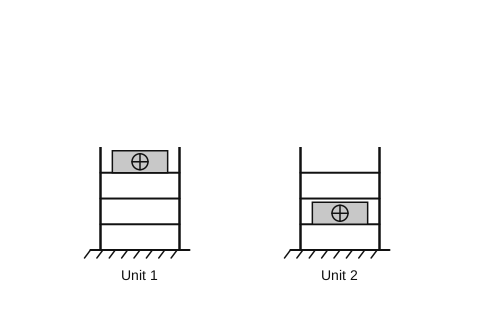
Show the answer
Answer: The shelf with the load near the top
A load placed high raises the center of gravity.
A higher center of gravity passes outside the base after a smaller tilt.
The unit with the load near the top is the less stable one.
Item 12 of 15
Chambers A and B hold trapped air and are connected through a valve, as shown: each piston has been pushed in by some amount, compressing the air trapped inside. Which direction will air flow through the valve?
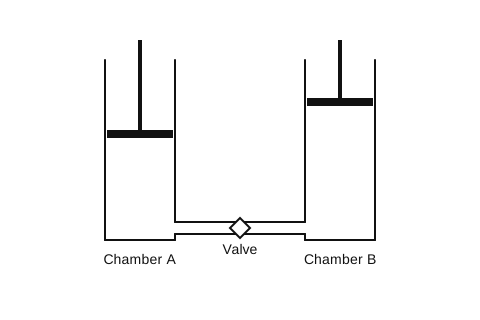
Show the answer
Answer: Toward Chamber B
Chamber A's piston is pushed in farther: its air is squeezed into less space.
Less volume, higher pressure (Boyle's law).
Air flows from high to low pressure: toward Chamber B.
Item 13 of 15
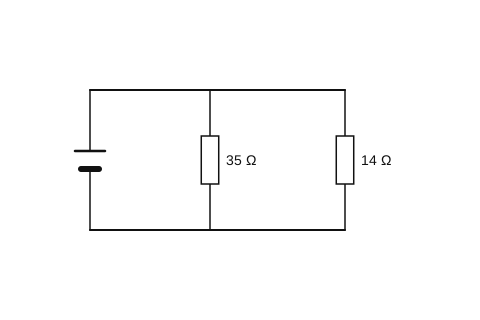
Two resistors, 35 Ω and 14 Ω, are wired in parallel. Find the total (equivalent) resistance of the circuit.
Show the answer
Answer: 10 Ω
In parallel, R = (R1 × R2) / (R1 + R2) = (35 × 14) / 49 = 10 Ω.
Parallel resistance is below the smallest resistor, so not 14 or 35 Ω; 5 Ω would need two 10 Ω resistors.
Item 14 of 15
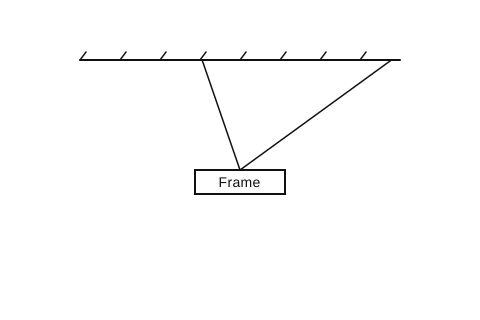
A picture frame hangs at rest from two ropes anchored to the ceiling, as shown. Which rope, the one nearer to vertical or the one farther from vertical, carries LESS tension (or do both ropes carry the same tension)?
Show the answer
Answer: The rope farther from vertical
At rest, the sideways pulls of the two ropes cancel.
The rope farther from vertical pulls more sideways for each pound of tension.
So it needs less tension: the rope farther from vertical carries less.
Item 15 of 15
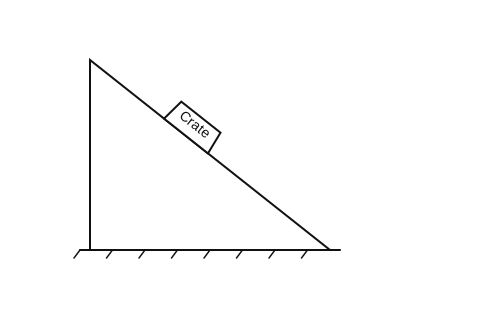
Instead of lifting the crate straight up, a mover pushes it up the frictionless ramp shown. Compared to lifting the crate straight up, how does the total WORK done compare (ignoring friction)?
Show the answer
Answer: The same as lifting straight up
Raising the crate to a given height takes work = weight × height, whatever the path.
The frictionless ramp cuts the force but lengthens the distance by the same factor.
Same work: not less despite the smaller force, not more without friction, and no numbers are needed.
Your results
- Simple Drawings
- Hidden Figures
- Army Aviation Information
- Spatial Apperception
- Reading Comprehension
- Math Skills
- Mechanical Comprehension
- Total
Explore each subtest
Format, scoring, and five more free questions on every subtest page.