Hidden Figures
Fifty items in five minutes: find the simple shape buried inside a dense pattern. Pure visual search — and a highly trainable reflex.
- Questions
- 50
- Time limit
- 5 min
- Pace
- ~6 s per item
- Counts toward
- SIFT score
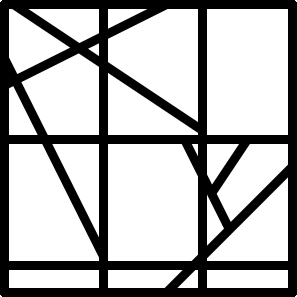
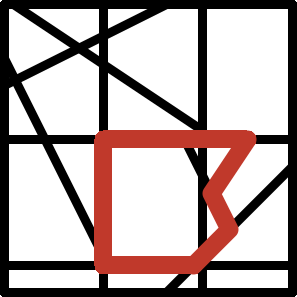
Training test screenshot
Real preview from the Hidden Figures training test interface.
How the Hidden Figure test works
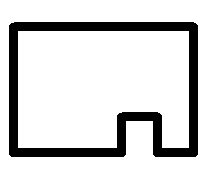
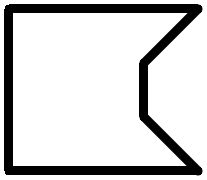
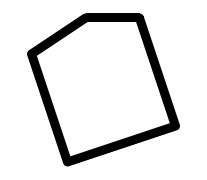
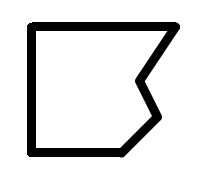
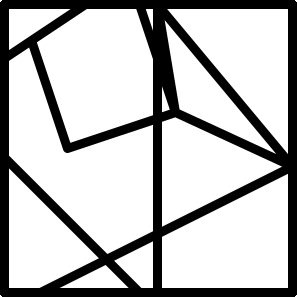
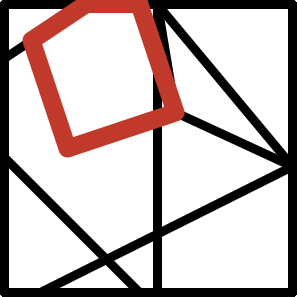
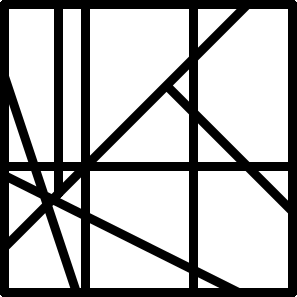
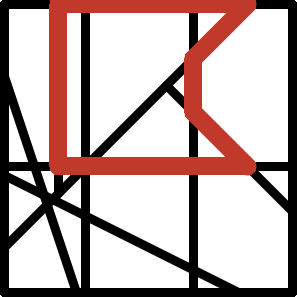
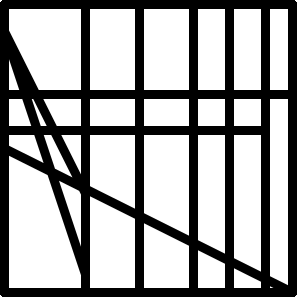
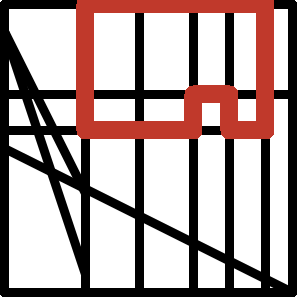
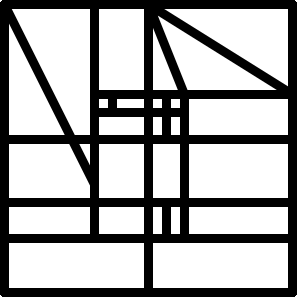
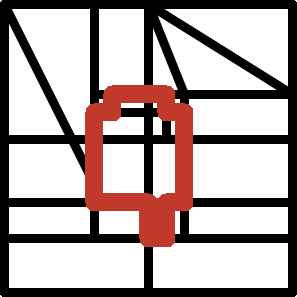
The Hidden Figures section is a visual search challenge. On every question, you see one complex grid made of overlapping lines and five candidate shapes labeled A through E. One candidate is embedded inside the grid, and your job is to identify it quickly and accurately.
You get 50 questions in 5 minutes, which is about 6 seconds per item. This sounds manageable on paper, but many candidates lose points because the visual clutter makes simple shapes harder to isolate than expected.
In practice, this section feels difficult because your brain wants to process the full drawing at once. High scorers do the opposite: they lock onto one distinctive feature, confirm two supporting lines, then answer without overchecking.
Why Candidates Get Caught Off Guard. Many candidates underestimate this section because the candidate shapes look simple. The trap is the background: heavy overlap creates false matches that make wrong options look correct at first glance.
Two items, solved the test-day way
Use these examples to learn a repeatable solve pattern instead of guessing under pressure.
Example 1: Angle Anchor Method
You are looking for a shape with one sharp 45-degree corner and one long straight tail. Instead of matching the whole shape, first scan for the 45-degree corner only. Once found, verify tail direction and answer. This avoids getting tricked by partial lookalikes.
Example 2: Intersection Check
Two options seem possible, but only one includes a true three-line intersection. Check that intersection before anything else. In Hidden Figures, intersection structure is often the fastest way to eliminate trap options.
Common mistakes
Searching Randomly
Without a fixed scan pattern, you re-check the same area and miss easy matches. Use a consistent sweep direction on every question.
Matching the Whole Shape First
This is too slow. Start with one unique feature (angle, intersection, or curve), then confirm supporting lines.
Overtrusting First Impressions
Overlap creates fake visual matches. Always verify one structural detail before selecting an option.
Spending Too Long on One Item
At 6 seconds per question, one stubborn item can cost multiple later points. Decide quickly and keep pace.
Hidden Figures, quick answers
Why do many candidates find Hidden Figures difficult?
The difficulty comes from visual clutter and trap patterns. Many candidates search randomly or try to match full shapes instead of validating one distinctive feature first.
What is the best way to improve Hidden Figures performance?
Prioritize short, frequent timed practice instead of occasional long sessions. On every item, use a fixed scan pattern, pick one unmistakable anchor feature in the composite figure, then match it to the options before the clock pushes you into guessing. For drills that mirror test-day pacing, sign in to the Frontline Forge training platform and run Hidden Figures sets under the same kind of time pressure you will see on the SIFT.
Do wrong answers hurt my score on SIFT Hidden Figures?
Yes. Hidden Figures is formula-scored: a portion of the items you answer incorrectly is deducted from the items you answer correctly. The Army's own guidance for this subtest is to work quickly and not guess. Nobody is expected to reach all 50 items, so accuracy on the ones you do reach is worth more than volume.
Should I skip hard questions or stay until I solve them?
Do not get trapped on one item — at this speed, one stubborn question costs you several later ones. But because of the wrong-answer deduction, skipping cleanly is better than picking at random: if the shape has not resolved, leave it and keep scanning.
What pace should I target during practice?
Aim for about 6 seconds per question, which matches the official 50-in-5 timing. First build a reliable scan routine, then gradually increase speed while keeping accuracy stable.
How many days of practice do most candidates need to improve?
Many candidates improve within 1 to 2 weeks of daily timed sets. Short, consistent sessions with quick review after each set usually work better than occasional long practice blocks.
What should I focus on in the final week before test day?
Prioritize timed repetition and consistency. Keep the same scan method, simulate test pressure, and avoid switching to brand-new techniques in the last few days.
Build your test-day method
- Exam-aligned drills under deliberate time pressure
- Instant explanations after every item
- Your score estimate, tracked drill after drill