Table Reading
Find the value where row meets column, forty times in seven minutes. Pure speed — and every point feeds your Pilot score.
- Questions
- 40
- Time limit
- 7 min
- Pace
- ~10 s per item
- Counts toward
- Pilot · CSO · ABM
How the Table Reading test works
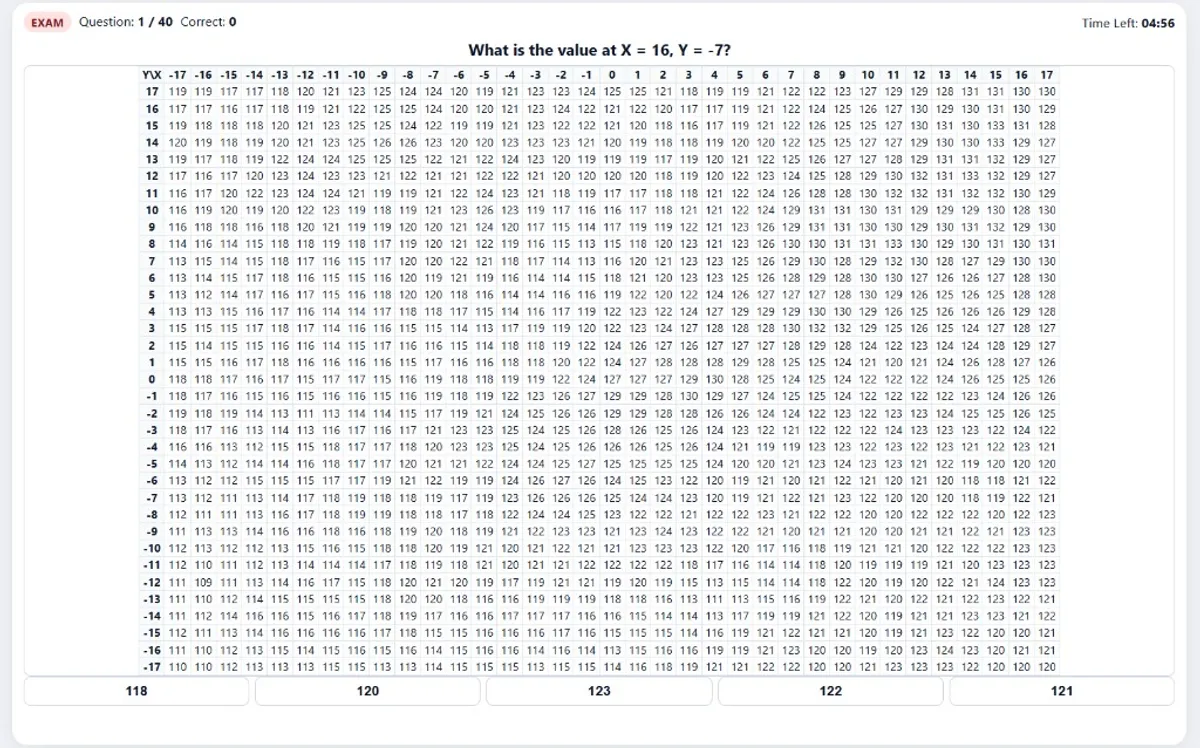
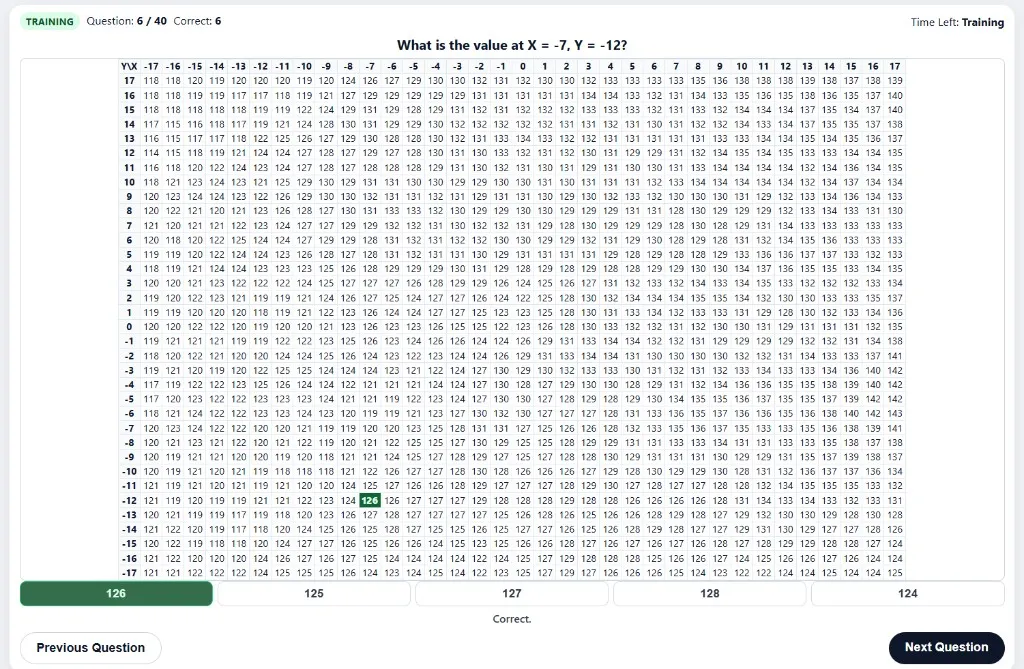
Each question gives two coordinates, usually presented as an X value and a Y value. Your task is simple in theory: find the correct row, find the correct column, and select the value where they intersect. The challenge is execution speed across 40 consecutive items.
There is no calculation and almost no interpretation. This is a visual search and control test. The people who improve fastest are those who standardize their sequence and repeat it until it is automatic under time pressure.
Reliable sequence: (1) anchor your finger on the target row label, (2) move horizontally to the grid, (3) visually match the target column, (4) confirm the intersection value once, (5) mark and move immediately.
Practical strategy from test-taker feedback
Use these methods exactly as you practice so test day feels familiar.
On test day you are not allowed to use one. Practice the same way: your finger becomes your anchor. If your training method is different from test conditions, your timing will drop when it counts.
Strong candidates often place the finger close to the target intersection first, then verify with eyes. You may land one or two boxes off initially. Correct quickly and record. This is faster than restarting a full top-to-bottom scan every time.
Accuracy is as important as speed. If a row alignment feels uncertain, spend an extra second to verify before marking. A clean confirmation is better than collecting fast but avoidable misses.
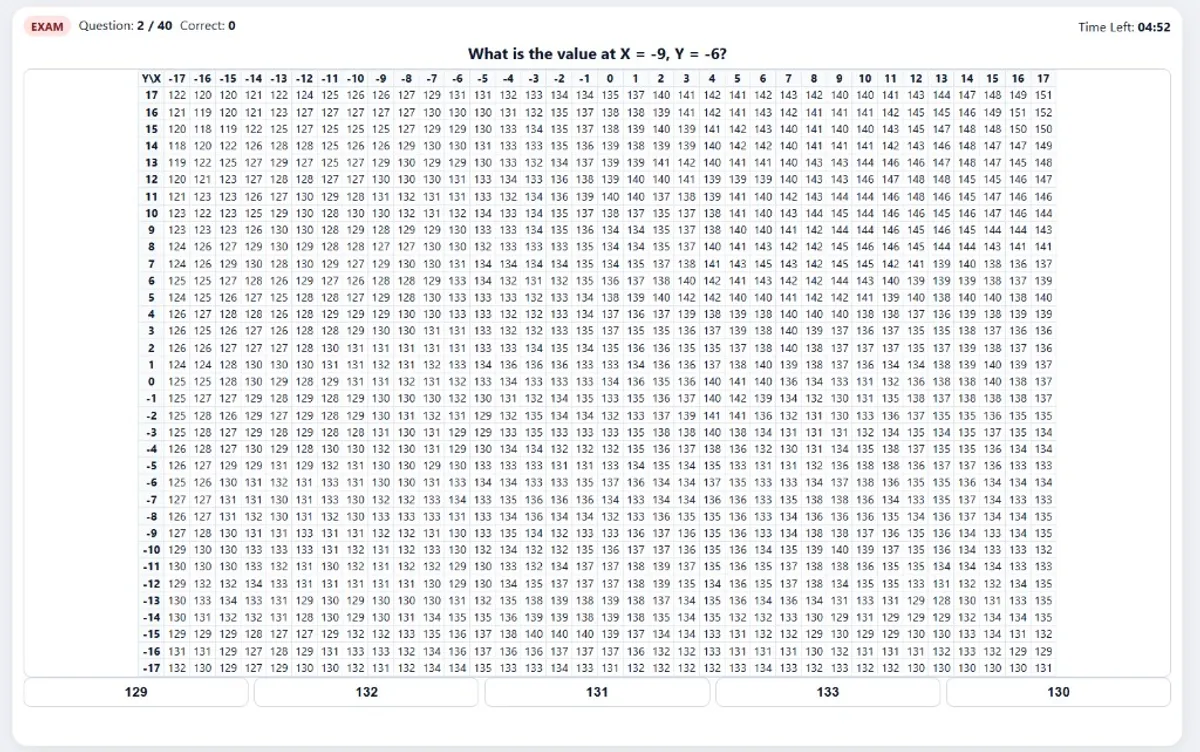
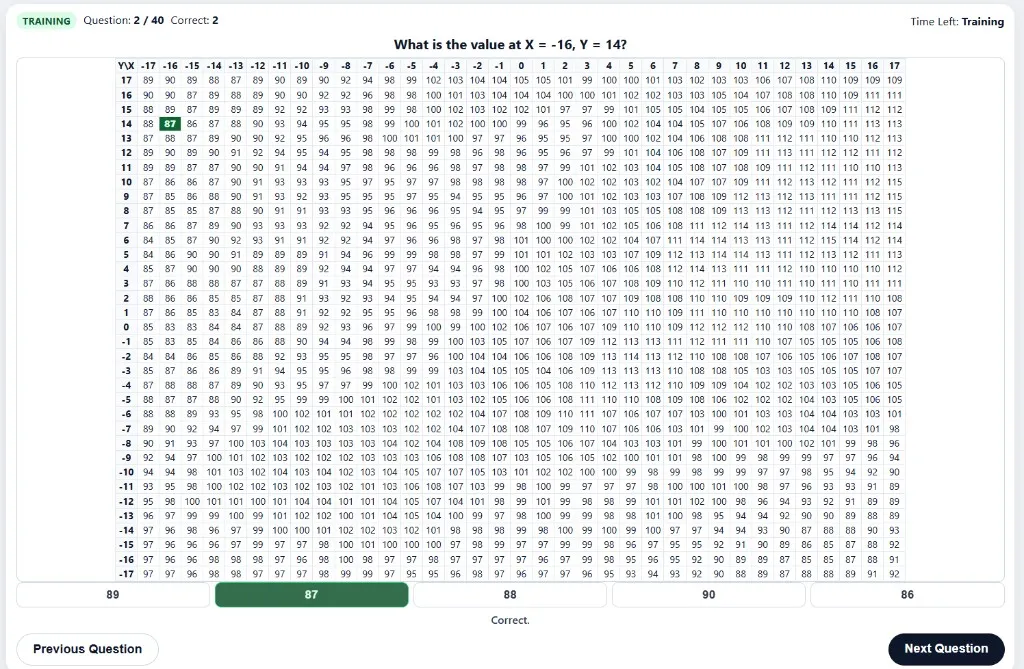
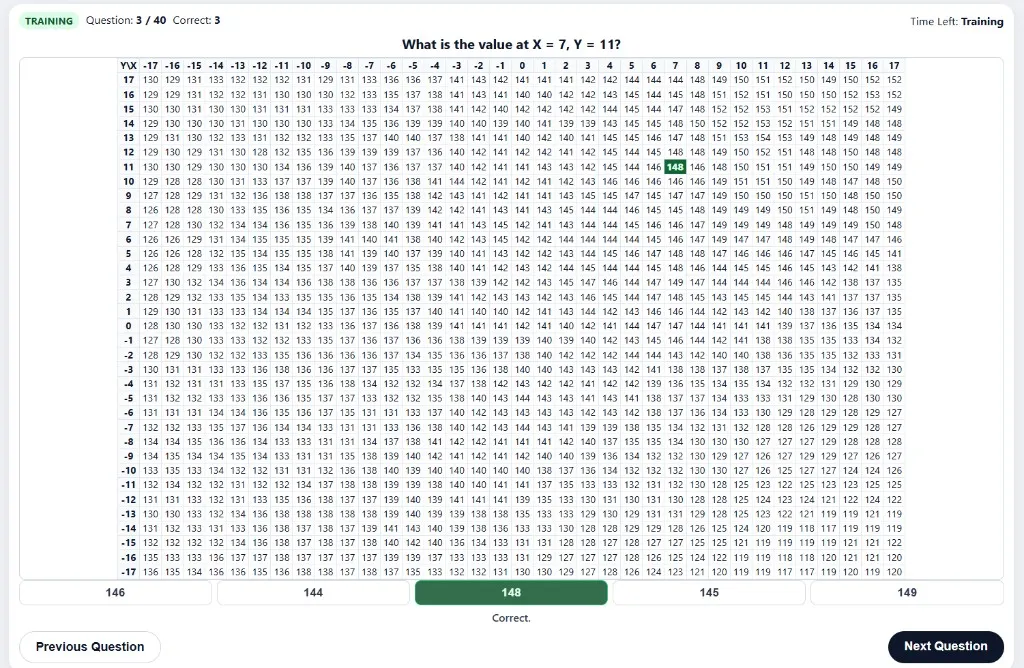
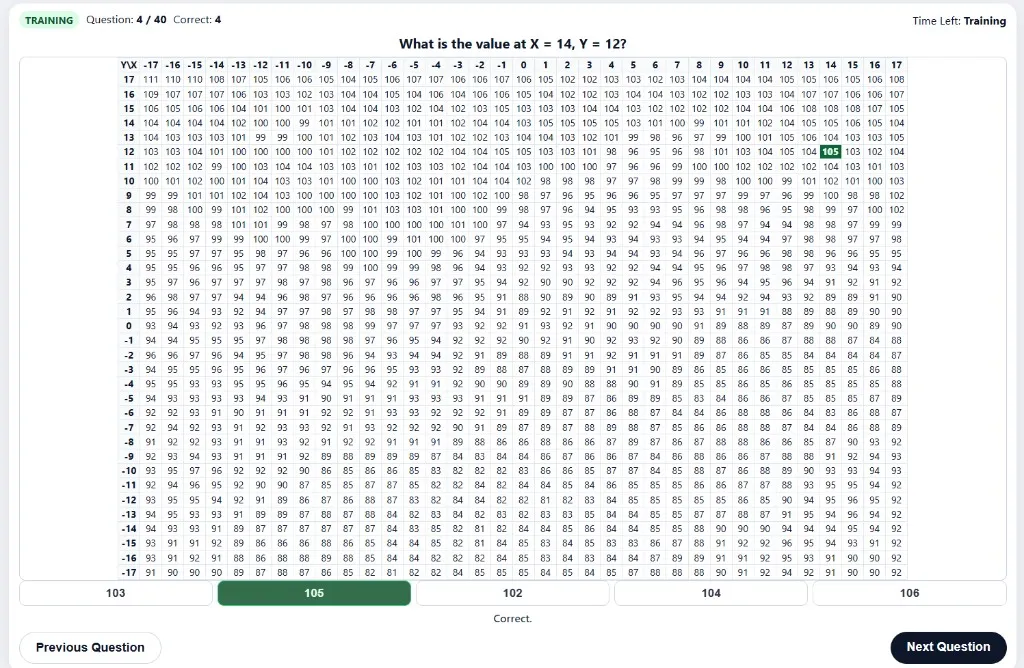
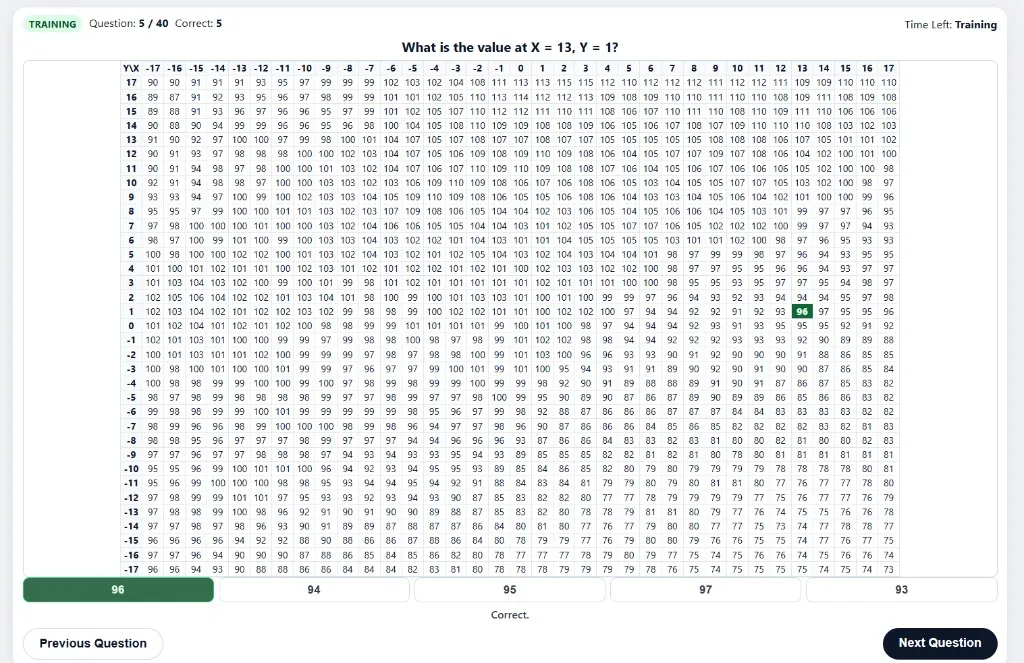
Many real tables behave like gradients: adjacent cells can differ by only one or two points. Answer options may include those neighbors, so a single row/column slip can look correct. This is why precise alignment beats rushing blind.
For each item: find row, find column, confirm once, answer, next. Keep your rhythm constant. Rhythm reduces decision fatigue and helps you preserve both speed and consistency through the full section.
Example questions
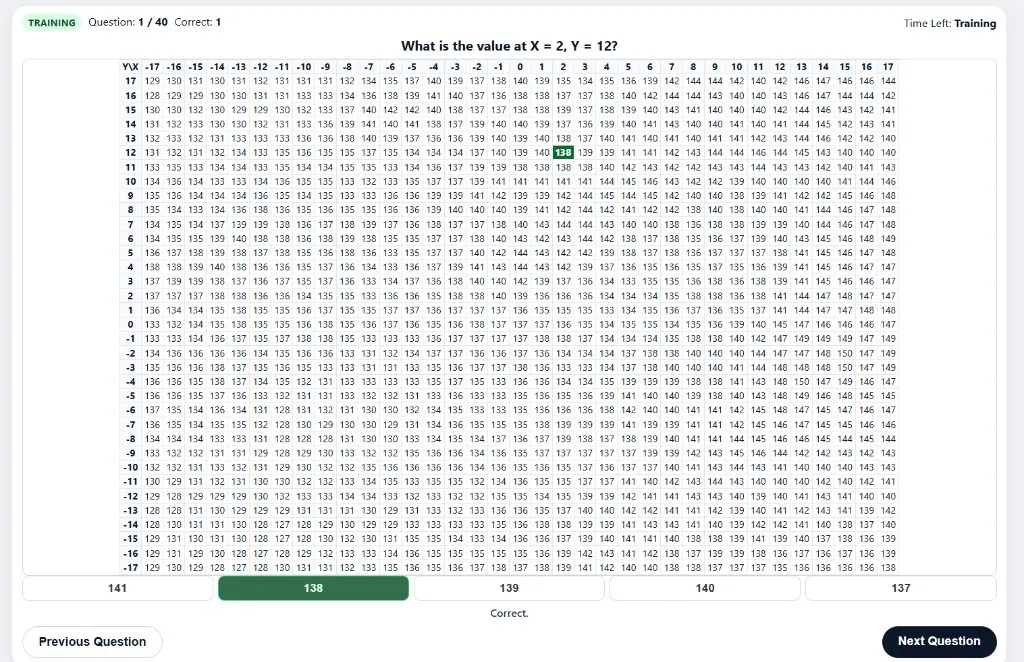
Real question screenshots from training flow, ordered to show progression and reinforce pattern recognition under time pressure.
Common mistakes
Training with tools you cannot use
Practicing with a straight edge creates false confidence. Match real conditions and train with finger tracking.
Re-scanning from zero every item
Starting over each question wastes time. Build a repeatable anchor method and keep your scan path consistent.
Ignoring near-neighbor answers
When numbers form gradients, nearby cells look plausible. One misalignment can cost points repeatedly.
Rushing without one clean check
Speed matters, but blind speed hurts. Use one deliberate confirmation before you mark and move on.
Related AFOQT subtests
Table Reading, quick answers
How does AFOQT Table Reading work?
Each item gives one X and one Y coordinate. You locate the X row and Y column, then choose the number where they intersect. The skill being tested is fast, repeatable visual lookup under pressure.
How much time do I have per question?
You have roughly 10.5 seconds per question (40 questions in 7 minutes). Because the pace is tight, process consistency is critical.
Should I practice with a straight edge?
No. Practice without one because it is not allowed on the test. Use your finger as the anchor while your eyes verify alignment.
Why are wrong answers often close to the right one?
Table values often change gradually, so adjacent cells may differ by one or two points. Test options can include those neighbors, so row/column precision matters.
Does this section matter for pilot applicants?
Yes. Table Reading feeds the Pilot, CSO and ABM composites. For pilot candidates, stronger performance here can improve your overall competitiveness.
Build your test-day method
- Exam-aligned drills under deliberate time pressure
- Instant explanations after every item
- Your score estimate, tracked drill after drill