Stick and Throttle
Two-axis tracking with the stick, airspeed with the throttle, call signs in one ear — the closest thing to a cockpit before flight school.
- Format
- 2-axis tracking + throttle
- Extra load
- Dichotic listening
- Part of
- PBM battery
- Counts toward
- Not part of the OAR
How the Stick and Throttle test works
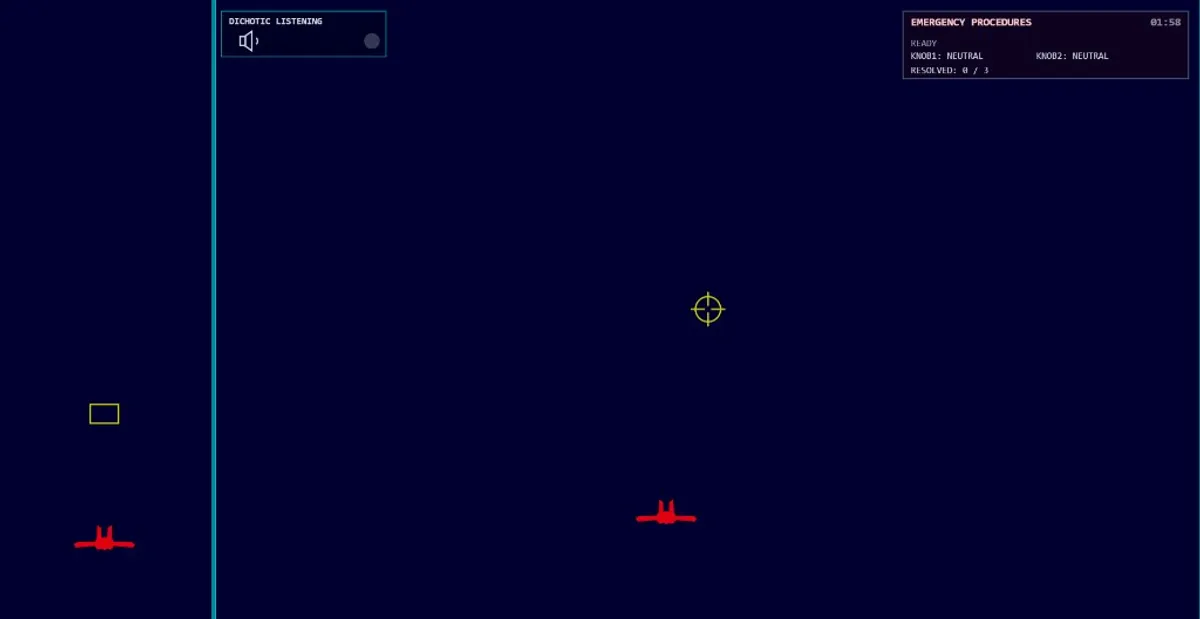
General test flow. The Stick and Throttle module is a divided-attention test. It starts relatively simple, then increases cognitive load by layering additional tasks while you keep controlling the interface.
By the end, you must manage 4 simultaneous tasks: joystick, throttle, dichotic audio, and emergency prompts.
This module does not reward speed alone. It evaluates whether you can stay stable, organized, and accurate under sustained cockpit-style workload.
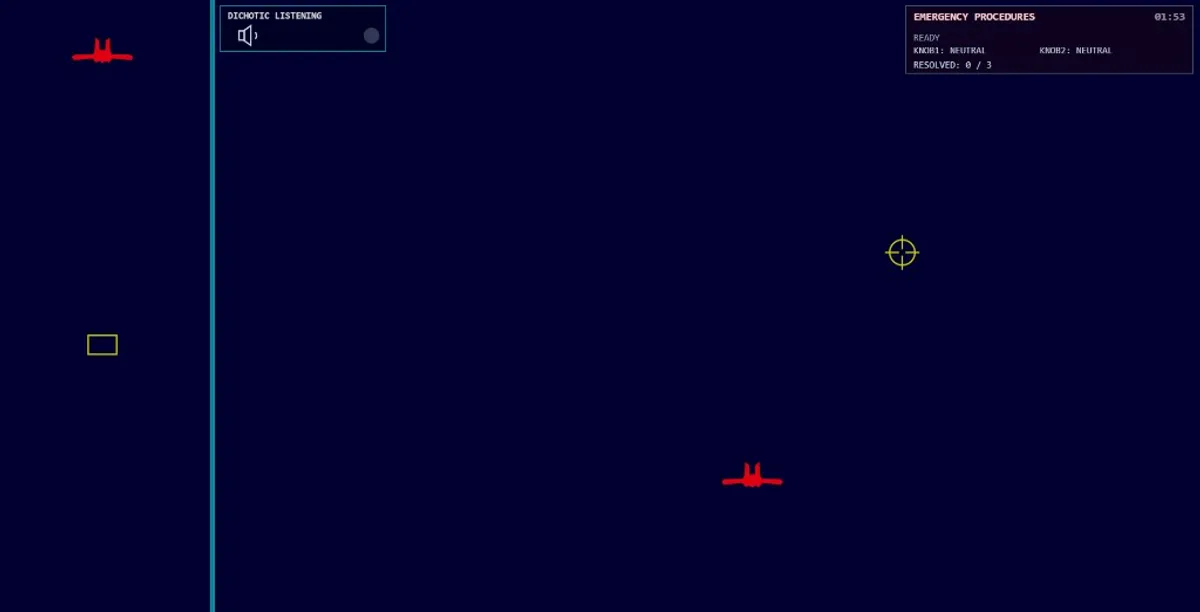
Basic control
You begin with core motor control tasks to establish rhythm, precision, and hand stability.
Added workload
The test layers in additional demands to force real divided-attention management.
Full multitask stack
Joystick, throttle, audio, and emergency actions must be handled without losing control quality.
Detailed breakdown: throttle control
The throttle segment tests your ability to hold a target power band without excessive oscillation. The most common error is over-correcting, then over-correcting again in the opposite direction, which creates a continuous instability loop.
Best method: use small adjustments, anticipate minor drift, and return smoothly to the target zone. Think "stabilize and trim" instead of "slam and chase."
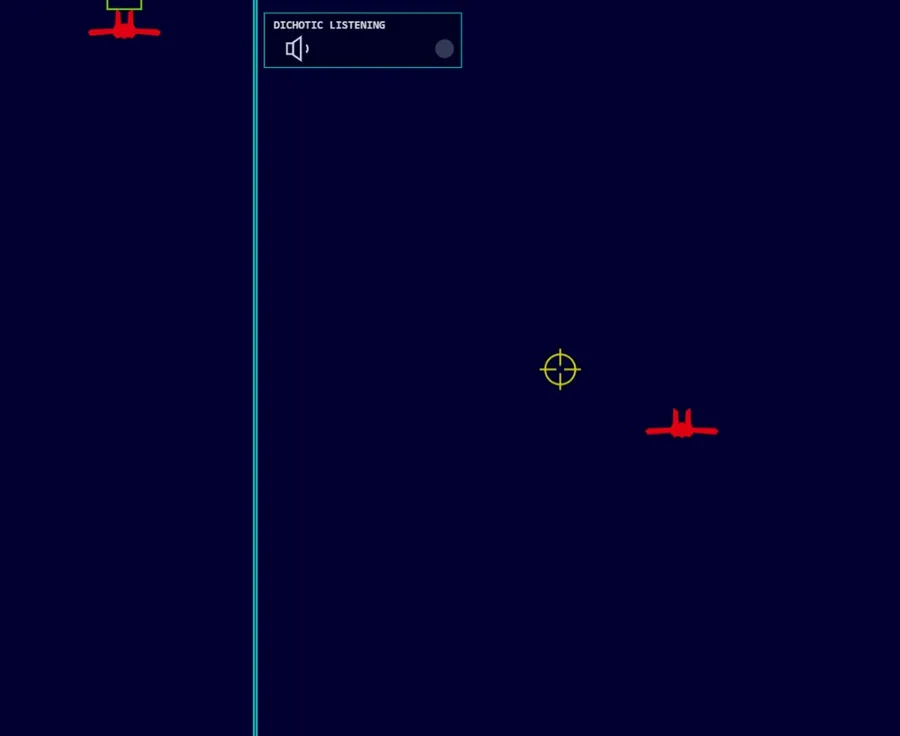
Practical example. If your indicator drops below the target band, bring it up with one small correction, then briefly observe response before acting again. One measured correction usually beats three panic corrections.
Detailed breakdown: joystick control
The joystick segment measures fine tracking control: keeping the marker in range while minimizing drift and unnecessary movement. Again, over-correction is the number-one trap.
Your objective is not to be aggressive, it is to be stable: short inputs, quick recentering, relaxed grip. When workload rises, this efficient control style preserves mental bandwidth for audio and emergencies.
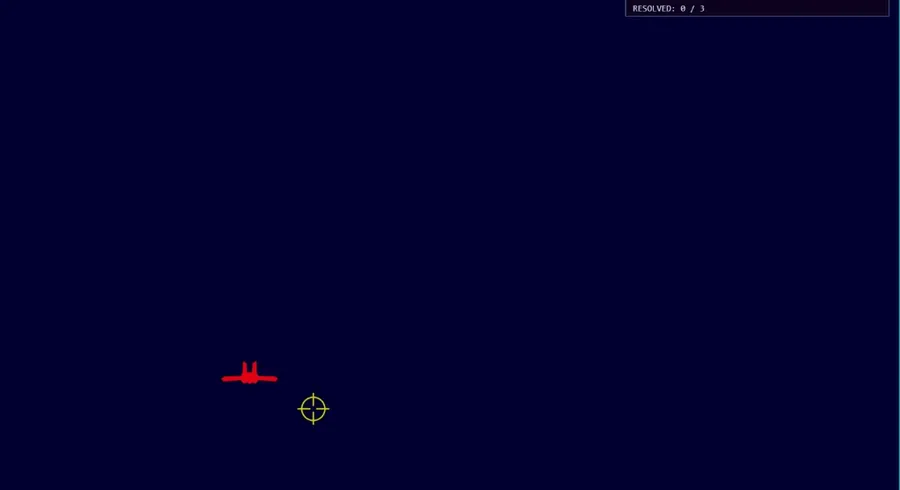
Practical example. Your marker drifts up-right: apply a short diagonal correction, then release immediately to avoid overshooting. "Correct then stabilize" is more effective than "push until it catches up."
Detailed breakdown: dichotic audio
The dichotic audio segment forces you to process auditory input while continuing motor tasks. In practice, you identify the relevant cue, respond quickly, then instantly return to your visual scan.
The real danger is not missing one audio cue. The real danger is mentally lingering on it and degrading joystick/throttle control for the next 2–3 seconds.
Practical example. You hear an ambiguous sequence: run a simple three-step protocol — "identify, respond, return." Even if uncertain, do not freeze. Fast recovery to global control is better than long internal verification.
Detailed breakdown: emergencies
The emergency component measures prioritization under pressure. An alert appears, and you must execute the correct response quickly without abandoning all other control channels.
Best reflex: identify the emergency, execute the required action cleanly, then immediately return to your joystick-throttle-audio loop. This is mostly a discipline test, not just a reaction-speed test.
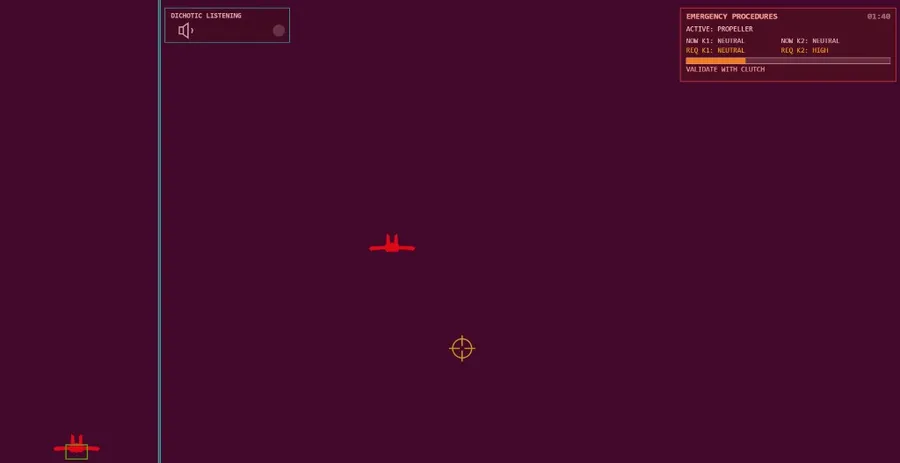
Practical example. An emergency prompt appears while your tracking starts drifting: execute the emergency action in one clear step, then immediately correct drift. Avoid the classic mistake of over-focusing on the alert and losing total motor control.
Common mistakes
Over-correcting the joystick
Large, aggressive movements create constant oscillation and drain attention from all other tasks.
Ignoring throttle during audio
Many candidates process audio correctly but let throttle drift outside the target band.
Spending too long on emergencies
Respond, then return quickly to the global loop. Staying locked on one alert causes system-wide performance drops.
Changing strategy mid-test
A repeatable routine almost always beats improvisation under stress.
Stick and Throttle, quick answers
How many tasks are active at the end of the module?
You finish with 4 simultaneous tasks: joystick, throttle, dichotic audio, and emergency handling.
What skill matters most for scoring well?
Consistency. Clean, stable control across the full test usually beats a fast start followed by instability.
How should I train before test day?
Use short, realistic sessions: joystick control plus secondary audio tasks, with goals focused on stability, not just raw speed.
Should I prioritize one task when everything stacks at once?
Yes. Handle the immediate emergency, then return without delay to your joystick-throttle-audio loop. The goal is fast recovery to overall balance.
Build your test-day method
- Exam-aligned drills under deliberate time pressure
- Instant explanations after every item
- Your score estimate, tracked drill after drill