Airplane Tracking
Keep the crosshair on a target that never stops moving. Joystick pursuit tracking — pure psychomotor skill, measured continuously.
- Format
- Computer-based
- Hardware
- Joystick + rudder pedals
- Scoring
- Continuous tracking error
- Counts toward
- PCSM score
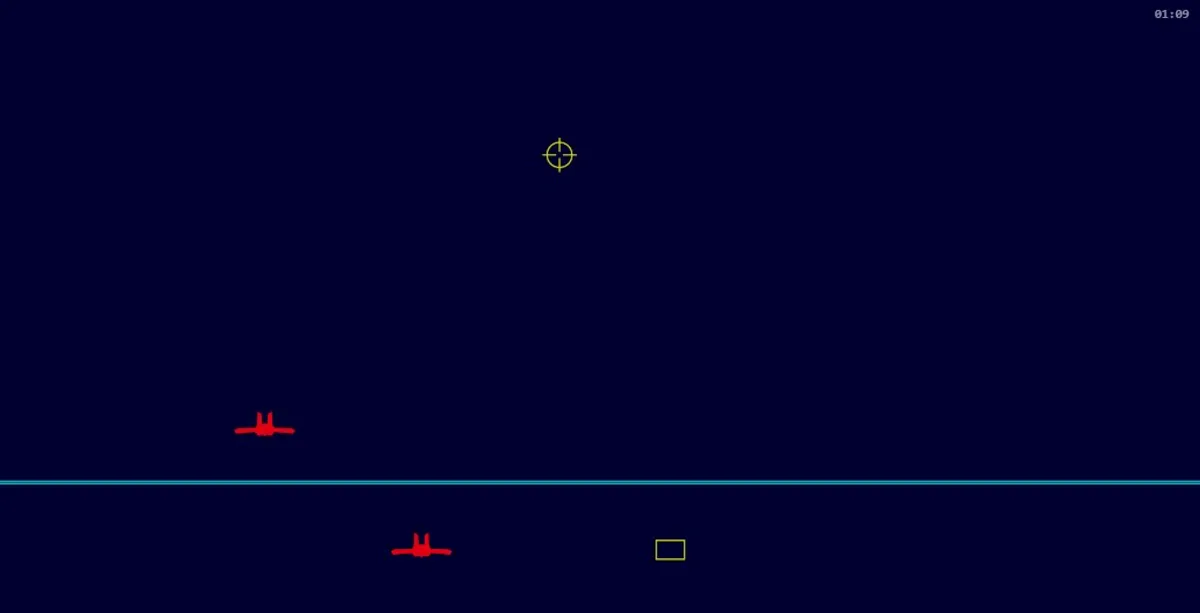
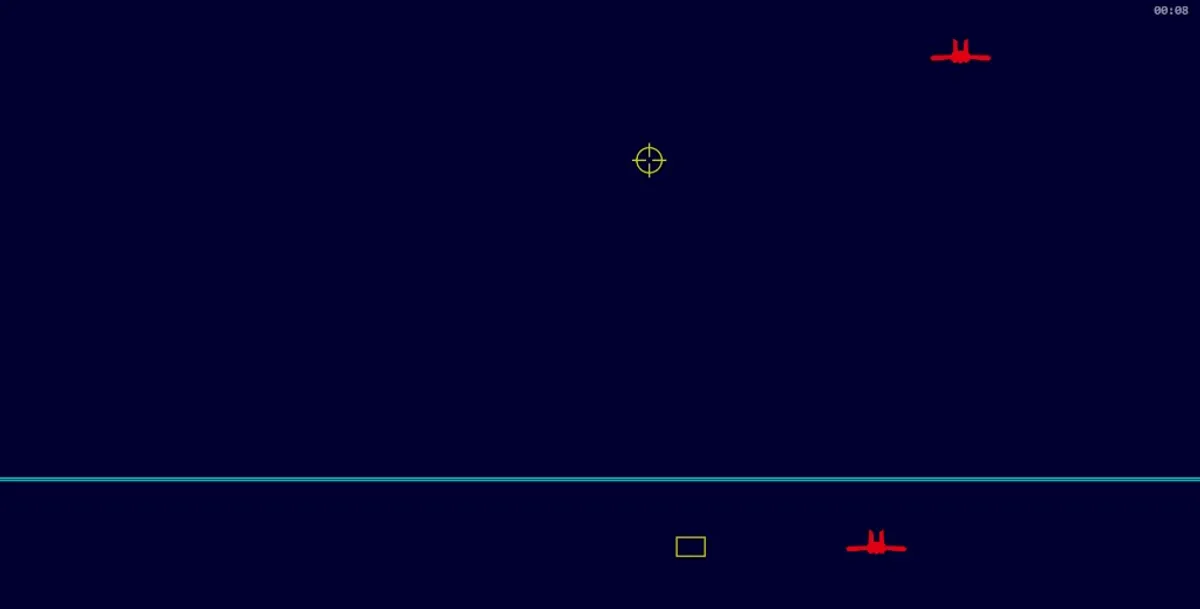
Airplane Tracking interface with upper joystick task and lower rudder task
How Airplane Tracking is structured (3 phases)
Rudder pedals only (bottom aircraft)
You control only the lower reticle while tracking the lower aircraft moving left-right. This phase isolates foot coordination and lateral precision with the rudder.
Joystick only (top aircraft)
You control only the upper reticle to follow the upper aircraft as it moves in straight segments and changes direction every few seconds. This phase isolates hand-eye tracking with two-axis stick control.
Joystick + rudder together
Both subtasks run at the same time. You must split attention, keep smooth corrections, and avoid over-controlling either reticle.
During Phase 3, most candidates perform better when they prioritize the top aircraft (joystick) and manage the lower aircraft with peripheral vision. This keeps precision where directional complexity is highest.
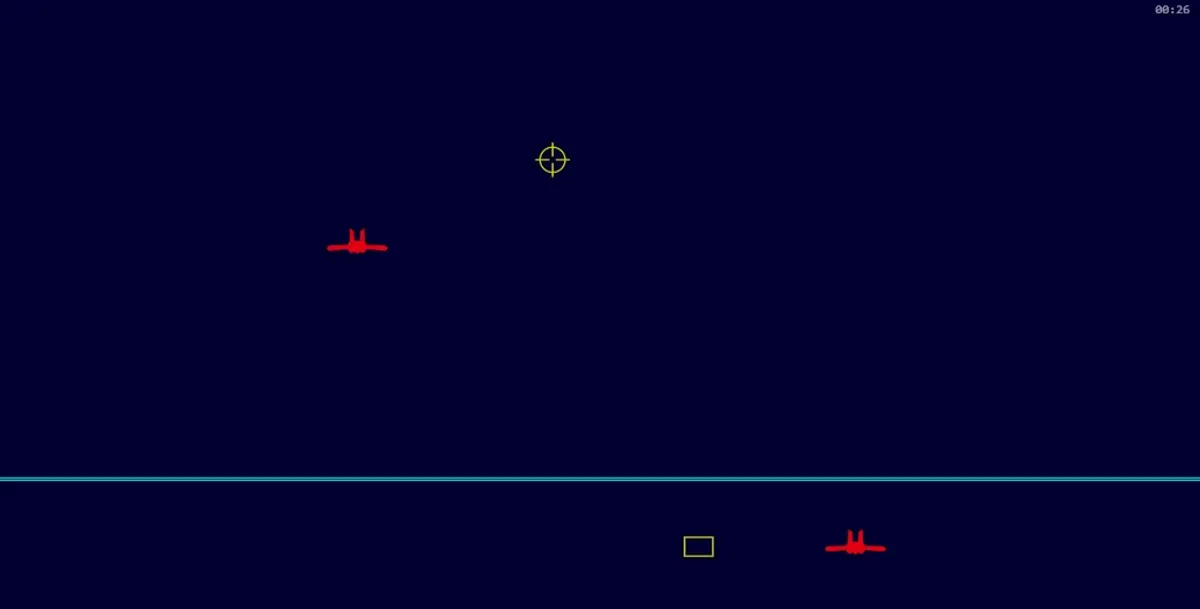
Phase 3 demands simultaneous control and disciplined attention switching
Exact control mapping
Use this mapping exactly as you practice:
- Push joystick → upper reticle goes down
- Pull joystick → upper reticle goes up
- Move joystick left → upper reticle goes left
- Move joystick right → upper reticle goes right
- Right rudder pedal → lower reticle goes right
- Left rudder pedal → lower reticle goes left
If controls are inverted on your setup, directions can flip. Confirm your mapping before serious practice sessions.
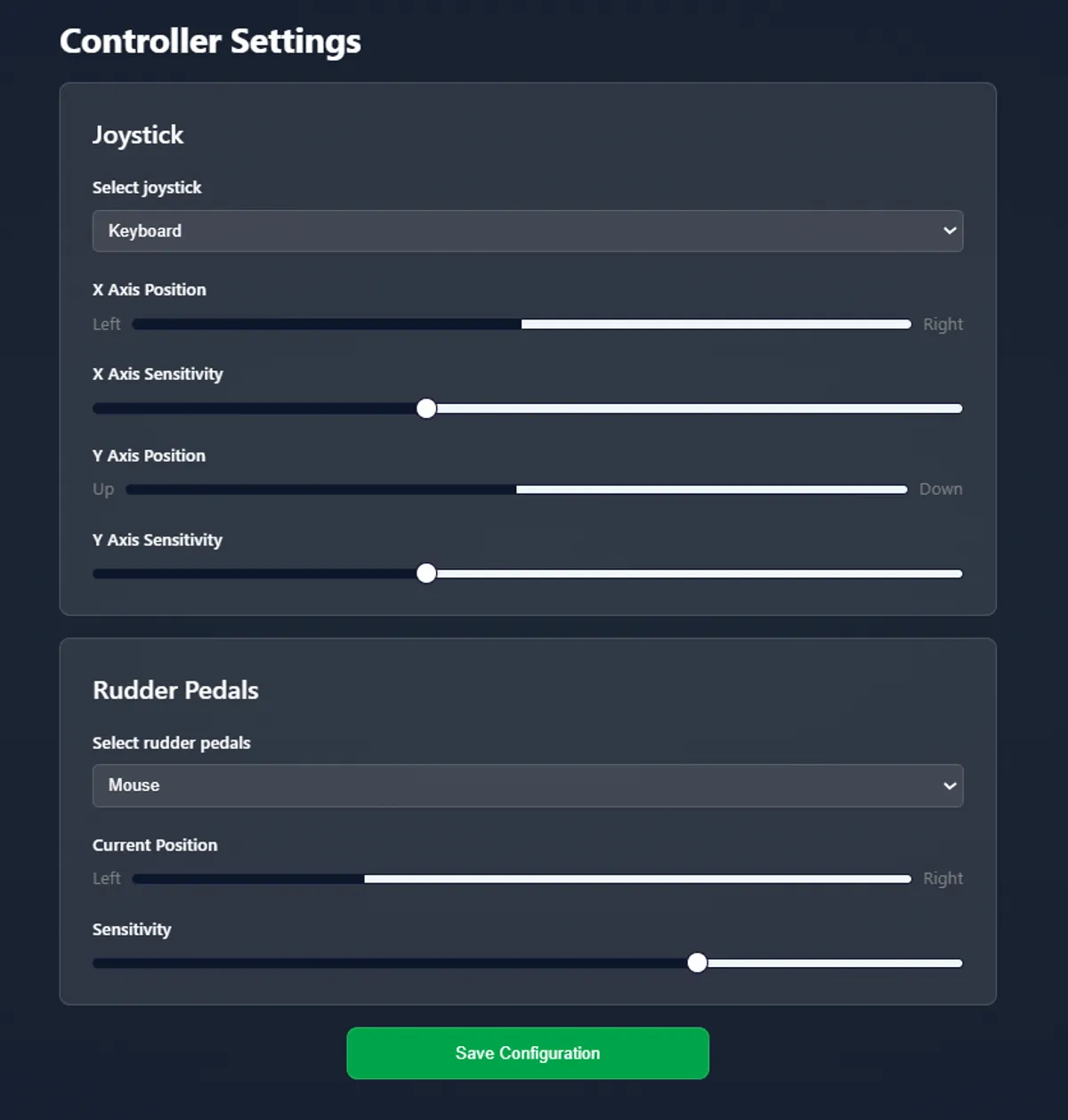
Controller settings panel: verify axis behavior and sensitivity before practice
Real testing hardware is often rustic and may have mechanical play (slack). Do not get surprised by this. Use small smooth corrections, avoid sudden jerks, and expect minor dead-zone behavior.
What your score really reflects
Airplane Tracking scoring is fundamentally a time-on-target consistency problem. High performers are not the most aggressive movers; they are the smoothest and most stable over the full duration.
Phase 1 goal
Build clean left-right rudder tracking with minimal oscillation around the target.
Phase 2 goal
Stay smooth through direction changes instead of chasing with large stick corrections.
Phase 3 goal
Maintain stable upper tracking while keeping lower tracking acceptable via peripheral monitoring.
Stability over time beats aggressive over-correction
Common mistakes and fixes
Tension grip
Hand or leg tension creates noisy control inputs. Relax your grip and apply pressure smoothly instead of in pulses.
Losing focus after a mistake
The real score drop often comes after an error, not from the error itself. If you miss one target moment and mentally disconnect, you can lose several seconds of tracking. Stay combative, reset instantly, and get back on target on the very next correction.
Hyperfocusing on one indicator in the combined phase
In the combined phase, over-fixating on one reticle can make you lose the other. Even a few extra seconds of tunnel vision can tank your consistency. Keep a short scan rhythm and re-check both zones continuously, including when one side feels stable.
Airplane Tracking, quick answers
How is Airplane Tracking structured?
Tracking is assessed in three stages — rudder only, joystick only, then both at once. The Air Force counts them as separate subtests of the nine that make up the TBAS rather than phases of one, but you sit them back to back and they build on each other.
Which target should I prioritize in the combined phase?
Most candidates score better by prioritizing the upper joystick target and managing the lower rudder target with peripheral vision.
Why does my tracking feel unstable even when I react quickly?
Reaction speed alone is not enough. Instability usually comes from over-correction and hardware slack. Smooth small inputs outperform fast large ones.
Can this subtest impact my pilot competitiveness?
Yes. TBAS performance contributes to PCSM, and Airplane Tracking is one of the most direct psychomotor indicators in the battery.
Build your test-day method
- Exam-aligned drills under deliberate time pressure
- Instant explanations after every item
- Your score estimate, tracked drill after drill